
TOPIC: FOOD AND FOOD GROUPS
A: TEACHING AND LEARNING MATERIALS
- Samples or pictures of common foods.
- Rice, beans, yam, maize or pictures of them.
- Egg, fish, meat or pictures of them.
- Fruits such as orange, banana, pawpaw and watermelon.
- Vegetables such as spinach, pumpkin leaves and carrots.
- Chart showing different food groups.
- Food picture cards for sorting activities.
- Three labelled baskets or containers for grouping foods.
B: REFERENCE MATERIALS
- Primary 2 Home Economics Scheme of Work (All Three Terms)
- Recommended Home Economics textbook for Primary 2 (school-approved edition)
- World Health Organization – Healthy Diet
C: PREVIOUS KNOWLEDGE
Pupils have learnt about healthy living, exercise, rest and sleep. They know that these good habits help the body to remain active and healthy.
Pupils also eat different kinds of food every day. In this lesson, they will learn what food means and how some common foods can be grouped according to what they mainly do for the body.
Previous Lesson: Primary 2 Home Economics First Term – Week 7: GOOD SLEEPING HABITS
D: PERFORMANCE OBJECTIVES
By the end of the lesson, pupils should be able to:
- explain the meaning of food;
- state at least four reasons why we need food;
- mention different foods commonly eaten in Nigeria;
- identify the three simple food groups taught in the lesson;
- give at least four examples from each food group;
- sort pictures of common foods into suitable groups; and
- explain why children should eat different kinds of food.
E: CONTENT
Meaning of Food
Food is anything we eat or drink that helps the body to live, grow and remain healthy.
Food gives the body what it needs for daily activities.
We need food because it helps us to:
- get energy;
- grow;
- build and repair the body;
- remain healthy;
- carry out daily activities; and
- protect the body from some illnesses.
Food is therefore very important to everyone.
Common Foods We Eat
There are many foods eaten in Nigeria.
Examples include:
- rice;
- beans;
- yam;
- cassava;
- garri;
- bread;
- maize;
- potatoes;
- plantain;
- fish;
- meat;
- eggs;
- milk;
- groundnuts;
- vegetables;
- oranges;
- bananas;
- pawpaw;
- mangoes; and
- watermelon.
Different families may eat different foods depending on their culture, location and what is available.
Food Groups
For this lesson, foods can be placed into three simple groups according to the main work they do in the body.
They are:
- Energy-giving foods
- Body-building foods
- Protective foods
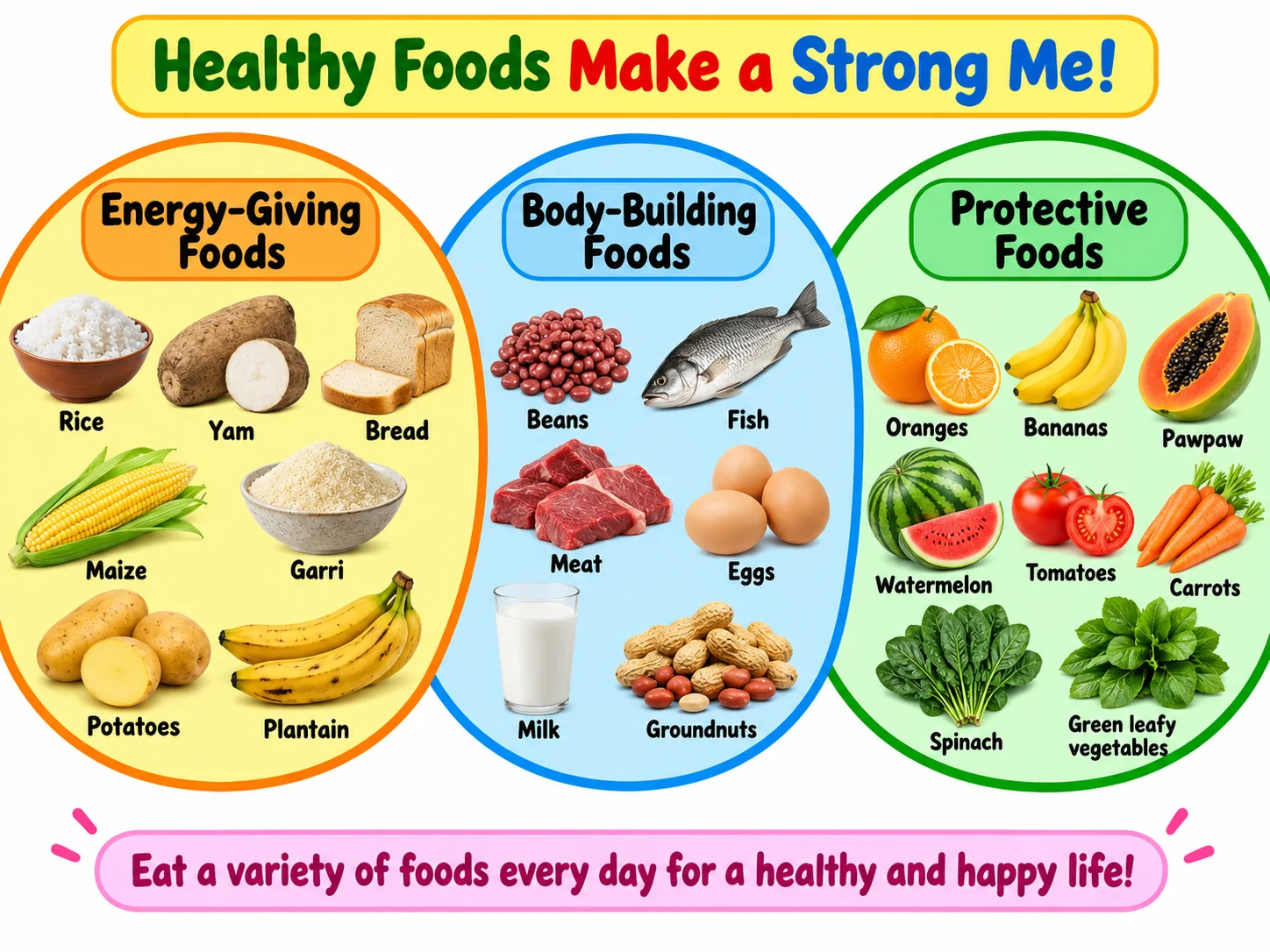
1. Energy-Giving Foods
Energy-giving foods help to give us energy.
We need energy to:
- walk;
- run;
- play;
- work;
- learn;
- exercise; and
- perform other daily activities.
Examples of energy-giving foods include:
- rice;
- yam;
- garri;
- cassava;
- bread;
- maize;
- potatoes;
- plantain;
- cereals;
- pasta; and
- some fats and oils.
For example, a pupil needs energy to walk to class, write, play during break time and take part in exercise.
2. Body-Building Foods
Body-building foods help the body to grow and repair itself.
They are especially important for growing children.
Examples include:
- beans;
- fish;
- meat;
- eggs;
- milk;
- groundnuts;
- chicken; and
- other suitable protein foods.
A child who is growing needs body-building foods as part of a varied diet.
3. Protective Foods
Protective foods help support the body and keep it healthy.
Many fruits and vegetables belong to this group.
Examples include:
- oranges;
- mangoes;
- pawpaw;
- watermelon;
- bananas;
- carrots;
- tomatoes;
- spinach;
- pumpkin leaves; and
- other fruits and vegetables.
Protective foods provide vitamins, minerals and other useful substances needed by the body.
Simple Food Group Chart
|
Food Group |
What It Mainly Does |
Examples |
|
Energy-giving foods |
Give us energy for activities |
Rice, yam, bread, garri, maize, potatoes |
|
Body-building foods |
Help the body grow and repair |
Beans, fish, meat, eggs, milk, groundnuts |
|
Protective foods |
Help support good health |
Fruits and vegetables |
This grouping is a simple way for young pupils to understand food.
Some foods contain more than one useful nutrient, so a food may help the body in more than one way.
Why Do We Eat Food?
1. Food Gives Us Energy
We need energy to perform our daily activities.
A pupil needs energy to:
- walk;
- run;
- write;
- play;
- study; and
- help with simple household duties.
2. Food Helps Us Grow
Children need food because their bodies are growing.
Good food supports the development of the body.
3. Food Helps Build and Repair the Body
Some foods help the body build muscles and repair worn-out tissues.
Foods such as beans, eggs, fish and meat are useful examples.
4. Food Helps Us Stay Healthy
Fruits and vegetables provide nutrients that support good health.
5. Food Helps Us Think and Learn
Children need regular, suitable meals to provide energy for school and other activities.
Eating Different Types of Food
We should not eat only one type of food all the time.
For example, a meal containing only rice may give energy, but adding beans, fish, vegetables or fruit provides other useful nutrients.
A meal may include foods from more than one group.
Example 1
Rice + Beans + Vegetable Stew
- Rice mainly gives energy.
- Beans help with growth and body building.
- Vegetables provide protective nutrients.
Example 2
Yam + Egg Sauce + Fruit
- Yam mainly gives energy.
- Egg helps with body building.
- Fruit provides protective nutrients.
Example 3
Pap + Milk + Banana
- Pap mainly provides energy.
- Milk supports growth and body building.
- Banana provides useful vitamins and minerals.
Healthy Food Choices
Children should learn to make healthy food choices.
Good habits include:
- eating different kinds of food;
- eating fruits and vegetables regularly;
- eating clean and properly prepared food;
- drinking clean water;
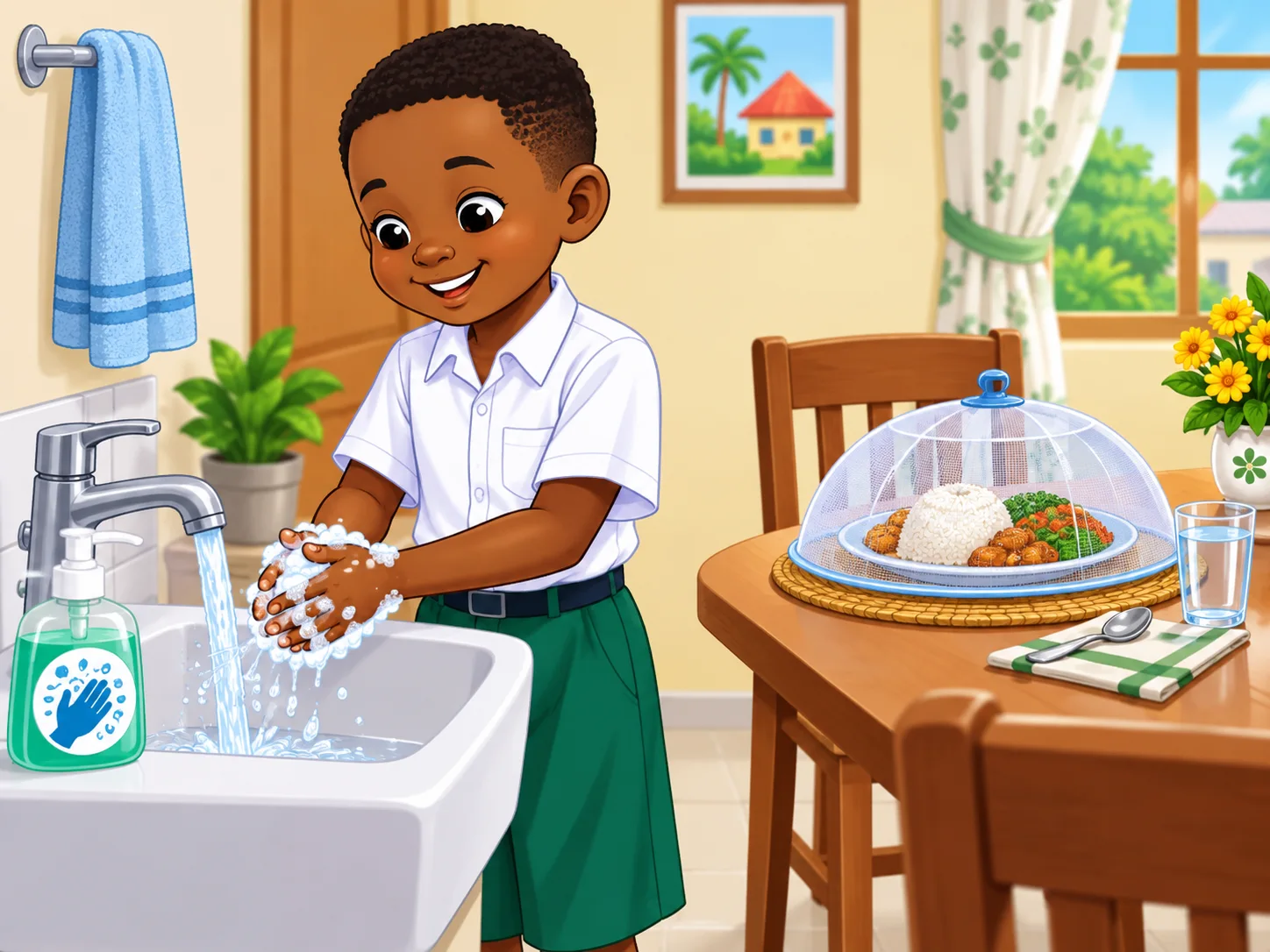
- washing the hands before eating;
- keeping food covered;
- avoiding spoiled food; and
- eating meals at suitable times.
Clean Food Is Important
Food should not only be nutritious; it should also be clean.
Before eating:
- wash your hands;
- make sure the plate and spoon are clean;
- check that the food is properly prepared; and
- avoid food that smells bad or looks spoiled.
Fruits should be washed properly before eating where appropriate.
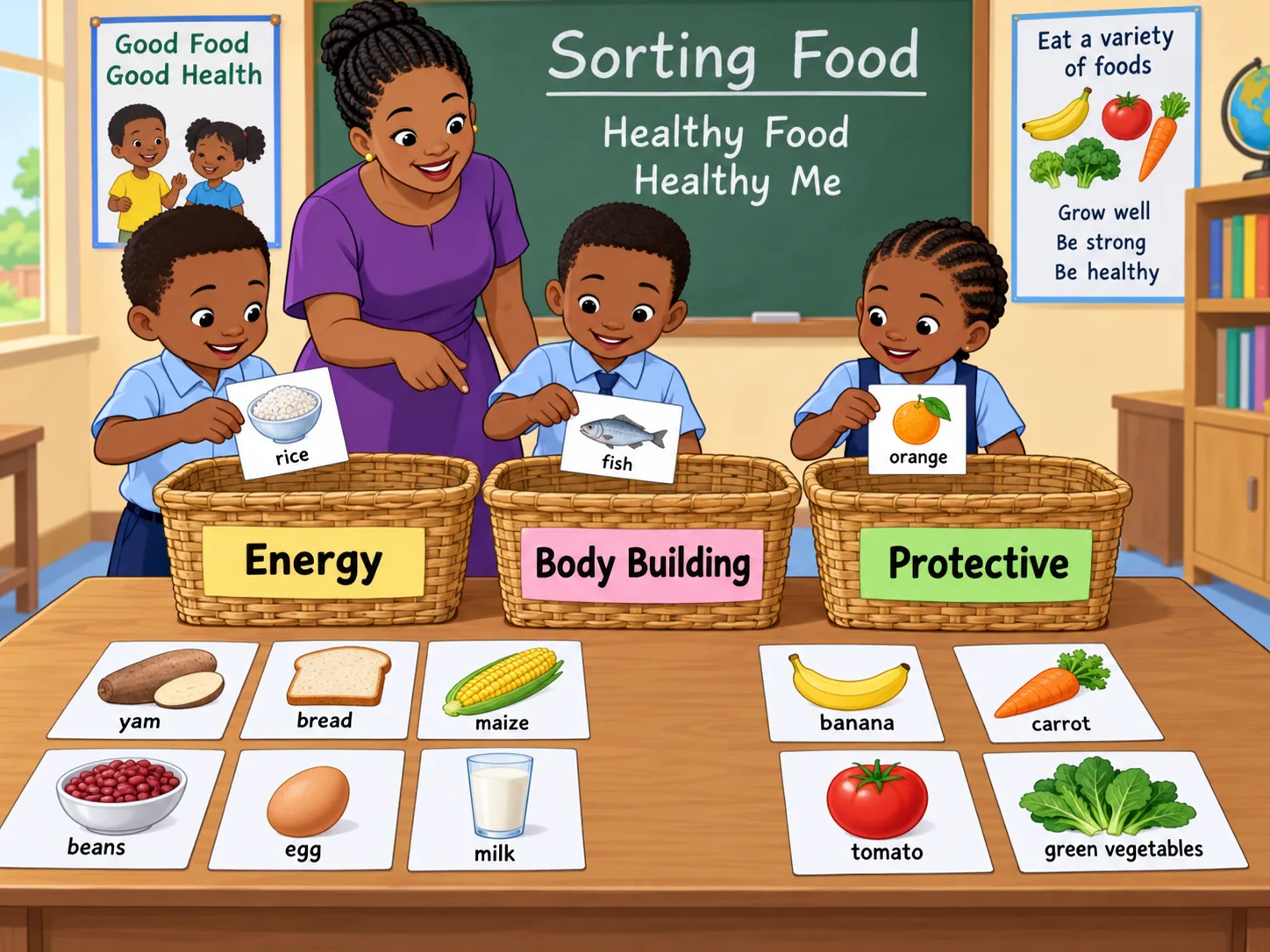
Food Sorting Activity
The teacher can display pictures of:
- rice;
- yam;
- bread;
- beans;
- fish;
- egg;
- orange;
- carrot;
- banana.
Pupils should place the pictures under the three headings:
Energy-Giving Foods
Rice, yam, bread
Body-Building Foods
Beans, fish, egg
Protective Foods
Orange, carrot, banana
Remember
Food is anything we eat or drink that helps the body to live, grow and remain healthy.
The three simple food groups taught in this lesson are:
- Energy-giving foods – give us energy.
- Body-building foods – help us grow and repair the body.
- Protective foods – help support good health.
Children should eat different kinds of clean and properly prepared food because the body needs different nutrients.
F: LESSON PRESENTATION
F1: Teachers’ Activities
- The teacher revises healthy living by asking pupils to mention some things that help the body remain healthy.
- The teacher displays samples or pictures of common foods.
- The teacher asks pupils to name the foods they recognise.
- The teacher introduces the topic Food and Food Groups.
- The teacher explains the meaning of food in simple language.
- The teacher discusses reasons why people need food.
- The teacher introduces the three simple food groups.
- The teacher displays examples of energy-giving foods and explains their main function.
- The teacher displays examples of body-building foods and explains their main function.
- The teacher displays fruits and vegetables as examples of protective foods.
- The teacher draws or displays the food-group table.
- The teacher explains that some foods may contain more than one kind of nutrient.
- The teacher shows examples of meals containing foods from different groups.
- The teacher organises a food-sorting activity using picture cards.
- The teacher discusses cleanliness before eating.
- The teacher asks oral questions and corrects pupils where necessary.
F2: Pupils’ Activities
- Pupils mention some healthy living habits already learnt.
- Pupils observe the food samples and pictures.
- Pupils name familiar foods.
- Pupils explain food in their own simple words.
- Pupils mention reasons why we eat food.
- Pupils repeat the names of the three food groups.
- Pupils give examples of energy-giving foods.
- Pupils give examples of body-building foods.
- Pupils identify fruits and vegetables as protective foods.
- Pupils sort food pictures into the correct groups.
- Pupils suggest simple meals containing different types of food.
- Pupils mention good food hygiene habits.
- Pupils answer questions and copy important notes.
G: CONCLUSION
The teacher revises the lesson by asking pupils to explain the meaning of food and name the three simple food groups.
The teacher reminds pupils that energy-giving foods help us carry out activities, body-building foods support growth and repair, while protective foods help support good health.
Pupils are encouraged to eat different kinds of clean, properly prepared food rather than depending on only one type of food.
The teacher also reminds pupils to wash their hands before eating and to avoid dirty or spoiled food.
Next Lesson: Primary 2 Home Economics First Term – Week 9: BALANCED DIET AND CLASSES OF FOOD
H: EVALUATION GUIDE
Oral Questions
- What is food?
- Mention four reasons why we need food.
- Name the three simple food groups.
- Mention four energy-giving foods.
- What do energy-giving foods do for the body?
- Mention four body-building foods.
- What do body-building foods help the body to do?
- Mention four protective foods.
- Give two examples of meals containing foods from different groups.
- Mention four good habits to practise before eating.
Written Exercise
A. Fill in the blanks with suitable words.
- __________ is anything we eat or drink that helps the body to live and grow.
- Rice and yam are mainly __________-giving foods.
- Beans and fish are __________-building foods.
- Fruits and vegetables are examples of __________ foods.
- We should wash our __________ before eating.
B. Write the correct food group beside each food.
Choose from: Energy-Giving, Body-Building, Protective
- Rice — __________________
- Beans — __________________
- Orange — __________________
- Yam — __________________
- Fish — __________________
- Carrot — __________________
- Bread — __________________
- Egg — __________________
Practical Activity
The teacher provides pictures or real samples of common foods.
Pupils should work in small groups to arrange them under:
- Energy-Giving Foods
- Body-Building Foods
- Protective Foods
Each group should explain why at least three of the foods were placed in their chosen categories.
Take-Home Activity
Draw and colour six common foods eaten in your home.
Under each drawing, write whether it is mainly:
- Energy-Giving;
- Body-Building; or
- Protective.