
TOPIC: GOOD SLEEPING HABITS
A: TEACHING AND LEARNING MATERIALS
- Pictures of children preparing for sleep.
- Picture of a clean and well-arranged bedroom.
- Picture of a dirty or uncomfortable sleeping area.
- Bed, mattress, pillow and clean bedsheet or pictures of them.
- Night clothes.
- Toothbrush and toothpaste.
- Chart showing a simple bedtime routine.
- Flash cards containing the words sleep, night, bedroom, clean, quiet, and bedtime.
B: REFERENCE MATERIALS
- Primary 2 Home Economics Scheme of Work (All Three Terms)
- Recommended Home Economics textbook for Primary 2 (school-approved edition)
- CDC – About Sleep
C: PREVIOUS KNOWLEDGE
Pupils have learnt the meaning and importance of sleep. They know that sleep is a natural period of deep rest and that getting enough sleep helps the body and mind to rest.
They have also learnt that good sleep helps children to wake up refreshed, pay attention in class and take part in daily activities.
Previous Lesson: Primary 2 Home Economics First Term – Week 6: SLEEP – MEANING AND IMPORTANCE
D: PERFORMANCE OBJECTIVES
By the end of the lesson, pupils should be able to:
- explain the meaning of good sleeping habits;
- mention suitable times for sleeping;
- identify places where people should sleep;
- mention situations when pupils should not normally sleep;
- state at least six good sleeping habits;
- describe a simple bedtime routine; and
- explain how to keep a sleeping place clean and comfortable.
E: CONTENT
Meaning of Good Sleeping Habits
Good sleeping habits are the good things we do regularly to help us get enough peaceful and comfortable sleep.
Good sleeping habits include:
- going to bed at a regular time;
- preparing properly for bed;
- sleeping in a clean and comfortable place;
- keeping the sleeping area quiet;
- avoiding unnecessary activities late at night; and
- waking up at an appropriate time.
Good sleeping habits are an important part of healthy living.
When Should We Sleep?
1. At Night
Night is the main period for sleeping.
After the activities of the day, the body needs enough time to rest.
Children should go to bed at a suitable time set by their parents or caregivers.
Staying awake until very late every night is not a good sleeping habit.
[Insert Image: A child going to bed at night while a clock and moon are visible.]
2. When It Is Time for Bed
A family may have a regular bedtime for children.
For example, when bedtime comes, a child should begin preparing for sleep instead of starting another long game or activity.
A regular bedtime helps the child develop a good sleeping routine.
3. When We Are Tired and It Is Appropriate to Sleep
After a busy day, a child may become tired and sleepy.
Signs may include:
- yawning;
- rubbing the eyes;
- feeling tired;
- becoming less active; and
- finding it difficult to concentrate.
If it is an appropriate time to sleep, the child should prepare for bed.
4. During a Suitable Daytime Rest Period
Some children may occasionally sleep for a short period during the day when allowed by their parents or caregivers, especially when they are tired or unwell.
However, children should not spend most of the day sleeping when they are expected to be learning, playing or carrying out normal activities.
When Should We Not Normally Sleep?
There are times when a pupil should normally remain awake and attentive.
These include:
1. During Lessons
Pupils should not make a habit of sleeping while the teacher is teaching.
They should listen, participate and complete their schoolwork.
A pupil who feels unusually sleepy or unwell should tell the teacher.
2. While Doing Important Work
A child should not lie down to sleep in the middle of a task that needs to be completed, unless the child is unwell or has been told to rest.
3. While Eating
Eating while lying down or falling asleep with food in the mouth is unsafe.
Meals should be eaten properly before bedtime.
4. In an Unsafe Place
A person should never sleep:
- beside a busy road;
- near an open fire;
- near dangerous electrical equipment;
- in a place with sharp objects;
- close to moving vehicles; or
- in any other unsafe environment.
Where Should We Sleep?
We should sleep in a place that is:
- safe;
- clean;
- comfortable;
- properly ventilated; and
- suitable for sleeping.
Good places for sleeping include:
- a bed in a bedroom;
- a clean mattress;
- a clean sleeping mat where a bed is not available; and
- another safe sleeping place provided by parents or caregivers.
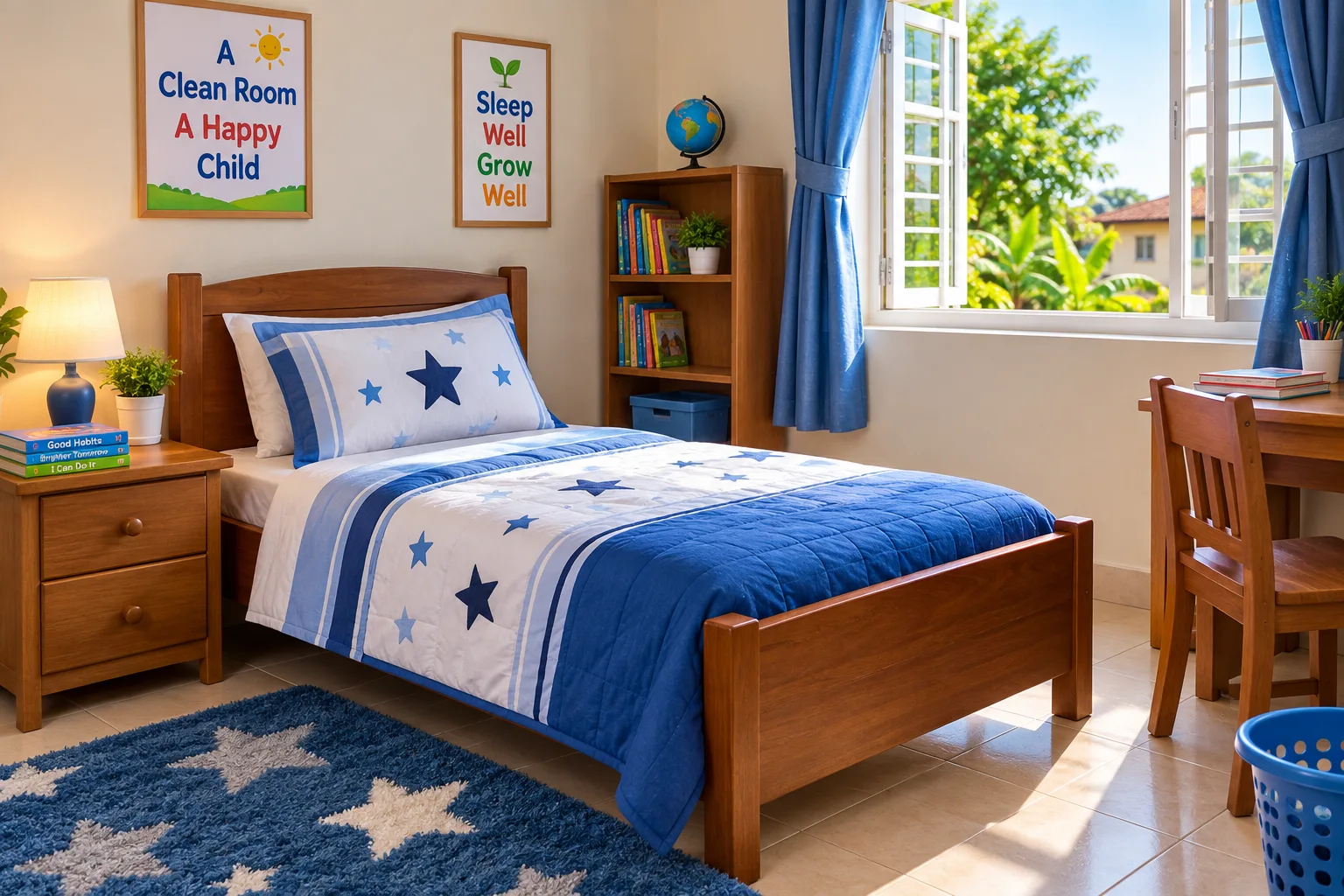
The Bedroom
The bedroom is the room in the home mainly used for sleeping and resting.
A good bedroom should be:
- neat;
- free from unnecessary rubbish;
- comfortable;
- properly ventilated; and
- arranged so that a person can sleep safely.
Good Sleeping Habits
1. Have a Regular Bedtime
Children should try to go to bed at about the same suitable time each night.
Parents or caregivers usually decide the proper bedtime.
A regular bedtime helps the body know when it is time to rest.
2. Brush the Teeth Before Bed
The teeth should be brushed before sleeping.
This helps to remove food particles and keep the mouth clean.
The toothbrush should be rinsed and kept properly after use.
3. Use the Toilet Before Going to Bed
Children should use the toilet when necessary before going to sleep.
This may help them sleep more comfortably without needing to get up soon after going to bed.
4. Wear Clean and Comfortable Night Clothes
Night clothes should be:
- clean;
- comfortable;
- suitable for the weather; and
- not too tight.
Very uncomfortable clothes can make it difficult to sleep peacefully.
5. Sleep on Clean Bedding
Bedsheets, pillowcases, mats and other sleeping materials should be kept clean.
Dirty bedding may contain:
- dust;
- sweat;
- unpleasant smells; and
- dirt.
Clean bedding makes the sleeping area more pleasant.
6. Keep the Bedroom Well Ventilated
A bedroom should have fresh air.
Windows may be opened when it is safe and appropriate to allow air to move through the room.
A room should not feel stuffy or filled with smoke.
7. Keep the Sleeping Area Quiet
Too much noise can disturb sleep.
Children should avoid:
- shouting at bedtime;
- playing very loud music;
- making unnecessary noise near someone who is sleeping.
A calm environment makes peaceful sleep easier.
8. Reduce Television, Phones and Games Before Bed
Watching television, playing video games or using phones and tablets for a long time late at night can delay bedtime.
Children should follow the rules given by their parents or caregivers about the use of screens at night.
Bedtime should be a calm period.
9. Avoid Rough Play Just Before Bed
Running around, wrestling or playing very active games immediately before sleeping may make it difficult for some children to settle down.
Calmer activities are better near bedtime.
Examples include:
- listening to a short story;
- arranging school materials for the next day;
- saying prayers according to the family’s practice; or
- talking quietly with a parent.
10. Do Not Take Food to Bed
Children should not leave food, dirty plates or food wrappers on the bed.
Food crumbs can make the bed dirty and may attract insects.
A Simple Bedtime Routine
A bedtime routine is a set of simple activities we follow before sleeping.
For example:
Finish Evening Activities → Brush Teeth → Use Toilet → Put on Night Clothes → Arrange Bed → Go to Bed → Sleep
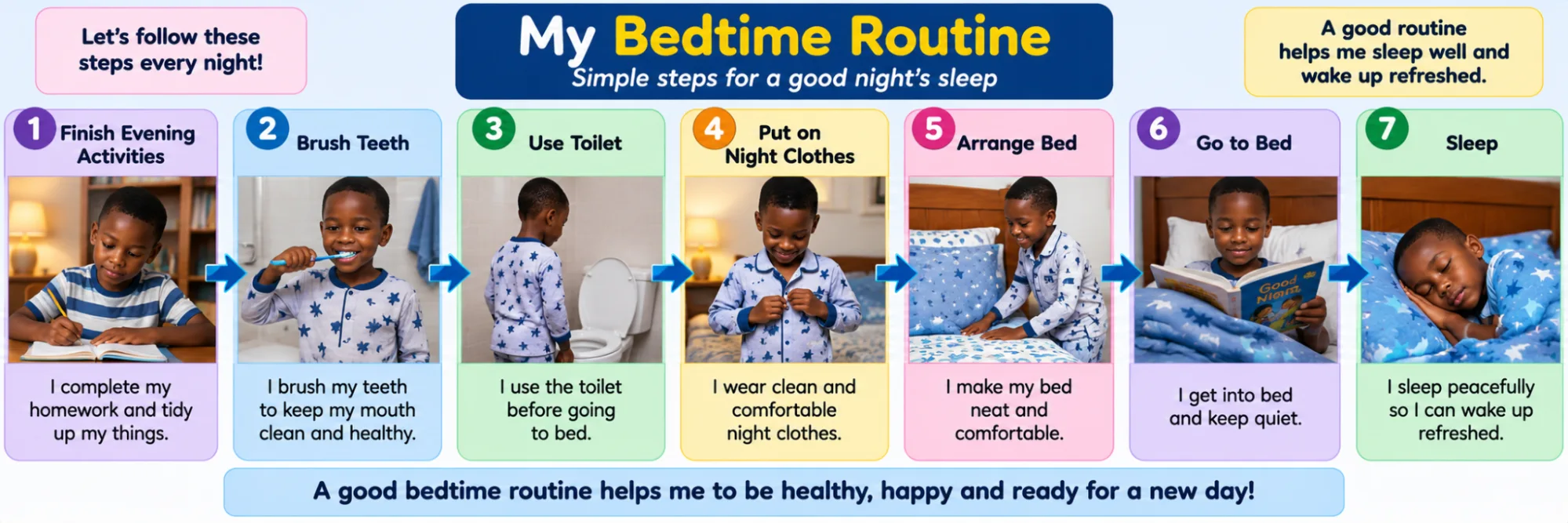
Following a simple routine each night can help children know that it is time to settle down and sleep.
Good and Bad Sleeping Habits
|
Good Sleeping Habits |
Bad Sleeping Habits |
|
Going to bed at a regular time |
Staying awake very late every night |
|
Brushing the teeth before bed |
Going to bed without cleaning the teeth |
|
Sleeping on clean bedding |
Sleeping on very dirty bedding |
|
Keeping the room quiet |
Making loud noise at bedtime |
|
Wearing comfortable night clothes |
Sleeping in uncomfortable clothes |
|
Keeping the bedroom tidy |
Leaving rubbish around the bed |
|
Reducing screen use before bedtime |
Watching television or playing games very late |
|
Sleeping in a safe place |
Sleeping in a dangerous place |
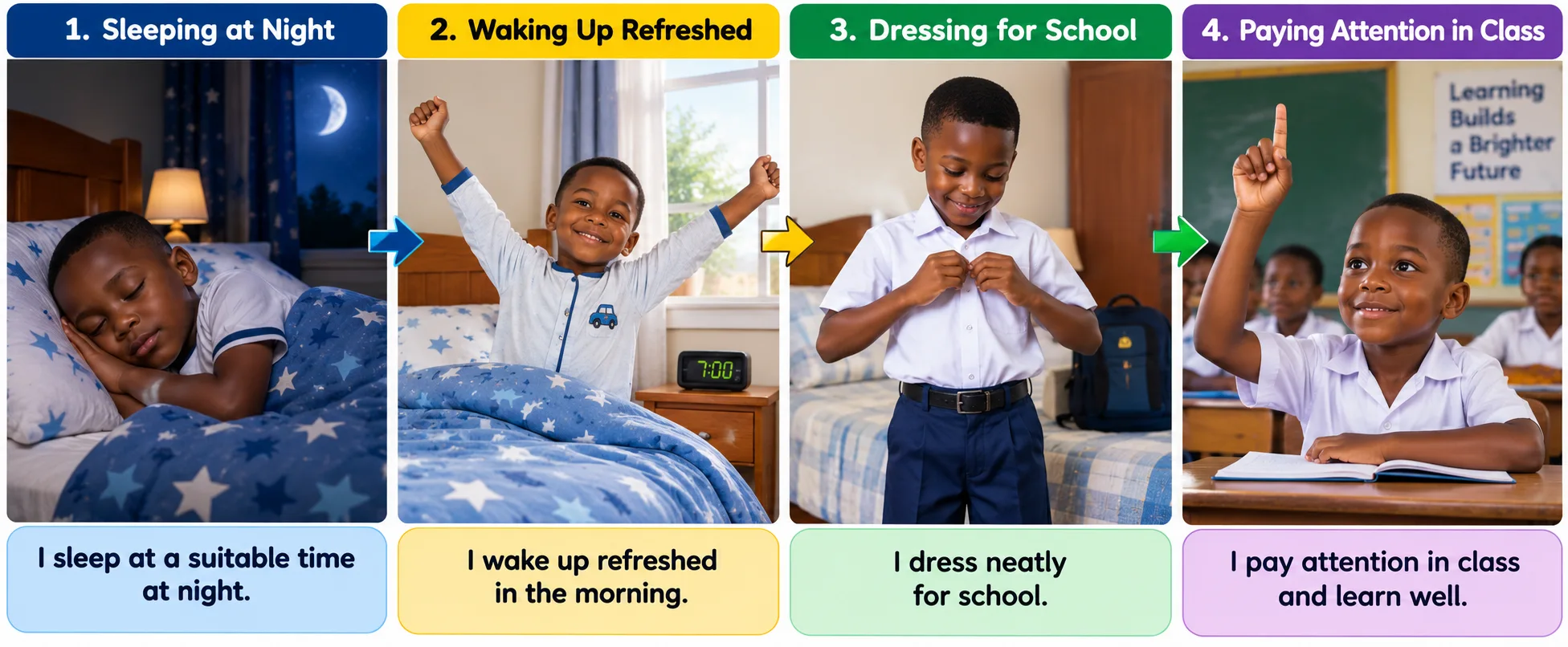
Why Are Good Sleeping Habits Important?
Good sleeping habits can help us to:
- get enough sleep;
- sleep more peacefully;
- wake up feeling refreshed;
- be ready for school;
- pay better attention during lessons;
- keep our sleeping area clean;
- develop a good daily routine; and
- support healthy growth and well-being.
Caring for the Sleeping Area
Children can help to keep their sleeping area tidy by:
- arranging the bed after waking;
- folding or arranging blankets properly;
- keeping dirty clothes away from the bed;
- putting shoes in the proper place;
- avoiding littering the bedroom;
- keeping toys and books properly; and
- helping an adult change dirty bedding when necessary.
Pupils should only perform household tasks that are safe and suitable for their age.
Remember
Good sleeping habits help us to sleep comfortably and get enough rest.
We should:
- sleep mainly at night;
- go to bed at a regular time;
- brush our teeth before sleeping;
- wear clean and comfortable night clothes;
- sleep in a clean, safe and comfortable place;
- keep the bedroom quiet and properly ventilated;
- reduce television, phones and games before bedtime; and
- keep our sleeping area clean and tidy.
F: LESSON PRESENTATION
F1: Teachers’ Activities
- The teacher revises the previous lesson by asking pupils to explain the meaning and importance of sleep.
- The teacher asks pupils what they normally do before going to bed.
- The teacher introduces the topic Good Sleeping Habits.
- The teacher explains when children should normally sleep.
- The teacher discusses situations when pupils should remain awake and attentive.
- The teacher displays pictures of suitable and unsuitable sleeping places.
- The teacher discusses qualities of a good sleeping environment.
- The teacher displays or demonstrates clean bedding and comfortable night clothes.
- The teacher explains good sleeping habits one after another.
- The teacher uses picture cards to arrange a simple bedtime routine.
- The teacher compares good and bad sleeping habits using the table.
- The teacher discusses how pupils can help to keep their bedrooms or sleeping areas tidy.
- The teacher asks individual pupils to
F2: Pupils’ Activities
- Mention good sleeping habits learnt in the lesson.
- Identify good and bad sleeping habits from pictures.
- Describe how to keep a sleeping area clean and comfortable.
- Explain their own simple bedtime routine.
G: CONCLUSION
The teacher summarises the importance of sleeping at the right time, observing a regular bedtime routine and keeping the bedroom clean and comfortable.
Next Lesson: Primary 2 Home Economics First Term – Week 8: FOOD AND FOOD GROUPS
H: EVALUATION GUIDE
- What is a good sleeping habit?
- Mention three things you should do before going to bed.
- Why should we keep our bedroom clean?
- Mention two things to avoid before sleeping.
- Explain why pupils need enough sleep at night.