TOPIC: INTRODUCTION TO HOME ECONOMICS AND HEALTHY LIVING
A: TEACHING AND LEARNING MATERIALS
- Pictures of a clean home and surroundings.
- Pictures of children carrying out household activities.
- Pictures of healthy and unhealthy habits.
- Soap, sponge, toothbrush and toothpaste.
- Samples or pictures of clean clothes.
- Pictures of different types of food.
- Broom and dustpan.
- Chart showing simple healthy habits.
B: REFERENCE MATERIALS
- Primary 2 Home Economics Scheme of Work (All Three Terms)
- Recommended Home Economics textbook for Primary 2 (school-approved edition)
- World Health Organization – Healthy Diet
C: PREVIOUS KNOWLEDGE
Pupils have learnt about the human body, different parts of the body and simple ways of keeping the body clean. They have also learnt about materials used for caring for the body, such as soap, water, sponge, toothbrush and toothpaste.
They can identify some activities carried out at home, such as sweeping, bathing, washing clothes and helping to arrange household items.
D: PERFORMANCE OBJECTIVES
By the end of the lesson, pupils should be able to:
- explain Home Economics in simple words;
- mention at least four activities learnt in Home Economics;
- state at least four reasons why Home Economics is important;
- explain the meaning of healthy living;
- mention at least five good habits that promote healthy living;
- identify healthy and unhealthy habits from pictures; and
- practise simple healthy habits at home and in school.
E: CONTENT
Meaning of Home Economics
Home Economics is a subject that teaches us how to take care of ourselves, our family and our home.
It teaches us useful things that we do every day.
For example, Home Economics teaches us how to:
- keep our body clean;
- keep our clothes clean;
- keep our home and surroundings clean;
- eat good food;
- care for things in the home;
- help members of our family;
- stay healthy and safe.
Home Economics is therefore an important subject because the things we learn can be practised at home, in school and in our community.
Activities We Learn in Home Economics
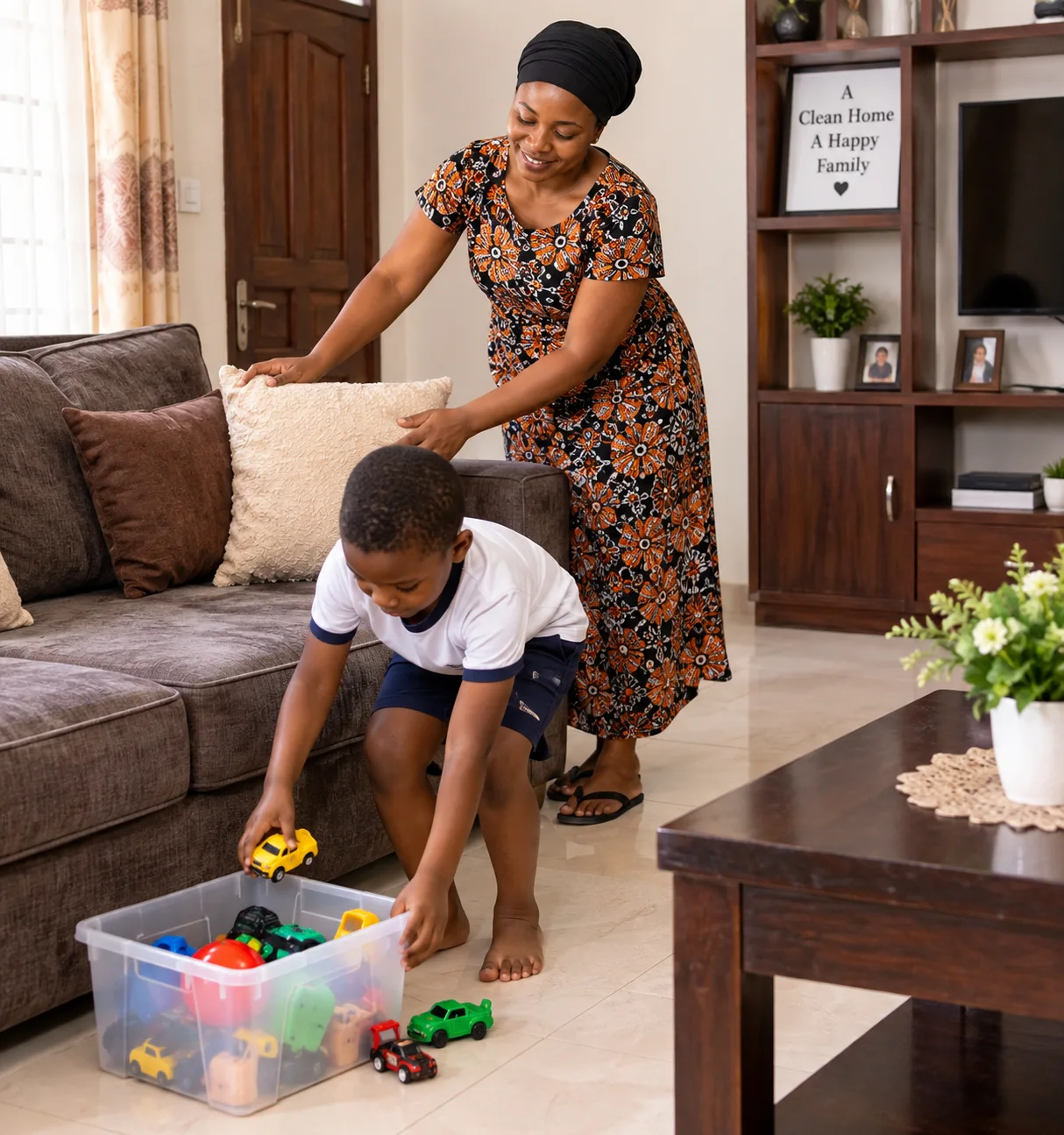
There are many activities that children can learn through Home Economics.
Some of them are:
- Bathing: We wash our body with clean water, soap and a sponge.
- Brushing the teeth: We clean our teeth every morning and night.
- Washing the hands: We wash our hands before eating and after using the toilet.
- Cleaning the home: We sweep and keep our rooms and surroundings tidy.
- Caring for clothes: We wear clean clothes and keep dirty clothes properly for washing.
- Eating good food: We eat clean and nutritious food to help our body grow.
- Helping at home: Children can perform simple duties such as arranging their books, toys, shoes and clothes.
Why Home Economics Is Important
Home Economics is important because it teaches us good habits and useful skills.
It helps us to:
- keep our body clean;
- keep our home clean and tidy;
- develop good eating habits;
- care for our clothes and other belongings;
- learn how to help at home;
- keep ourselves healthy;
- learn good manners; and
- become responsible children.
A child who practises what he or she learns in Home Economics can take better care of personal belongings and help to keep the home neat.
Meaning of Healthy Living
Healthy living means doing things that help us to keep our body clean, strong and well.
When we practise healthy living, we take good care of our body and avoid habits that may make us sick.
Healthy living does not mean only taking medicine when we are ill. It also means doing the right things every day to help prevent sickness.
Examples of Healthy Living Habits
Healthy habits include:
- bathing every day;
- brushing the teeth every morning and night;
- washing the hands with soap and clean water;
- eating clean and healthy food;
- drinking clean water;
- keeping the fingernails short and clean;
- wearing clean clothes;
- keeping the home and surroundings clean;
- exercising the body;
- resting when necessary; and
- getting enough sleep.
Healthy and Unhealthy Habits
Some habits help us to stay healthy, while other habits can make us dirty or sick.
|
Healthy Habits |
Unhealthy Habits |
|
Bathing every day |
Refusing to take a bath |
|
Washing hands before eating |
Eating with dirty hands |
|
Brushing the teeth |
Refusing to brush the teeth |
|
Eating clean food |
Eating dirty or spoilt food |
|
Drinking clean water |
Drinking dirty water |
|
Wearing clean clothes |
Wearing very dirty clothes |
|
Keeping the home clean |
Throwing rubbish around the home |
|
Sleeping at the proper time |
Staying awake very late every night |
Keeping the Body Clean
The body must be kept clean every day.
We should:
- take our bath regularly;
- brush our teeth;
- wash our hands often;
- keep our fingernails clean;
- comb or care for our hair;
- wear clean clothes.
A clean body helps us to look neat and feel comfortable.
Keeping the Home Clean
Healthy living also includes keeping our home and surroundings clean.
We should:
- sweep the floor;
- put rubbish in a waste bin;
- arrange household items properly;
- keep the toilet clean;
- keep food covered;
- avoid stagnant or dirty water around the home.
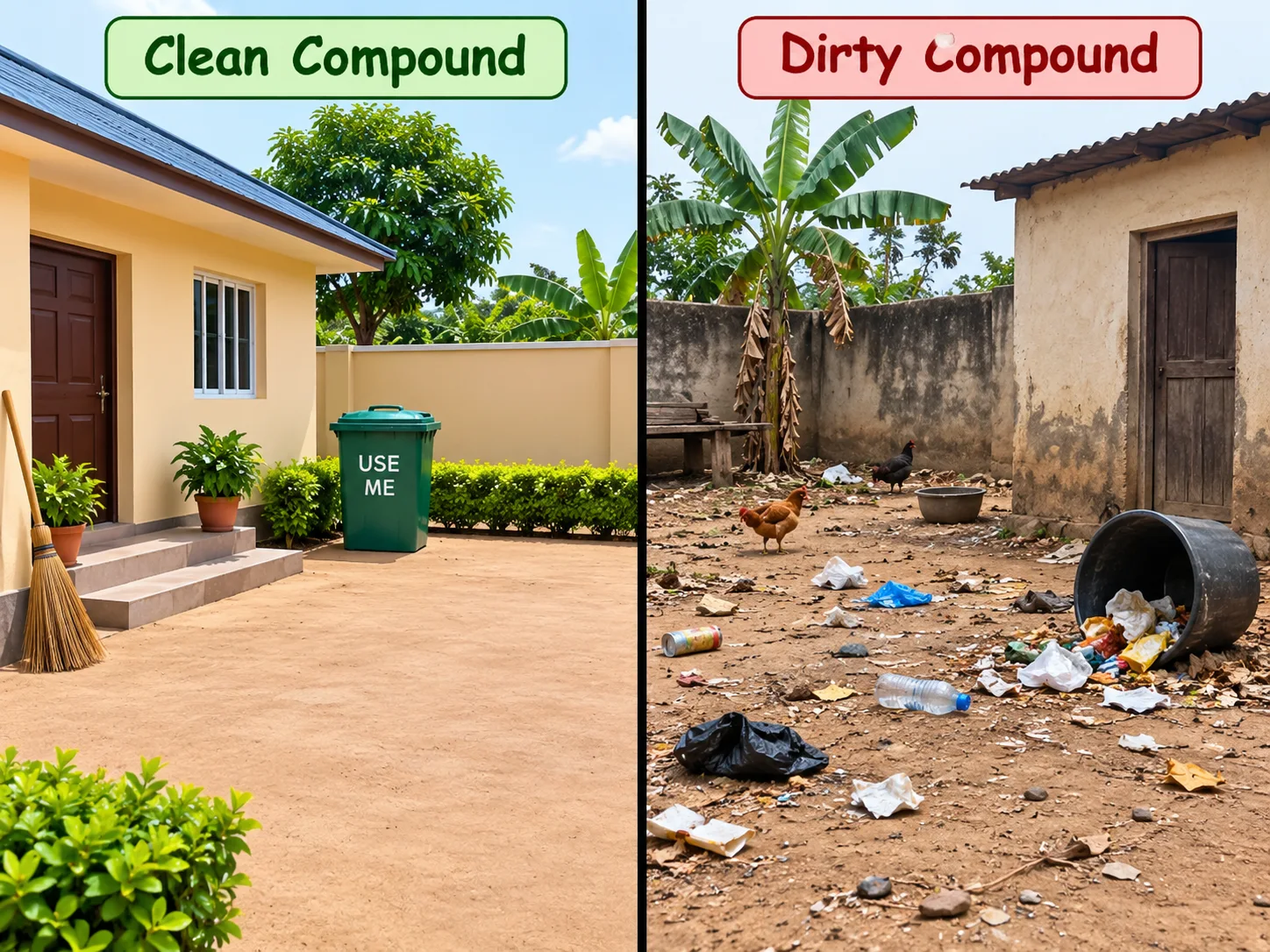
Ask pupils:
Which of the two surroundings is better for healthy living?
The clean environment is better because keeping our surroundings clean helps to reduce dirt, bad smells and some causes of sickness.
Eating Good Food
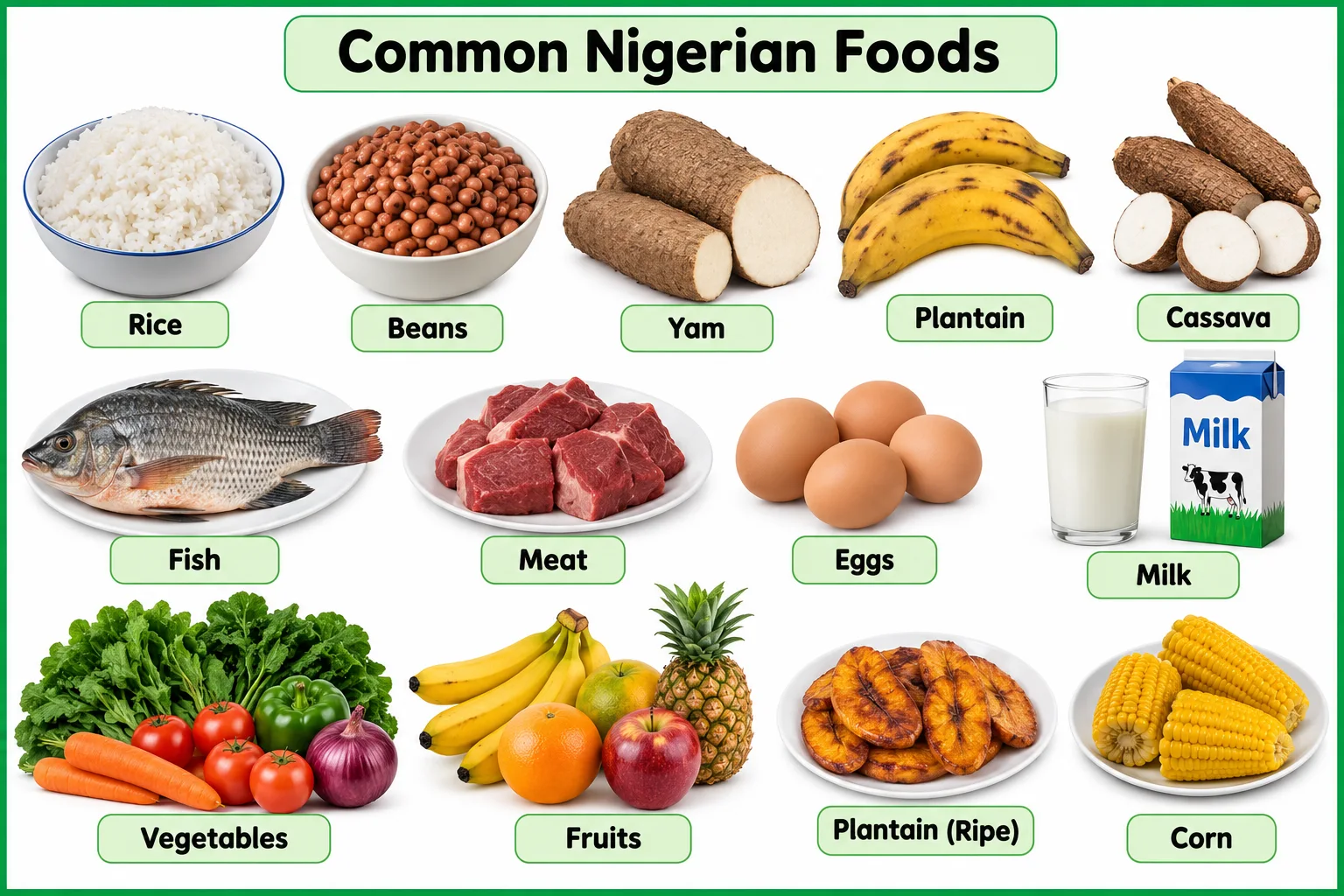
Good food is also important for healthy living.
Children need different kinds of food to grow and stay strong.
Examples include:
- rice;
- beans;
- yam;
- eggs;
- fish;
- meat;
- vegetables;
- fruits;
- milk.
Food should be prepared and served in a clean way.
We should wash our hands before eating and avoid eating food that is dirty or spoilt.
Simple Healthy Living Rules
Pupils should remember these simple rules:
- Keep your body clean.
- Wear clean clothes.
- Wash your hands regularly.
- Eat clean and good food.
- Drink clean water.
- Keep your home and surroundings clean.
- Exercise regularly.
- Rest when you are tired.
- Sleep well at night.
- Tell an adult when you feel sick.
F: LESSON PRESENTATION
F1: Teachers’ Activities
- The teacher begins the lesson by asking pupils to mention some things they do every morning before coming to school.
- The teacher allows pupils to mention activities such as bathing, brushing their teeth, dressing and eating breakfast.
- The teacher displays pictures of children performing different household and personal-care activities.
- The teacher explains that Home Economics teaches us how to care for ourselves, our family and our home.
- The teacher asks pupils to mention activities they learnt in Home Economics in Primary 1.
- The teacher demonstrates the use of simple materials such as soap, sponge, toothbrush and toothpaste.
- The teacher introduces the meaning of healthy living and explains it with familiar examples.
- The teacher displays pictures of healthy and unhealthy habits and asks pupils to identify each one.
- The teacher discusses the importance of bathing, handwashing, clean clothing, good food, exercise, rest and sleep.
- The teacher draws or displays the table of healthy and unhealthy habits and discusses each example with the class.
- The teacher asks pupils to mention healthy activities they practise at home.
- The teacher corrects wrong answers gently and reinforces the correct healthy habits.
F2: Pupils’ Activities
- Pupils mention activities they perform before coming to school.
- Pupils observe and identify the teaching materials.
- Pupils explain simple ways they care for their bodies.
- Pupils mention household activities they perform at home.
- Pupils listen to the explanation of Home Economics.
- Pupils identify healthy and unhealthy habits from pictures.
- Pupils demonstrate simple actions such as pretending to brush the teeth, wash the hands or sweep the floor.
- Pupils mention examples of good food they eat at home.
- Pupils state ways of keeping their homes and surroundings clean.
- Pupils copy important points into their notebooks.
G: CONCLUSION
The teacher revises the lesson by asking pupils to explain what Home Economics teaches us.
The teacher emphasises that Home Economics teaches us how to care for ourselves, our family and our home.
Pupils are also reminded that healthy living means practising good habits that help us to stay clean, strong and healthy.
The teacher calls on different pupils to mention one healthy habit each. The lesson ends with pupils being encouraged to practise good personal hygiene, eat clean food and help to keep their homes and surroundings clean.
Next Lesson: Primary 2 Home Economics First Term – Week 2: EXERCISE – MEANING AND IMPORTANCE
H: EVALUATION GUIDE
Oral Questions
- What is Home Economics?
- Mention four things we learn in Home Economics.
- State three reasons why Home Economics is important.
- What is healthy living?
- Mention five healthy habits.
- Mention two ways of keeping the body clean.
- Mention two ways of keeping the home clean.
- Why should we wash our hands before eating?
- Mention three examples of good food.
- State two unhealthy habits that children should avoid.
Written Exercise
A. Fill in the blanks with the correct words.
- __________ teaches us how to care for ourselves, our family and our home.
- We should brush our __________ every morning and night.
- We should wash our hands before __________.
- We should drink __________ water.
- Keeping our body and surroundings clean is part of __________ living.
B. Write “Healthy” or “Unhealthy” beside each activity.
- Eating with dirty hands. __________
- Bathing every day. __________
- Drinking clean water. __________
- Throwing rubbish on the floor. __________
- Brushing the teeth every day. __________
Take-Home Activity
Pupils should write five healthy habits they practise at home and draw a simple picture of one healthy activity.