
TOPIC: HOME AND ITS SURROUNDINGS – TYPES OF DIRT AND CLEANING OF DUST
A: TEACHING AND LEARNING MATERIALS
- Pictures of a clean home and dirty surroundings.
- Small broom.
- Dustpan.
- Clean duster or soft cleaning cloth.
- Waste bin.
- Small waste-paper basket.
- Dry leaves.
- Pieces of clean waste paper for demonstration.
- Picture cards showing different types of dirt.
- Pictures showing sweeping, picking and dusting.
- Pupils’ writing books and pencils.
B: REFERENCE MATERIALS
- Scheme of work.
- Recommended Home Economics textbook for Primary 1.
- Online educational resources.
C: PREVIOUS KNOWLEDGE
The pupils have learnt how to keep the toilet clean. They can identify some cleaning materials such as a broom, bucket, mop, cleaning cloth and waste bin. They also know that cleanliness makes the home and school more pleasant.
Previous lesson: Primary 1 Home Economics Third Term Week 3
D: PERFORMANCE OBJECTIVES
By the end of the lesson, pupils should be able to:
- Explain the meaning of home surroundings.
- Explain dirt in simple words.
- Identify common types of dirt found in and around the home.
- Mention places where dirt may be found.
- State simple ways of removing dirt.
- Identify materials used for picking, sweeping and dusting.
- Demonstrate simple dusting correctly.
- Demonstrate simple sweeping under supervision.
- Explain why rubbish should be put in a waste bin.
- Mention simple ways of keeping the home and its surroundings clean.
E: CONTENT
Meaning of Home Surroundings
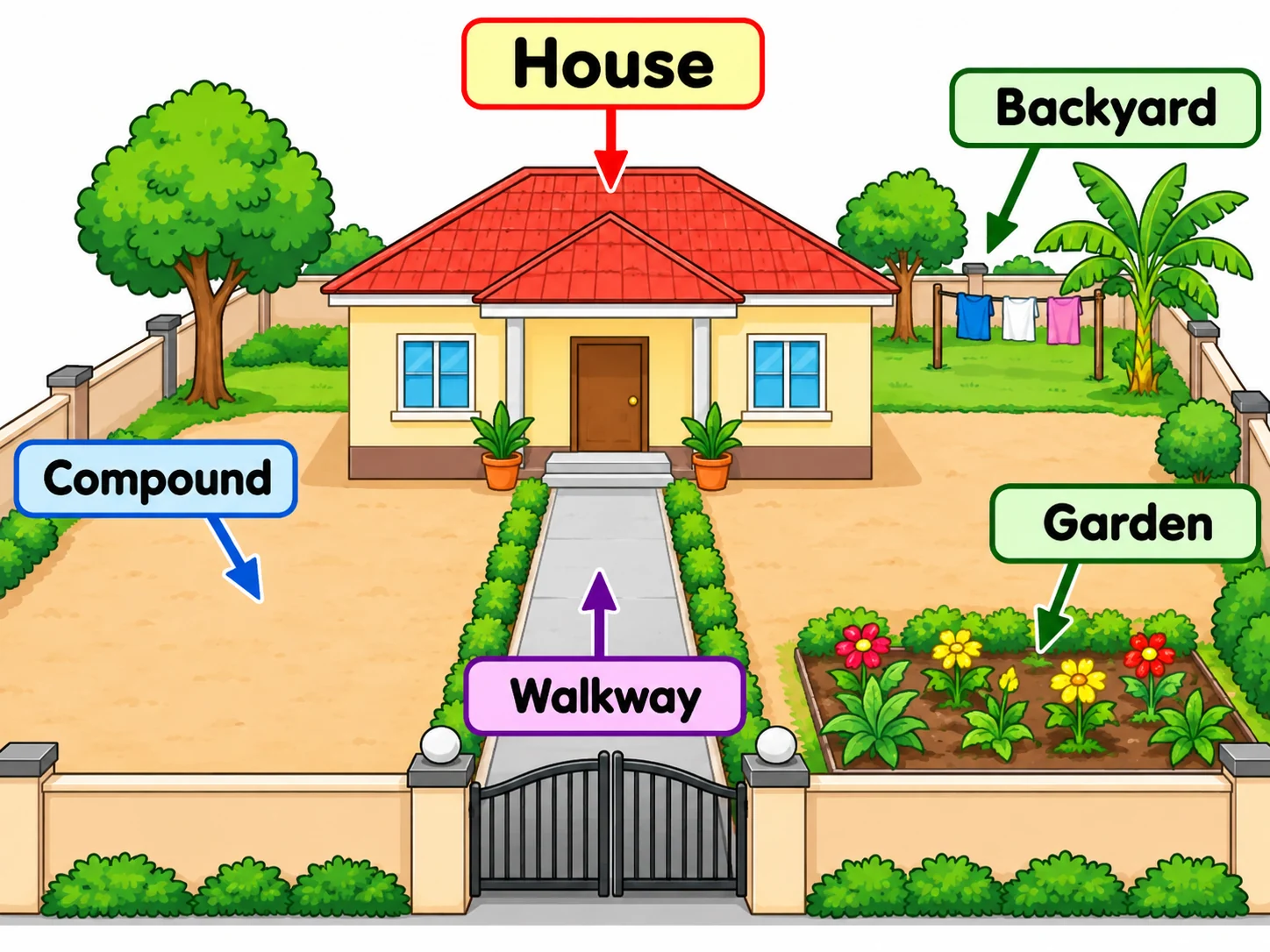
The home surroundings are the places around our home.
They may include:
- The compound.
- The front of the house.
- The backyard.
- The walkway.
- The garden.
- The drainage area.
- Other open spaces around the house.
The inside of the home and the surroundings should be kept clean.
Home and Its Surroundings
Meaning of Dirt
Dirt is anything that makes a place look unclean or untidy.
Dirt may be found:
- Inside the home.
- In the classroom.
- In the compound.
- On furniture.
- On the floor.
- Around the school.
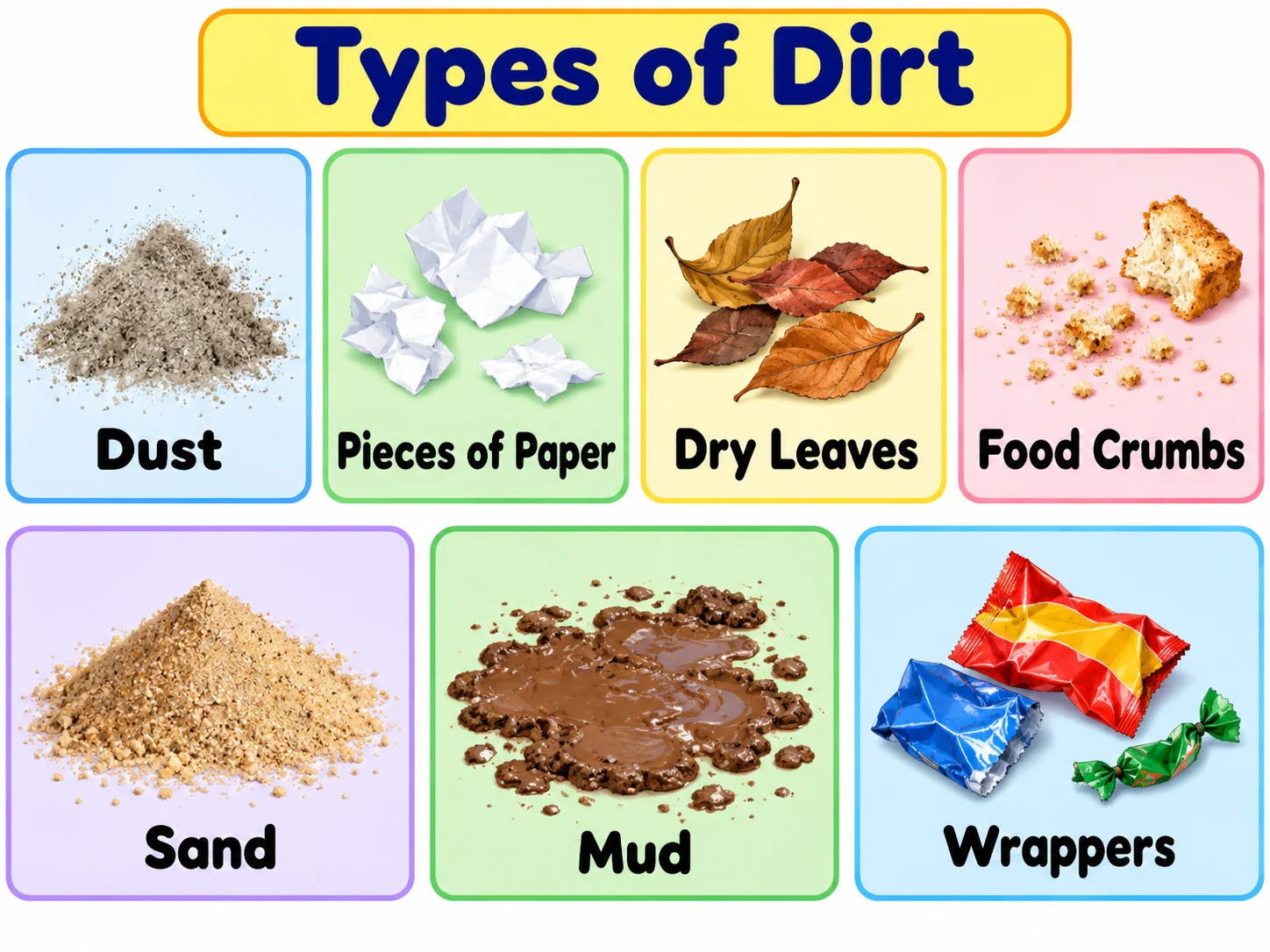
Examples of dirt include:
- Dust.
- Pieces of paper.
- Dry leaves.
- Food crumbs.
- Sand.
- Mud.
- Empty wrappers.
- Small pieces of rubbish.
Types of Dirt
For Primary 1 pupils, common types of dirt can be grouped simply as follows:
|
Type of Dirt |
Example |
|---|---|
|
Dust |
Fine dirt on tables and furniture |
|
Paper litter |
Pieces of paper on the floor |
|
Leaves |
Dry leaves around the compound |
|
Food dirt |
Crumbs or food pieces |
|
Sand |
Loose sand carried into a room |
|
Mud |
Wet soil carried by shoes |
|
Wrappers |
Empty biscuit or sweet wrappers |
Dust
Dust is very fine dirt that may settle on things.
Dust may settle on:
- Tables.
- Chairs.
- Shelves.
- Windows.
- Television stands.
- Books.
- Other surfaces.
Sometimes we may not notice dust until we look closely or wipe the surface.
How Dust Gets Into the Home
Dust may enter the home through:
- Open doors.
- Open windows.
- Shoes.
- Wind.
- Movement around the compound.
That is why surfaces should be cleaned regularly.
Paper Litter
Pieces of paper may make a place untidy.
Examples are:
- Used writing paper.
- Torn paper.
- Empty paper packets.
Paper should not be thrown on the floor.
Suitable waste paper should be placed in a:
- Waste-paper basket.
- Waste bin.
Dry Leaves
Dry leaves may fall from trees around the home.
They can collect:
- In the compound.
- Near the doorway.
- Along the walkway.
- In the garden.
Dry leaves can be gathered by sweeping or raking where appropriate.
Food Crumbs
Small pieces of food may fall:
- On the dining table.
- On the floor.
- Around the eating area.
They should be cleaned after eating.
Sand and Mud
Sand and mud may be carried into the home by shoes and feet.
We can help reduce this by:
- Cleaning muddy footwear.
- Using a doormat.
- Sweeping the floor when necessary.
Ways of Removing Dirt
There are different ways of cleaning dirt.
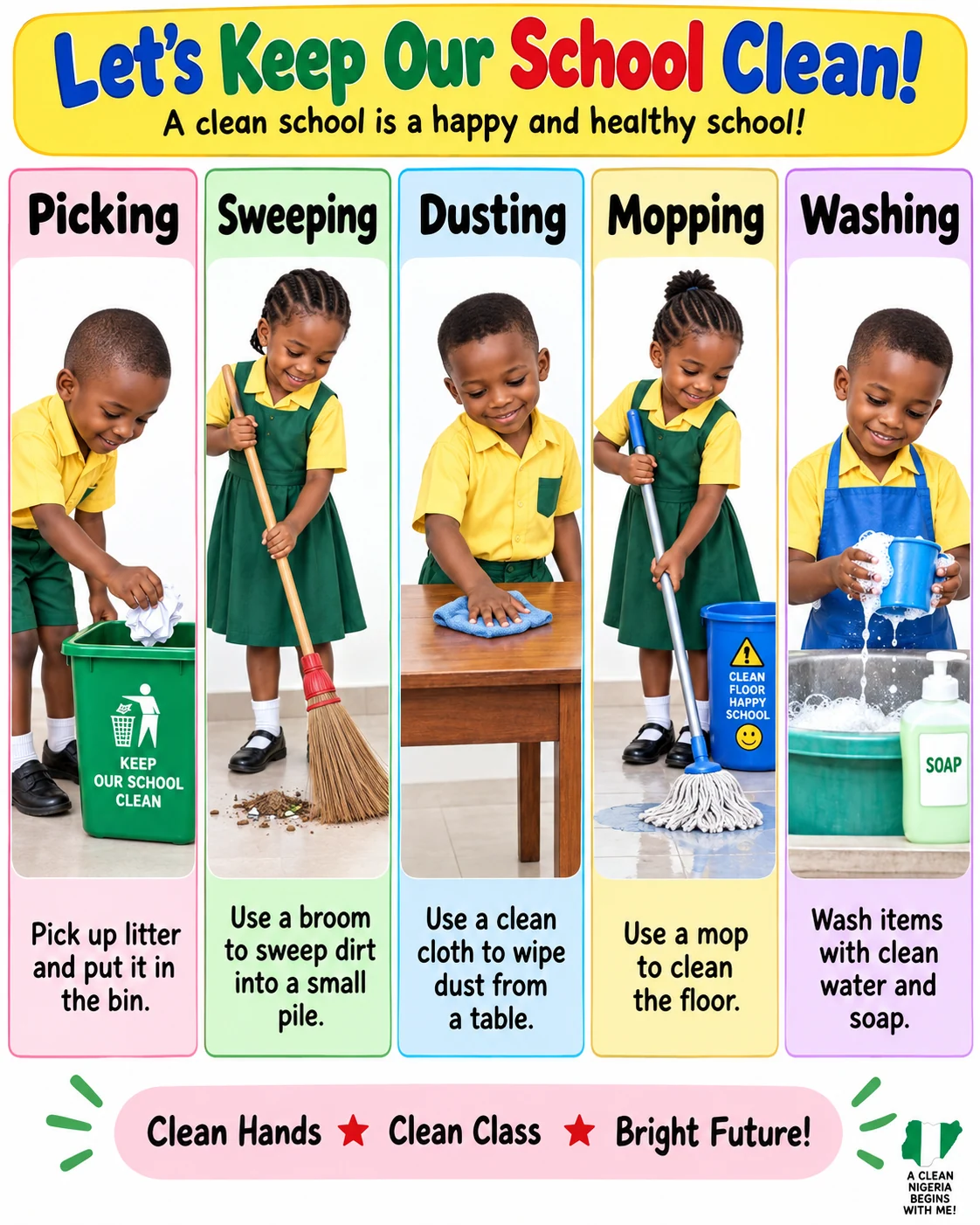
Simple methods include:
- Picking.
- Sweeping.
- Dusting.
- Mopping.
- Washing.
This week’s lesson focuses mainly on picking, sweeping and dusting.
Cleaning Methods at a Glance
|
Cleaning Method |
What We Remove |
|---|---|
|
Picking |
Pieces of paper and safe dry litter |
|
Sweeping |
Dust, sand, leaves and light dirt |
|
Dusting |
Dust from furniture and surfaces |
|
Mopping |
Dirt from suitable floors |
|
Washing |
Dirt from washable items and surfaces |
Picking
Picking means using the hand, or a suitable tool, to collect safe pieces of rubbish.
Examples of dirt that may be picked include:
- Clean pieces of paper used for classroom demonstration.
- Empty safe wrappers.
- Dry leaves.
After picking the dirt, put it in the proper waste bin.
Important Safety Rule
Pupils should not pick up:
- Broken glass.
- Razor blades.
- Needles.
- Unknown sharp objects.
- Dirty medical waste.
- Unknown liquids or chemicals.
If a pupil sees any dangerous object, he or she should tell an adult.
Sweeping
Sweeping means using a broom to gather dirt together.
We sweep:
- The floor.
- The classroom.
- The compound.
- The walkway.
- Other suitable places.
Materials Used for Sweeping
We may use:
- Broom.
- Dustpan.
- Waste bin.
Simple Steps in Sweeping
- Get the broom.
- Start from one part of the area.
- Sweep the dirt together into a small pile.
- Use a dustpan to collect the dirt.
- Put the dirt in the waste bin.
- Keep the broom and dustpan properly after use.
Sweeping Sequence
GET THE BROOM
↓
SWEEP THE DIRT
↓
MAKE A SMALL PILE
↓
USE THE DUSTPAN
↓
PUT DIRT IN THE BIN
↓
STORE THE TOOLS
Dusting
Dusting means removing dust from furniture and other suitable surfaces.
We may dust:
- Tables.
- Chairs.
- Shelves.
- Window ledges.
- Some household furniture.
Materials for Dusting
We may use:
- Clean soft cloth.
- Duster.
A duster or cloth used for dusting should be kept clean.
Simple Steps in Dusting
- Get a clean duster or cloth.
- Remove light objects from the surface where necessary.
- Wipe the surface gently.
- Fold or turn the cloth when one part becomes dirty.
- Return safe objects to their proper places.
- Clean or wash the cloth after use where necessary.
- Store it properly.
Simple Dusting Sequence
GET A CLEAN CLOTH
↓
WIPE THE SURFACE
↓
REMOVE DUST
↓
ARRANGE THE AREA
↓
CLEAN AND STORE CLOTH
Sweeping and Dusting Are Different
|
Sweeping |
Dusting |
|---|---|
|
Uses a broom |
Uses a duster or cloth |
|
Cleans floors and compounds |
Cleans tables and other surfaces |
|
Gathers loose dirt |
Removes fine dust |
|
Dirt is collected with a dustpan |
Cloth collects the dust |
Cleaning Tools and Their Uses
|
Cleaning Tool |
Use |
|---|---|
|
Broom |
Sweeping |
|
Dustpan |
Collecting swept dirt |
|
Waste bin |
Holding rubbish |
|
Duster |
Removing dust |
|
Cleaning cloth |
Wiping surfaces |
|
Mop |
Cleaning suitable floors |
|
Rake |
Gathering leaves outdoors |
Proper Disposal of Dirt
After cleaning, dirt should not be left in another part of the compound.
Suitable rubbish should be put in the correct:
- Waste basket.
- Waste bin.
We should not:
- Throw rubbish through the window.
- Throw waste on the road.
- Leave swept dirt in the walkway.
- Hide rubbish under furniture.
Good and Poor Cleaning Habits
|
Good Cleaning Habits |
Poor Cleaning Habits |
|---|---|
|
Putting rubbish in a bin |
Throwing rubbish on the floor |
|
Sweeping dirt properly |
Sweeping dirt under furniture |
|
Dusting with a clean cloth |
Using a very dirty cloth |
|
Returning tools after use |
Leaving tools on the walkway |
|
Keeping surroundings neat |
Scattering waste around |
|
Reporting dangerous waste |
Picking up sharp objects carelessly |
Why We Keep Our Home and Surroundings Clean
Keeping our surroundings clean:
- Makes the home look neat.
- Makes the surroundings pleasant.
- Reduces dirt.
- Helps us find things easily.
- Reduces unpleasant smells.
- Helps keep walkways clear.
- Teaches us good habits.
Everyone should help to keep the home clean according to his or her age and ability.
What a Primary 1 Pupil Can Do
A Primary 1 pupil may safely help by:
- Putting paper into a waste bin.
- Arranging books.
- Putting toys away.
- Dusting a low table with a clean cloth.
- Sweeping a small safe area under supervision.
- Picking clean demonstration litter.
- Keeping personal belongings properly.
- Telling an adult about dangerous dirt or objects.
What Pupils Should Leave for Adults
Children should ask adults to handle:
- Broken glass.
- Sharp metal.
- Razor blades.
- Heavy objects.
- Strong cleaning chemicals.
- Deep drains.
- Dangerous cutting tools.
Practical Classroom Activity
The teacher may prepare a safe cleaning practice area.
The teacher can place:
- Clean pieces of paper.
- Dry leaves.
- A little clean sand.
Pupils can practise:
- Picking paper.
- Sweeping leaves and sand.
- Using a dustpan.
- Putting waste into a bin.
- Dusting a table.
- Returning cleaning tools to their proper places.
The teacher should supervise the activity throughout.
Simple Clean-Surroundings Rule
Pupils can remember:
SEE DIRT
↓
CLEAN IT SAFELY
↓
USE THE BIN
↓
STORE THE TOOLS
↓
KEEP IT NEAT
F: LESSON PRESENTATION
F1: Teachers’ Activities
- Revises the previous practical lesson on cleaning the school toilet.
- Displays pictures of clean and dirty surroundings.
- Explains the meaning of home surroundings.
- Introduces the meaning and examples of dirt.
- Shows safe examples of paper, leaves, dust and sand.
- Displays a broom, dustpan, duster, cloth and waste bin.
- Explains the use of each cleaning material.
- Demonstrates how to pick safe litter properly.
- Demonstrates the correct way of sweeping.
- Demonstrates how to use a dustpan.
- Demonstrates how to dust a table with a clean cloth.
- Guides pupils through a simple supervised cleaning activity.
- Explains the proper disposal of rubbish.
- Discusses dangerous objects pupils should not pick up.
- Asks oral questions and corrects pupils where necessary.
F2: Pupils’ Activities
- Mention what they learnt in the previous lesson.
- Identify clean and dirty surroundings from pictures.
- Explain dirt in simple words.
- Identify examples of dirt.
- Identify cleaning materials.
- State the use of each cleaning material.
- Demonstrate picking safe practice litter.
- Practise sweeping under supervision.
- Practise using a dustpan.
- Demonstrate dusting a safe classroom surface.
- Put sample rubbish into the waste bin.
- Mention dangerous objects that should be reported to an adult.
- State ways of keeping their homes and school surroundings clean.
- Answer the teacher’s questions.
G: CONCLUSION
The teacher revises the meaning of home surroundings, common types of dirt and simple ways of removing dirt.
The teacher reminds pupils that picking, sweeping and dusting are useful ways of keeping the home and school neat.
The teacher emphasises that rubbish should be put into a proper waste bin and that young pupils should never pick up sharp or dangerous objects.
Pupils are encouraged to take part in simple, safe and age-appropriate cleaning activities at home and at school.
H: EVALUATION GUIDE
Pupils should be able to answer the following questions:
- What are home surroundings?
- What is dirt?
- Mention five examples of dirt.
- Where can dust be found?
- Mention three ways of removing dirt.
- What do we use for sweeping?
- What do we use a dustpan for?
- What is dusting?
- Mention two materials used for dusting.
- Mention four places that may be swept.
- Mention three surfaces that may be dusted.
- Where should rubbish be put after cleaning?
- Mention three good cleaning habits.
- Mention three dangerous objects pupils should not pick up.
- State four simple ways a Primary 1 pupil can help to keep the home clean.
- What should you do after using a broom or cleaning cloth?
- Complete: Broom is for sweeping, while a duster is for ________.
- Why should we keep our home and surroundings clean?