
TOPIC: SIMPLE TOILET HYGIENE
A: TEACHING AND LEARNING MATERIALS
- Pictures of a clean toilet and a dirty toilet.
- Toilet paper.
- Soap.
- Clean water.
- Waste bin.
- Hand towel.
- Toilet brush for demonstration by the teacher.
- Picture cards showing good and poor toilet habits.
- Chart showing handwashing steps.
- Pupils’ writing books and pencils.
B: REFERENCE MATERIALS
- Scheme of work.
- Recommended Home Economics textbook for Primary 1.
- Online educational resources.
C: PREVIOUS KNOWLEDGE
The pupils have learnt the meaning of a toilet, common types of toilets and the proper way to use a toilet. They also know that hands should be washed after using the toilet.
Previous lesson: Primary 1 Home Economics Third Term Week 1
D: PERFORMANCE OBJECTIVES
By the end of the lesson, pupils should be able to:
- Explain toilet hygiene in simple words.
- Identify a clean and a dirty toilet.
- Mention simple ways of keeping a toilet clean.
- State good habits to practise when using the toilet.
- Mention poor toilet habits that should be avoided.
- Explain why hands should be washed after toilet use.
- Demonstrate simple handwashing steps.
- State what to do when a toilet is dirty, blocked or damaged.
- Identify toilet-cleaning materials that should be handled only by adults.
E: CONTENT
Meaning of Toilet Hygiene
Toilet hygiene means using the toilet properly and keeping the toilet and the area around it clean.
Good toilet hygiene also includes keeping ourselves clean after using the toilet.
We should leave the toilet neat for the next person.
A Clean Toilet
A clean toilet:
- Has a clean floor.
- Has no rubbish scattered around.
- Has the toilet bowl or opening kept clean.
- Has toilet paper properly kept where available.
- Has a waste bin where necessary.
- Has water for cleaning.
- Has soap and water for handwashing where possible.
A Dirty Toilet
A dirty toilet may have:
- Rubbish on the floor.
- Used tissue scattered around.
- A dirty toilet bowl.
- Water spilled carelessly on the floor.
- Bad smell.
- Dirt around the toilet area.
We should not make the toilet dirty.
Clean Toilet and Dirty Toilet
|
Clean Toilet |
Dirty Toilet |
|---|---|
|
Floor is clean |
Floor is dirty |
|
Rubbish is in the bin |
Rubbish is on the floor |
|
Toilet is properly flushed |
Toilet may be left unflushed |
|
Toilet paper is properly kept |
Used tissue may be scattered |
|
Handwashing area is tidy |
Handwashing area may be dirty |
|
Pleasant to use |
Unpleasant to use |

Simple Ways of Keeping the Toilet Clean
We can help maintain toilet hygiene by:
- Using the toilet correctly.
- Flushing a flush toilet after use.
- Putting suitable waste in the correct waste bin.
- Keeping toilet paper off the floor.
- Avoiding spilling water unnecessarily.
- Leaving the toilet area neat.
- Washing the hands after use.
- Reporting a dirty or damaged toilet to an adult.
Simple Toilet Hygiene Rule
USE IT PROPERLY
↓
FLUSH IT
↓
LEAVE IT NEAT
↓
WASH YOUR HANDS

Good Toilet Habits
Good toilet habits include:
- Walking carefully into the toilet.
- Using the toilet bowl or opening properly.
- Cleaning yourself after toilet use.
- Flushing where a flush system is available.
- Putting used tissue in the correct place.
- Washing the hands with soap and clean water.
- Leaving the toilet neat.
- Telling an adult when there is a problem.
Poor Toilet Habits
Poor toilet habits include:
- Playing inside the toilet.
- Throwing tissue on the floor.
- Forgetting to flush.
- Wasting water.
- Leaving the toilet dirty.
- Writing on toilet walls.
- Putting toys or other objects into the toilet.
- Leaving without washing the hands.
- Playing with toilet-cleaning chemicals.
Good and Poor Habits
|
Good Toilet Habits |
Poor Toilet Habits |
|---|---|
|
Flush after use |
Leave toilet unflushed |
|
Wash hands |
Leave without washing hands |
|
Put waste in a bin |
Throw waste on the floor |
|
Walk carefully |
Run and play inside |
|
Report problems |
Ignore broken toilet equipment |
|
Leave the toilet neat |
Leave it dirty |

Flushing the Toilet
A flush toilet should normally be flushed after use.
Flushing helps move waste away from the toilet bowl.
A pupil should:
- Finish using the toilet.
- Clean himself or herself as taught.
- Press the flush button or use the flush handle.
- Check that the toilet has flushed properly.
- Tell an adult if the toilet does not flush.
A child should not keep pressing or playing with the flush button unnecessarily.
Using Toilet Paper Properly
Toilet paper is used for cleaning after using the toilet.
We should:
- Take only what is needed.
- Use it properly.
- Dispose of it in the correct way for the toilet being used.
- Avoid throwing it around the toilet room.
- Avoid wasting it.
Washing the Hands After Toilet Use
Hands should always be washed after using the toilet.
Our hands may pick up dirt and germs while using the toilet.
Handwashing helps keep the hands clean and reduces the spread of germs.
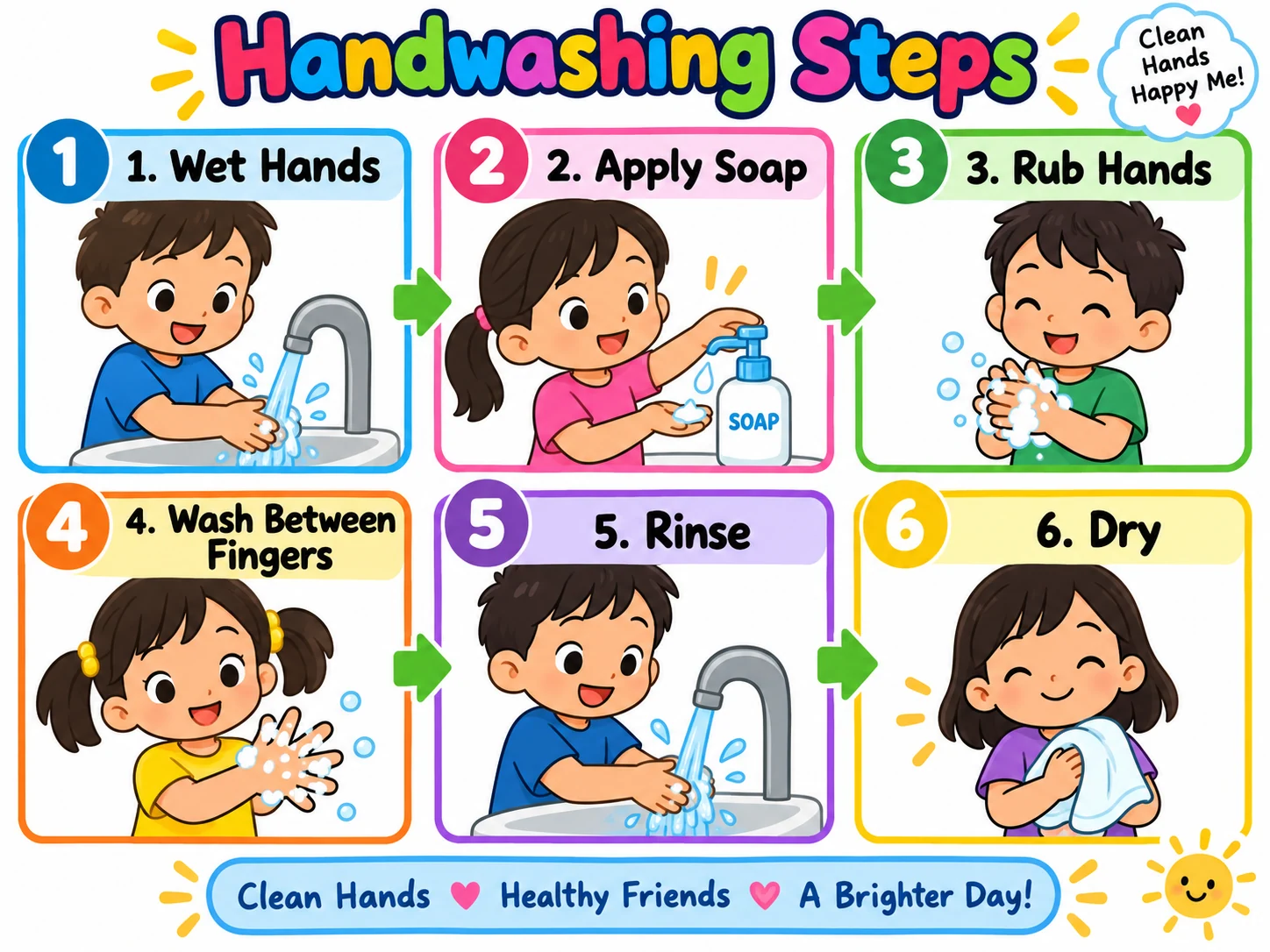
Simple Handwashing Steps
WET HANDS
↓
APPLY SOAP
↓
RUB HANDS WELL
↓
WASH BETWEEN FINGERS
↓
RINSE HANDS
↓
DRY HANDS
Steps for Washing the Hands
- Wet the hands with clean water.
- Apply soap.
- Rub the palms together.
- Rub between the fingers.
- Rub all parts of the hands.
- Rinse with clean water.
- Dry the hands properly.
Why We Wash Our Hands
We wash our hands after using the toilet because it:
- Removes dirt.
- Helps remove germs.
- Keeps the hands clean.
- Helps reduce the spread of illness.
- Helps keep things we touch cleaner.
Keeping the Toilet Floor Safe
Water should not be left all over the toilet floor.
A wet floor can be slippery.
Someone may fall.
Pupils should:
- Avoid splashing water.
- Walk carefully.
- Tell an adult when the floor is very wet.
- Avoid running inside the toilet.
Keeping the Toilet Free from Rubbish
Rubbish should not be thrown on the toilet floor.
Suitable waste should be put into a waste bin.
Examples of things that should not be left on the floor include:
- Used tissue.
- Paper.
- Empty packets.
- Other rubbish.
A clean toilet floor makes the toilet more pleasant and safer to use.
Toilet Cleaning Materials
Adults may use different materials to clean a toilet.
Examples include:
- Toilet brush.
- Broom.
- Mop.
- Bucket.
- Water.
- Cleaning cloth.
- Toilet cleaner.
- Disinfectant.
Safe and Unsafe Materials for Young Children
|
Pupils May Identify |
Adult Handling Is Needed |
|---|---|
|
Bucket |
Bleach |
|
Water |
Strong toilet cleaner |
|
Toilet brush |
Disinfectant chemicals |
|
Broom |
Other strong cleaning chemicals |
|
Cleaning cloth |
Chemical mixtures |
Primary 1 pupils should not handle strong cleaning chemicals.
They should tell an adult when a toilet needs deep cleaning.
Children and Toilet Cleaning
Young pupils can learn good toilet habits without being asked to handle dangerous cleaning products.
A pupil can help by:
- Using the toilet correctly.
- Flushing after use.
- Putting rubbish in the correct place.
- Avoiding unnecessary water spills.
- Washing the hands.
- Reporting dirt or damage to an adult.
An adult should handle strong cleaning chemicals and difficult cleaning jobs.
What to Do When the Toilet Has a Problem
A pupil should tell an adult when:
- The toilet is blocked.
- The toilet cannot flush.
- Water is flowing onto the floor.
- The toilet is badly dirty.
- The door is broken.
- The toilet seat is damaged.
- There is a strong or unusual smell.
- Cleaning chemicals have spilled.
Children should not try to repair a toilet by themselves.
Simple Toilet Safety Rules
Remember:
- Do not run inside the toilet.
- Do not play with the toilet.
- Do not play with water.
- Do not touch cleaning chemicals.
- Do not climb on the toilet.
- Do not leave toys inside the toilet.
- Tell an adult when something is wrong.
- Wash your hands after using the toilet.
Our Simple Toilet Hygiene Promise
Pupils can say:
I will use the toilet properly.
I will leave it neat.
I will not play inside the toilet.
I will wash my hands with soap and clean water.
I will tell an adult when there is a problem.
F: LESSON PRESENTATION
F1: Teachers’ Activities
- Revises the previous lesson on the meaning, types and proper use of toilets.
- Displays pictures of a clean and a dirty toilet.
- Guides pupils to identify the differences between the two pictures.
- Explains toilet hygiene in simple language.
- Demonstrates simple actions such as flushing and putting tissue in the correct place.
- Uses picture cards to discuss good and poor toilet habits.
- Demonstrates the correct handwashing steps.
- Shows pupils safe toilet-cleaning materials such as a bucket, broom and toilet brush.
- Displays pictures of strong cleaning chemicals and explains that they are for adult use.
- Discusses toilet-floor safety and the danger of running on wet floors.
- Explains what pupils should do when a toilet is blocked, damaged or very dirty.
- Guides pupils to recite the Toilet Hygiene Promise.
- Asks oral questions and corrects pupils where necessary.
F2: Pupils’ Activities
- Mention what they learnt about toilets in Week One.
- Identify clean and dirty toilets from pictures.
- Explain toilet hygiene in simple words.
- Mention good toilet habits.
- Identify poor toilet habits from picture cards.
- Demonstrate simple flushing movements.
- Demonstrate handwashing steps.
- Identify simple toilet-cleaning materials.
- Mention cleaning materials that children should not handle.
- State what they should do if the toilet is blocked or damaged.
- Recite the Toilet Hygiene Promise.
- Answer the teacher’s questions.
G: CONCLUSION
The teacher revises the meaning of simple toilet hygiene and reminds pupils that toilet hygiene involves using the toilet properly, leaving it neat and washing the hands afterward.
The teacher stresses that pupils should not play inside the toilet or touch strong cleaning chemicals.
The teacher corrects pupils where necessary and encourages them to practise good toilet habits at home and at school.
H: EVALUATION GUIDE
Pupils should be able to answer the following questions:
- What is toilet hygiene?
- Mention three things you may see in a clean toilet.
- Mention three things you may see in a dirty toilet.
- Mention four ways of keeping a toilet clean.
- What should you do after using a flush toilet?
- Where should rubbish be put?
- Mention four good toilet habits.
- Mention three poor toilet habits.
- Why should we wash our hands after using the toilet?
- Mention the first three steps in washing the hands.
- Why should we not run on a wet toilet floor?
- Mention three toilet-cleaning materials.
- Name two cleaning materials that should be handled by adults.
- What should you do if the toilet cannot flush?
- Should a Primary 1 pupil play with bleach or toilet cleaner?
- Complete: Use the toilet properly, leave it ______ and wash your hands with ______ and clean water.