
TOPIC: THE EYES AND THEIR CARE
A: TEACHING AND LEARNING MATERIALS
- Chart showing the human face and eyes.
- Large picture of a human eye.
- Mirror.
- Clean face towel or soft cloth.
- Clean water.
- Tissue paper.
- Picture cards showing good and poor eye-care habits.
- Pictures of objects that may harm the eyes.
- Pupils’ writing books and pencils.
B: REFERENCE MATERIALS
- Scheme of work.
- Recommended Home Economics textbook for Primary 1.
- Online educational resources.
C: PREVIOUS KNOWLEDGE
The pupils have learnt about the ears and nose, their functions and how to care for them. They also know that every part of the body should be kept clean and protected from injury.
Previous lesson: Primary 1 Home Economics Second Term Week 4
D: PERFORMANCE OBJECTIVES
By the end of the lesson, pupils should be able to:
- Identify the eyes on the human body.
- State the main function of the eyes.
- Identify some simple visible parts around the eye.
- Mention materials used for caring for the eyes.
- State simple ways of keeping the eyes clean and safe.
- Mention things that should not be put into the eyes.
- State some problems that may occur when the eyes are not properly cared for.
- Explain when an adult should be told about an eye problem.
E: CONTENT
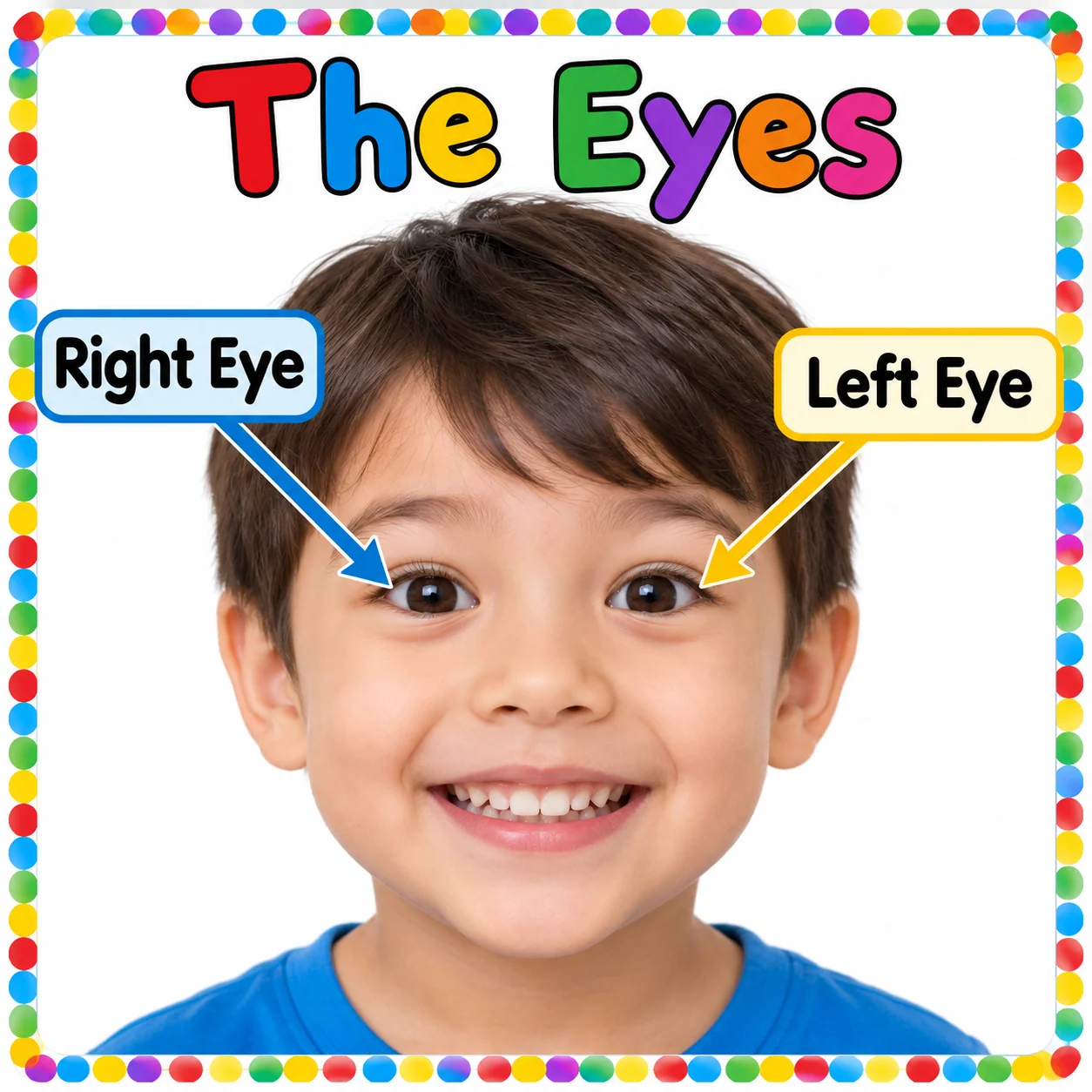
The Eyes
The eyes are important parts of the human body.
They are found on the face.
Most people have two eyes.
We use our eyes mainly for seeing.
With our eyes, we can see:
- People.
- Animals.
- Books.
- Colours.
- Houses.
- Cars.
- Trees.
- Things around us.
The eyes help us when we read, write, walk, play and do many other activities.
Simple Diagram of the Eyes on the Face
Simple Visible Parts of the Eye
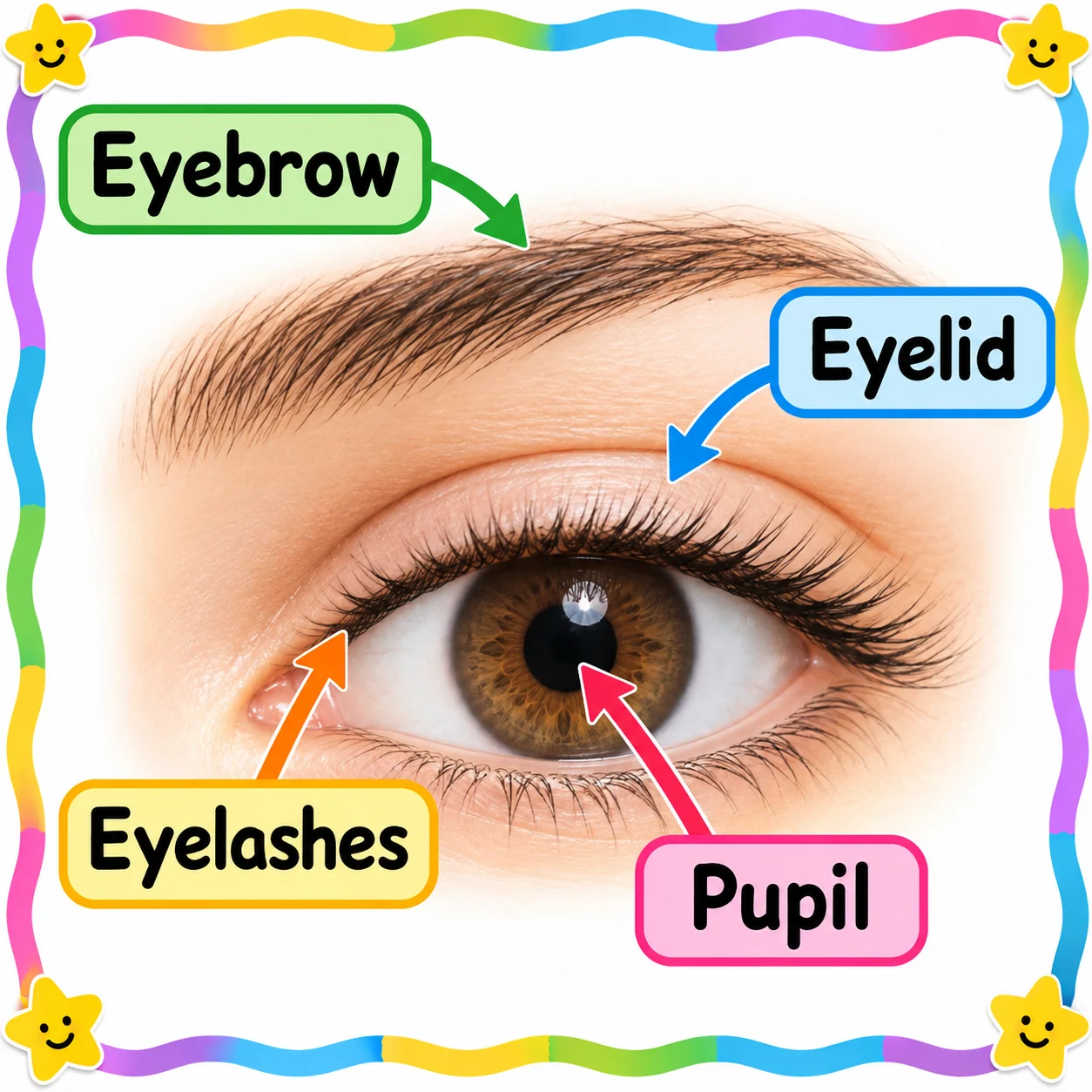
For Primary 1 pupils, some simple parts that can be seen around the eye include:
- Eyebrows
- Eyelids
- Eyelashes
- White part of the eye
- Coloured part of the eye
- Pupil
The teacher does not need to teach the detailed internal structure of the eye at this level.
Simple External Eye Diagram
Function of the Eyes
The main function of the eyes is seeing.
The eyes help us to:
- See people and objects.
- Recognise colours.
- Read books.
- Write in our books.
- Watch where we are going.
- Notice danger around us.
- Enjoy pictures and beautiful things.
Why We Should Care for Our Eyes
The eyes are delicate.
This means they can be hurt easily.
We should care for our eyes so that they remain:
- Clean.
- Comfortable.
- Safe from injury.
Good eye care is an important part of personal hygiene.
Materials Used for Caring for the Eyes
Some simple materials used for caring for the area around the eyes are:
|
Material |
Use |
|---|---|
|
Clean water |
Washing the face and rinsing the eye when necessary |
|
Clean soft cloth |
Gently wiping around the closed eye |
|
Clean face towel |
Drying the face after washing |
|
Tissue paper |
Gently wiping tears or the area around the eye |
|
Mirror |
Looking at the face and eye area |
These materials should always be clean.
Keeping the Area Around the Eyes Clean
The area around the eyes should be kept clean.
We can do this by:
- Washing the face with clean water.
- Using a clean towel to dry the face.
- Wiping tears with a clean tissue or cloth.
- Washing the hands before touching the face.
- Keeping dirty hands away from the eyes.
If the eyelids need to be cleaned, a clean cloth and water can be used gently around the closed eye. Current child eye-care guidance also stresses washing the hands before caring for a child’s eye.
Do Not Rub the Eyes with Dirty Hands
Our hands touch many things during the day.
They may carry dirt and germs.
We should not rub our eyes with dirty hands.
If the eye feels itchy:
- Do not rub it roughly.
- Tell an adult.
- Wash the hands.
- Allow an adult to help if necessary.
Things We Should Not Put into the Eyes
We should never put objects into our eyes.
Examples include:
- Fingers.
- Pencils.
- Pens.
- Sticks.
- Pins.
- Sand.
- Soap.
- Hair cream.
- Unknown liquids or medicines.
Sharp objects can injure the eye.
Protecting the Eyes During Play
Children should be careful when playing.
We should not:
- Throw sand at people.
- Point sticks at another person’s face.
- Play with sharp objects near the eyes.
- Spray unknown liquids towards another person’s face.
We should play safely.
Do Not Look Directly at the Sun
We should not stare directly at the bright sun.
Very bright light can harm the eyes.
Pupils should also avoid staring directly at very bright lamps or other strong sources of light.
Reading and Writing Safely
When reading or writing:
- Use enough light.
- Sit properly.
- Hold the book where it can be seen comfortably.
- Do not bring the book extremely close to the eyes.
Good lighting makes reading and writing more comfortable.
If Dust Enters the Eye
Sometimes dust or another small particle may enter the eye.
A pupil should:
- Avoid rubbing the eye.
- Tell an adult.
- Use clean water to rinse the eye when an adult helps.
Health guidance recommends clean water for rinsing an eye when something gets into it and advises against rubbing the eye after an injury.
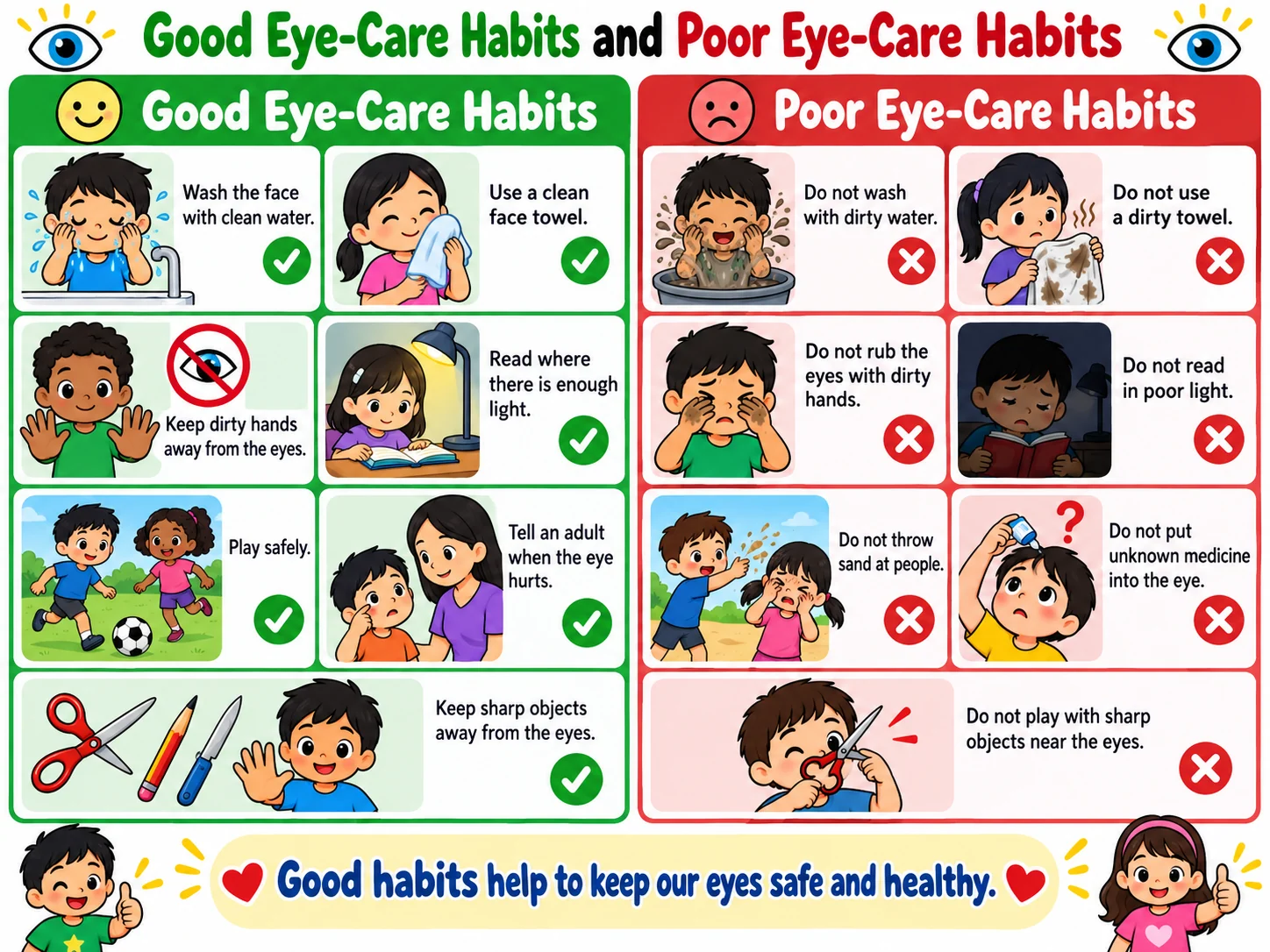
Good and Poor Eye-Care Habits
|
Good Eye-Care Habits |
Poor Eye-Care Habits |
|---|---|
|
Washing the face with clean water |
Washing with dirty water |
|
Using a clean face towel |
Using a dirty towel |
|
Keeping dirty hands away from the eyes |
Rubbing the eyes with dirty hands |
|
Reading where there is enough light |
Struggling to read in very poor light |
|
Playing safely |
Throwing sand at other pupils |
|
Telling an adult when the eye hurts |
Putting unknown medicine into the eye |
|
Keeping sharp objects away |
Playing with sharp objects near the eyes |
VISUAL TO INSERT: A two-column classroom poster titled Good Eye-Care Habits and Poor Eye-Care Habits, with simple pictures showing the actions in the table.
Problems That May Affect the Eyes
When the eyes are irritated, injured or not properly cared for, a person may have:
- Red eyes.
- Itchy eyes.
- Watery eyes.
- Pain.
- Swelling.
- Difficulty seeing clearly.
Pupils should not try to treat eye problems themselves.
When to Tell an Adult
A pupil should tell a parent, guardian, teacher or another responsible adult when:
- The eye is painful.
- The eye becomes very red.
- Something enters the eye.
- The eye is injured.
- The eye becomes swollen.
- The pupil cannot see properly.
- There is unusual discharge from the eye.
An injured child’s eye should be taken seriously, especially when pain or changes in vision are present.
Important Eye-Care Rules
Remember:
- Keep the face and eye area clean.
- Wash your hands regularly.
- Do not rub the eyes with dirty hands.
- Use only clean towels and tissues.
- Keep sharp objects away from the eyes.
- Do not throw sand at people.
- Do not stare directly at the sun.
- Tell an adult if the eye hurts.
- Never put unknown medicine or substances into the eyes.
F: LESSON PRESENTATION
F1: Teachers’ Activities
- Revises the previous lesson on care of the ears and nose.
- Displays a chart showing the human face and asks pupils to identify the eyes.
- Guides pupils to count the two eyes.
- Explains that the main function of the eyes is seeing.
- Uses familiar classroom objects to demonstrate things that pupils can see.
- Shows pupils a simple external diagram of the eye.
- Displays clean water, face towel, soft cloth and tissue paper.
- Explains how these materials can be used safely around the eyes.
- Demonstrates gentle wiping around a closed eye using a clean cloth.
- Shows picture cards of good and poor eye-care habits.
- Discusses objects and actions that may harm the eyes.
- Explains what pupils should do if dust enters an eye or an eye becomes painful.
- Asks simple oral questions and corrects pupils where necessary.
F2: Pupils’ Activities
- Point to their eyes.
- Count their two eyes.
- Mention things they can see around the classroom.
- State the main function of the eyes.
- Identify the materials displayed by the teacher.
- Mention ways of keeping the eyes clean and safe.
- Identify good and poor eye-care habits from pictures.
- Mention objects that should be kept away from the eyes.
- State what they should do if something enters the eye.
- Mention situations in which an adult should be told.
- Answer the teacher’s questions.
G: CONCLUSION
The teacher revises the eyes, their main function and simple ways of caring for them.
The teacher reminds pupils to keep dirty hands away from their eyes, use clean materials around the face, avoid sharp objects and tell an adult whenever an eye is painful or injured.
The teacher corrects pupils where necessary and encourages them to practise good eye-care habits at home and at school.
H: EVALUATION GUIDE
Pupils should be able to answer the following questions:
- How many eyes do most people have?
- What is the main function of the eyes?
- Mention three things you can see with your eyes.
- Mention three materials used for caring for the area around the eyes.
- Why should we not rub our eyes with dirty hands?
- Mention three things that should not be put into the eyes.
- Should we look directly at the bright sun?
- Mention two ways of protecting the eyes while playing.
- What should you do if dust enters your eye?
- Mention three good eye-care habits.
- Mention two poor eye-care habits.
- What should you do if your eye becomes painful?
- Mention two signs of an eye problem.