
TOPIC: IMPORTANCE OF GOOD FOOD AND GOOD EATING HABITS
A: TEACHING AND LEARNING MATERIALS
- Pictures or samples of common healthy foods.
- Pictures of children eating correctly and incorrectly.
- Plate, spoon, cup and other clean eating utensils.
- Soap and clean water for handwashing demonstration.
- Pictures of balanced meals.
- Fruits such as orange, banana and pawpaw.
- Chart showing good eating habits.
- Food picture cards for classroom activities.
B: REFERENCE MATERIALS
- Primary 2 Home Economics Scheme of Work (All Three Terms)
- Recommended Home Economics textbook for Primary 2 (school-approved edition)
- World Health Organization – Food Safety
- World Health Organization – Healthy Diet
C: PREVIOUS KNOWLEDGE
Pupils have learnt about food, food groups, classes of food and balanced diet. They can mention carbohydrate foods, protein foods, fruits, vegetables, fats and oils.
They also know that eating different kinds of food helps the body get energy, grow and remain healthy. In this lesson, pupils will learn why good food is important and the proper habits to practise when eating.
Previous Lesson: Primary 2 Home Economics First Term – Week 9: BALANCED DIET AND CLASSES OF FOOD
D: PERFORMANCE OBJECTIVES
By the end of the lesson, pupils should be able to:
- explain the meaning of good food;
- state at least five reasons why eating good food is important;
- explain the meaning of good eating habits;
- mention at least eight good eating habits;
- identify good and bad eating habits from pictures;
- demonstrate proper handwashing before eating;
- demonstrate correct behaviour while eating; and
- state simple table manners suitable for children.
E: CONTENT
Meaning of Good Food
Good food is food that is clean, safe to eat and contains useful nutrients needed by the body.
Good food should be:
- clean;
- properly prepared;
- fresh or properly stored;
- safe to eat; and
- nutritious.
Examples include properly prepared rice, beans, yam, fish, eggs, vegetables, fruits and other suitable foods.
Good food does not have to be expensive. Many common local foods can provide the nutrients children need when they are combined properly.
Importance of Eating Good Food
Good food is important to both children and adults.
1. Good Food Gives Us Energy
We need energy for our daily activities.
Food gives us energy to:
- walk;
- run;
- play;
- read;
- write;
- exercise; and
- help with simple activities at home.
Foods such as rice, yam, garri, maize, bread and potatoes mainly provide energy.
2. Good Food Helps Children Grow
Children are still growing.
Foods such as beans, fish, meat, eggs and milk provide nutrients that support growth and the building of body tissues.
Eating a variety of nutritious foods helps children grow properly.
3. Good Food Helps Repair the Body
The body sometimes needs to repair worn or damaged tissues.
Protein foods such as:
- beans;
- fish;
- meat;
- eggs;
- milk; and
- groundnuts
help with growth and repair.
4. Good Food Supports Good Health
Fruits, vegetables and other nutritious foods provide vitamins, minerals and other substances the body needs.
Examples include:
- oranges;
- pawpaw;
- mangoes;
- carrots;
- tomatoes;
- spinach; and
- pumpkin leaves.
Eating a variety of nutritious foods helps the body function properly.
5. Good Food Helps Us Learn and Take Part in Activities
A hungry or poorly fed child may find it difficult to concentrate on school activities.
Suitable meals give children energy for:
- listening;
- reading;
- writing;
- answering questions; and
- taking part in play and exercise.
6. Good Food Helps Us Develop Healthy Eating Patterns
Children who learn to eat different kinds of nutritious food can develop good habits that may continue as they grow older.
Eating fruits, vegetables, protein foods and energy foods in suitable amounts is better than depending on only one type of food.
Good Food and the Body
|
What Good Food Does |
Simple Example |
|
Gives energy |
Helps us run, play and learn |
|
Supports growth |
Helps children grow |
|
Builds and repairs the body |
Protein foods help body tissues |
|
Supports good health |
Fruits and vegetables provide useful nutrients |
|
Helps us stay active |
Gives the body fuel for daily activities |
Meaning of Good Eating Habits
Good eating habits are the proper things we do before, during and after eating.
Good eating habits help us eat safely, cleanly and politely.
Examples include washing our hands, sitting properly, using clean utensils and chewing food well.
Good Habits Before Eating
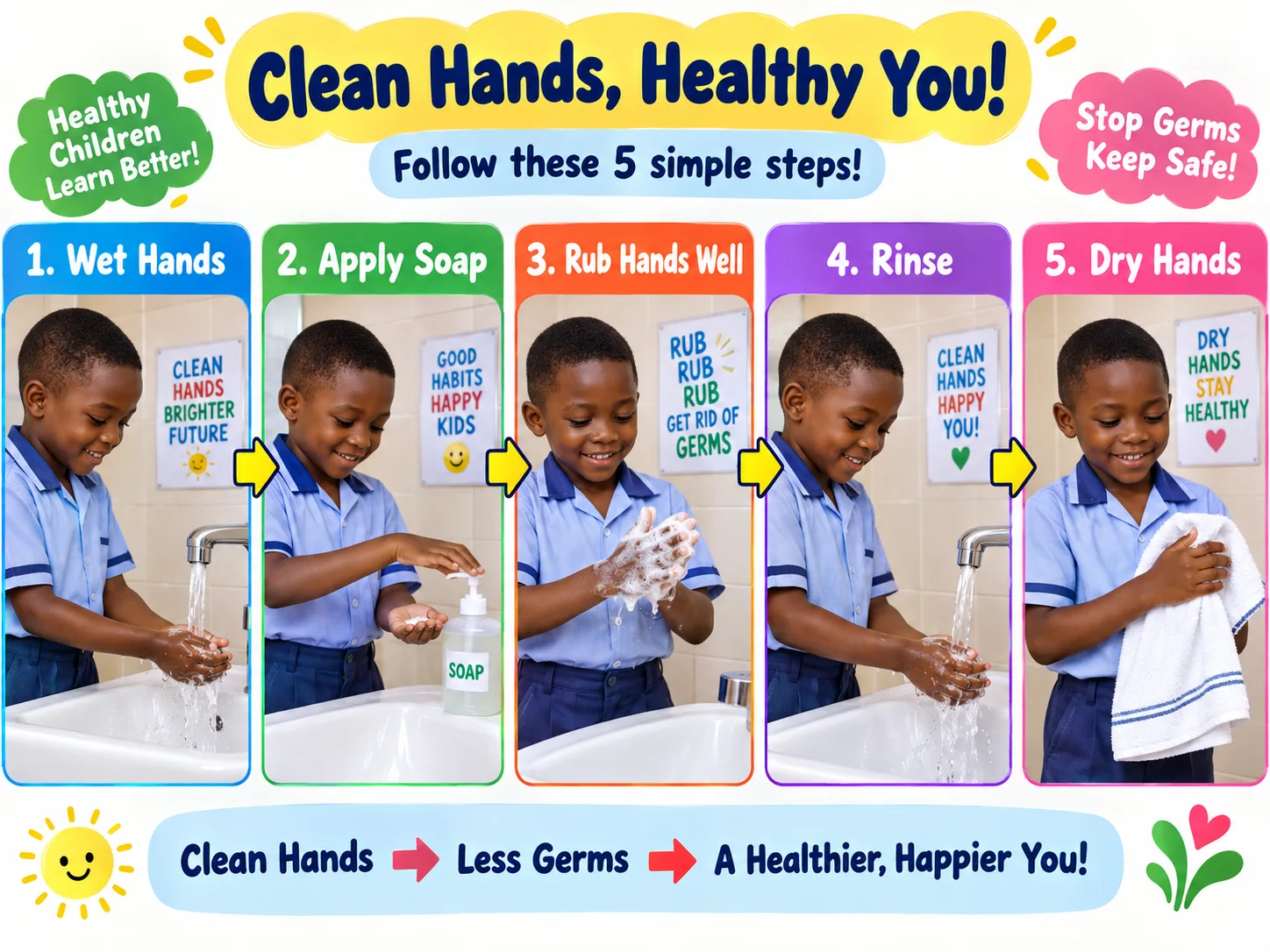
1. Wash Your Hands
We should wash our hands with soap and clean water before eating.
Our hands may carry dirt from:
- playing;
- touching objects;
- writing;
- using the toilet; and
- other activities.
Washing the hands helps prevent dirt and harmful germs from getting into our food and mouth.
2. Use Clean Plates, Cups and Cutlery
We should eat with clean utensils.
Examples include:
- plates;
- bowls;
- spoons;
- forks where appropriate; and
- cups.
Dirty utensils can make food unsafe.
3. Make Sure the Food Is Clean and Safe
Before eating, food should be properly prepared and safe.
Do not eat food that:
- smells badly spoiled;
- has obvious mould;
- has been contaminated with dirt;
- has been left where flies and pests can easily reach it; or
- has been declared unsafe by a responsible adult.
Children should ask an adult when they are unsure whether food is safe.
Good Habits While Eating
1. Sit Properly
Sit comfortably while eating.
Do not run around with food in your mouth.
A calm sitting position makes eating safer and more orderly.
2. Eat Slowly
Do not rush your food.
Take a suitable amount at a time and eat calmly.
3. Chew Food Properly
Food should be chewed well before swallowing.
Chewing breaks food into smaller pieces and makes it easier to swallow.
4. Do Not Talk With Food in Your Mouth
Finish chewing and swallow before speaking.
Talking with food in the mouth is poor table behaviour and may also cause food to come out of the mouth.
5. Take Small Bites
Avoid putting too much food into the mouth at once.
Small bites are easier to chew and swallow.
6. Drink Clean Water
Clean drinking water is an important part of healthy eating.
Drink water when needed and avoid drinking from dirty cups or unsafe sources.
7. Avoid Playing With Food
Food should be eaten properly and not thrown around.
We should also avoid unnecessary food wastage.
8. Eat a Suitable Amount
Eat enough food for your needs.
Do not deliberately overfill your mouth or continue eating until you become very uncomfortable.
Parents and caregivers can guide children on suitable portions.
Good Habits After Eating
After eating, pupils should:
- wash or wipe the mouth where necessary;
- wash the hands;
- take plates and cups to the proper place;
- keep leftover food properly with the help of an adult;
- clean food spills;
- throw waste into the correct waste bin; and
- leave the eating area neat.
Good and Bad Eating Habits
|
Good Eating Habits |
Bad Eating Habits |
|
Washing hands before eating |
Eating with dirty hands |
|
Using clean utensils |
Using dirty plates or cups |
|
Sitting properly |
Running around while eating |
|
Chewing food well |
Swallowing large pieces quickly |
|
Taking small bites |
Stuffing too much food into the mouth |
|
Finishing chewing before speaking |
Talking with food in the mouth |
|
Drinking clean water |
Drinking unsafe water |
|
Keeping the eating area clean |
Throwing food waste on the floor |
|
Eating different nutritious foods |
Depending on only one food all the time |
Simple Table Manners
Table manners are polite ways of behaving when we eat.
Some simple table manners for children are:
- Wash your hands before eating.
- Sit properly.
- Wait patiently when food is being served.
- Use your spoon or other utensil correctly.
- Take small bites.
- Chew quietly.
- Do not speak with food in your mouth.
- Avoid reaching roughly across another person’s plate.
- Say “please” when asking for something.
- Say “thank you” when appropriate.
- Avoid wasting food.
- Leave the eating area clean.
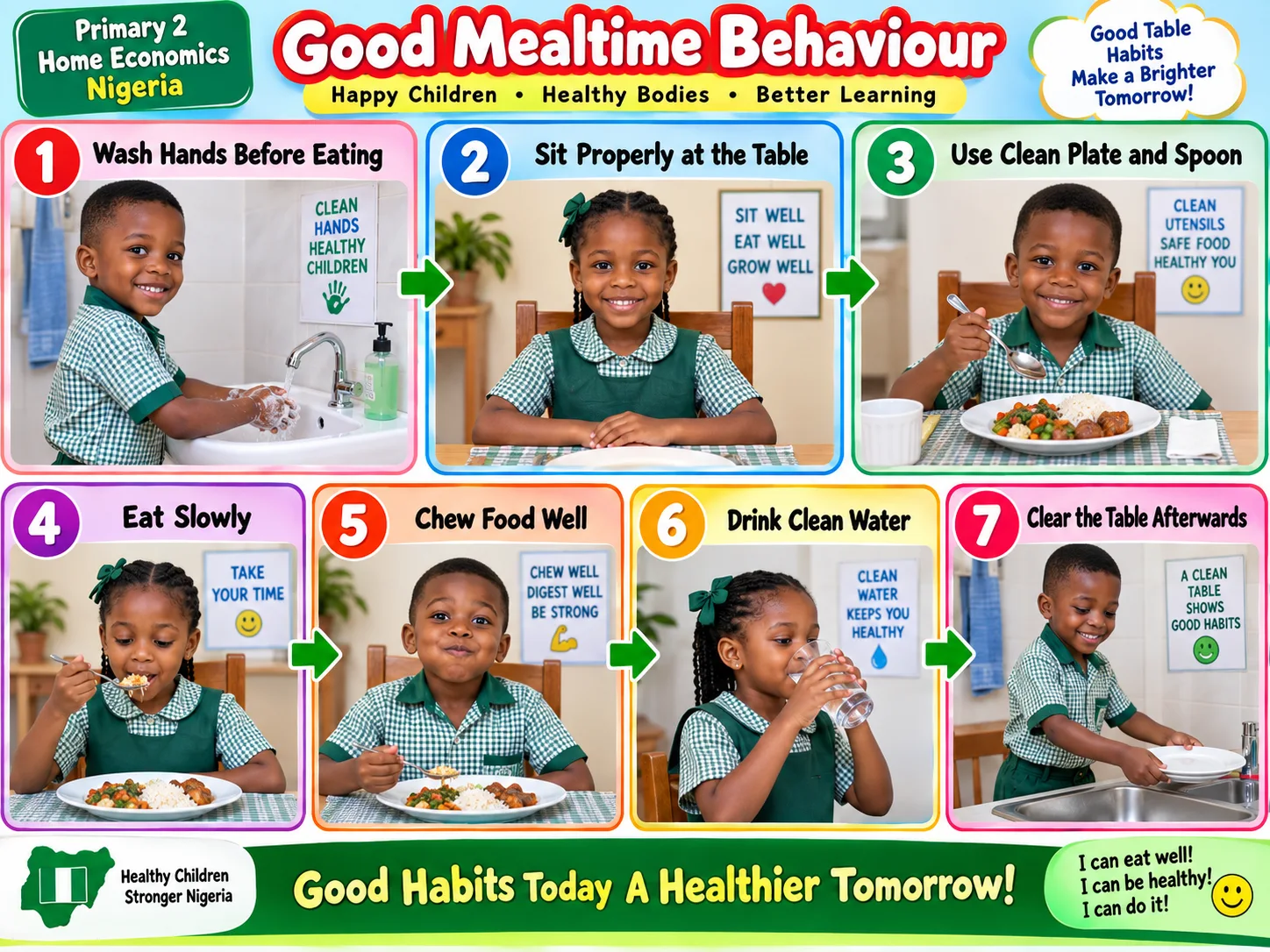
Steps for Eating a Meal Properly
A simple eating routine can be shown as:
Wash Hands → Sit Properly → Eat Slowly → Chew Well → Drink Clean Water → Clear the Table → Wash Hands
Eating Meals at Suitable Times
Children should eat meals at suitable times according to the family routine.
Common meals include:
Breakfast
Breakfast is the meal eaten in the morning.
Examples may include:
- pap and milk;
- bread and egg;
- yam and egg;
- rice and beans; or
- other suitable family foods.
Lunch
Lunch is usually eaten around the middle part of the day.
Dinner
Dinner is usually eaten later in the day or evening.
Regular meals help provide energy for daily activities.
Good Food Hygiene
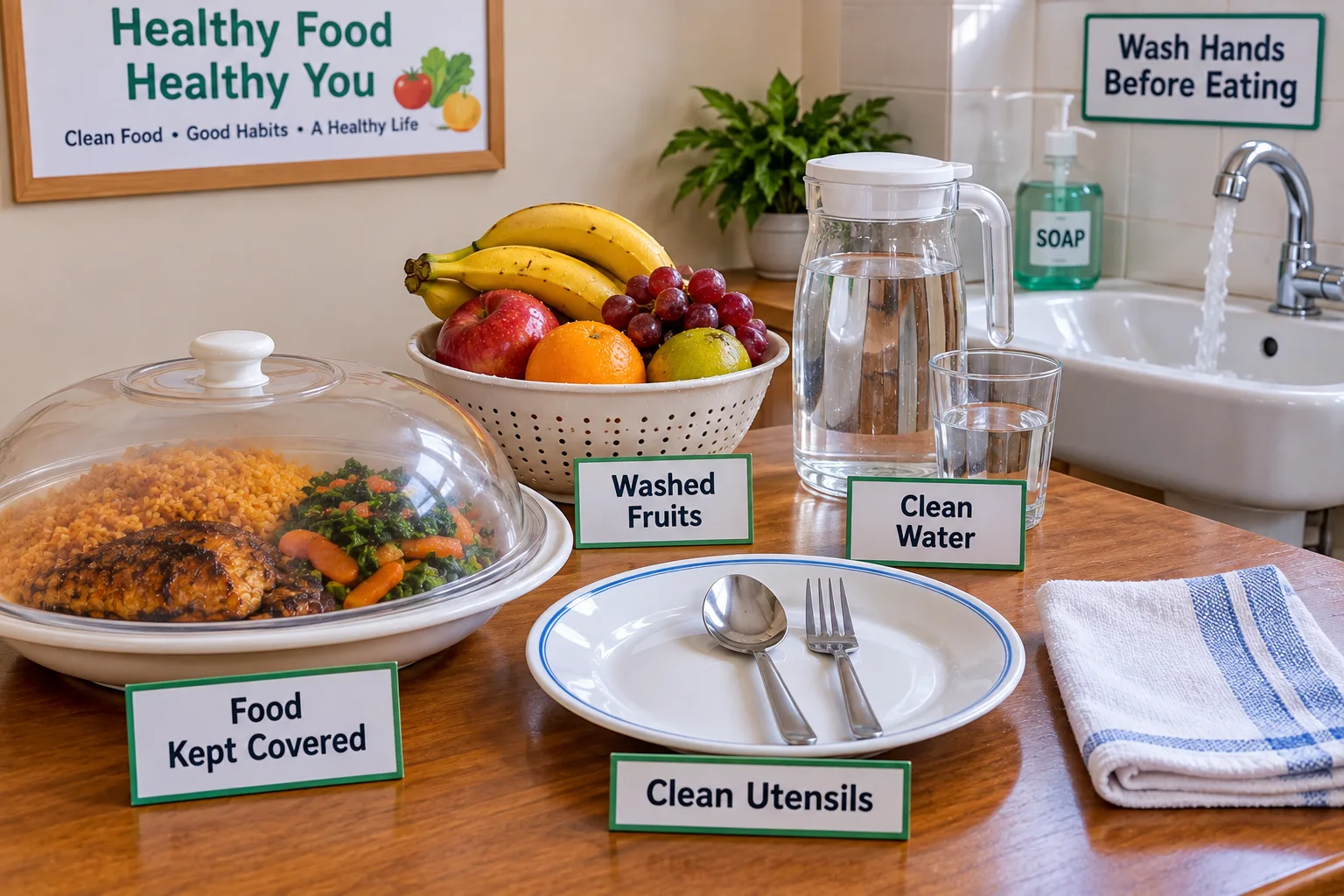
Food hygiene means keeping food, utensils and eating areas clean and safe.
Good food hygiene includes:
- washing hands;
- washing fruits where necessary;
- using clean utensils;
- covering food;
- protecting food from flies;
- keeping the eating area clean;
- storing leftover food properly; and
- avoiding spoiled food.
Why We Should Not Eat Spoiled Food
Spoiled food may:
- smell unpleasant;
- change colour;
- develop mould; or
- show other signs that it is no longer safe to eat.
Eating unsafe or contaminated food can make a person sick.
A child should show suspicious food to a responsible adult instead of tasting it.
Remember
Good food is clean, safe and nutritious food.
Eating good food is important because it:
- gives us energy;
- supports growth;
- helps build and repair the body;
- supports good health; and
- helps us take part in school and daily activities.
Good eating habits include:
- washing our hands;
- using clean utensils;
- sitting properly;
- taking small bites;
- chewing food well;
- finishing chewing before speaking;
- drinking clean water; and
- keeping the eating area clean.
F: LESSON PRESENTATION
F1: Teachers’ Activities
- The teacher revises the previous lesson by asking pupils to explain a balanced diet.
- The teacher displays pictures or samples of good foods.
- The teacher asks pupils to identify the foods and state what some of them do for the body.
- The teacher explains the meaning of good food.
- The teacher discusses the importance of eating good food.
- The teacher displays pictures showing correct and incorrect eating behaviour.
- The teacher introduces the meaning of good eating habits.
- The teacher demonstrates proper handwashing before meals.
- The teacher displays a clean plate, cup and spoon and explains why eating utensils should be clean.
- The teacher demonstrates sitting properly and taking small bites.
- The teacher demonstrates chewing food before speaking.
- The teacher discusses simple table manners.
- The teacher explains what pupils should do after eating.
- The teacher displays the chart comparing good and bad eating habits.
- The teacher allows pupils to role-play a proper mealtime.
- The teacher asks questions and corrects pupils where necessary.
F2: Pupils’ Activities
- Pupils recall what they learnt about balanced diet.
- Pupils identify different nutritious foods.
- Pupils state reasons why good food is important.
- Pupils explain good eating habits in simple words.
- Pupils demonstrate washing their hands correctly.
- Pupils identify clean eating utensils.
- Pupils demonstrate sitting correctly for a meal.
- Pupils demonstrate taking small bites and pretending to chew properly.
- Pupils identify good and bad eating habits from pictures.
- Pupils role-play simple table manners.
- Pupils state what they should do after eating.
- Pupils answer oral questions and copy important notes.
G: CONCLUSION
The teacher revises the lesson by asking pupils to mention the importance of good food and some good eating habits.
The teacher reminds pupils that good food helps the body get energy, grow, repair itself and remain healthy.
Pupils are encouraged to wash their hands before eating, use clean utensils, sit properly, eat slowly, chew their food well and keep their eating area clean.
The teacher emphasises that healthy eating is not only about what we eat, but also about how cleanly and properly we eat it.
Next Lesson: Primary 2 Home Economics First Term – Week 11: REVISION OF FIRST TERM WORK
H: EVALUATION GUIDE
Oral Questions
- What is good food?
- Mention five reasons why eating good food is important.
- What are good eating habits?
- Mention six good eating habits.
- Why should we wash our hands before eating?
- Why should we use clean plates and spoons?
- Why should we chew food properly?
- Should we talk with food in our mouth? Give a reason.
- Mention four things we should do after eating.
- Mention four simple table manners.
Written Exercise
A. Fill in the blanks with suitable words.
- Good food gives the body __________.
- We should wash our __________ before eating.
- We should use clean plates and __________.
- Food should be properly __________ before it is swallowed.
- We should drink clean __________.
B. Write “Good Habit” or “Bad Habit”.
- Washing hands before eating. __________________
- Talking with food in the mouth. __________________
- Sitting properly while eating. __________________
- Throwing food waste on the floor. __________________
- Using clean eating utensils. __________________
- Chewing food properly. __________________
- Eating with dirty hands. __________________
- Clearing the eating area after a meal. __________________
Practical Activity
The teacher arranges a simple pretend dining table with a plate, spoon, cup and picture of a meal.
Pupils should take turns demonstrating:
- washing their hands;
- sitting properly;
- using the eating utensils correctly;
- taking small bites;
- chewing before speaking;
- clearing the eating area after the meal.
The teacher observes and corrects the pupils gently where necessary.
Take-Home Activity
Write eight good eating habits.
Draw and colour a picture showing a child practising good table manners while eating.