
TOPIC: THE HOME
A: TEACHING AND LEARNING MATERIALS
- Picture of a family home.
- Pictures of different types of houses.
- Picture cards showing family members.
- Chart showing activities carried out at home.
- Picture of a clean and tidy home.
- Picture of an untidy home.
- Toy house or simple model of a house.
- Pupils’ writing books and pencils.
B: REFERENCE MATERIALS
- Scheme of work.
- Recommended Home Economics textbook for Primary 1.
- Online educational resources.
C: PREVIOUS KNOWLEDGE
The pupils have learnt about personal health and how to keep the body clean and healthy. They also know that cleanliness is important at home and at school.
Previous lesson: Primary 1 Home Economics Second Term Week 6
D: PERFORMANCE OBJECTIVES
By the end of the lesson, pupils should be able to:
- Explain the meaning of a home in simple words.
- State the importance of a home.
- Mention people who may live in a home.
- Identify some common types of homes.
- Mention activities carried out at home.
- State simple ways of keeping the home clean.
- Mention simple safety rules in the home.
- Explain why household property should be treated with care.
E: CONTENT
Meaning of a Home
A home is a place where a person or family lives.
It is where we:
- Live.
- Eat.
- Sleep.
- Rest.
- Play.
- Keep our belongings.
A house becomes a home when people live there and care for one another.
House and Home
A house is a building where people can live.
A home is the place where a person or family lives and carries out daily activities.
For example:
Tunde lives with his parents and sister in a house.
That house is Tunde’s home.
Simple Diagram of a Home
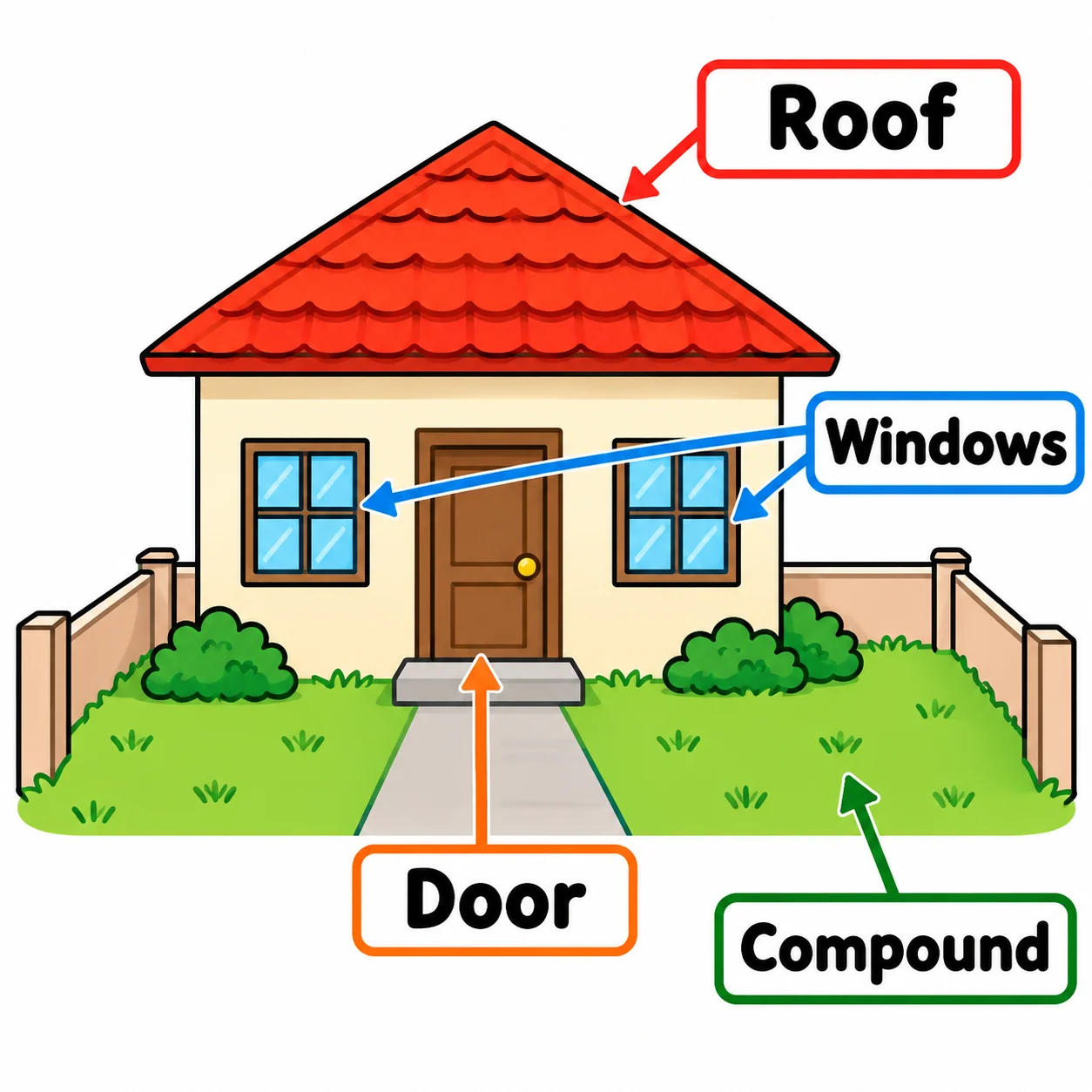
Importance of a Home
A home is important because it gives us a place to:
- Live.
- Sleep and rest.
- Eat our meals.
- Keep our clothes and belongings.
- Stay with our family.
- Protect ourselves from rain, sun and bad weather.
- Carry out many family activities.
The Home Gives Us Shelter
Shelter means a safe place where people can live and be protected from the weather.
A home helps to protect us from:
- Heavy rain.
- Hot sun.
- Strong wind.
- Cold weather.
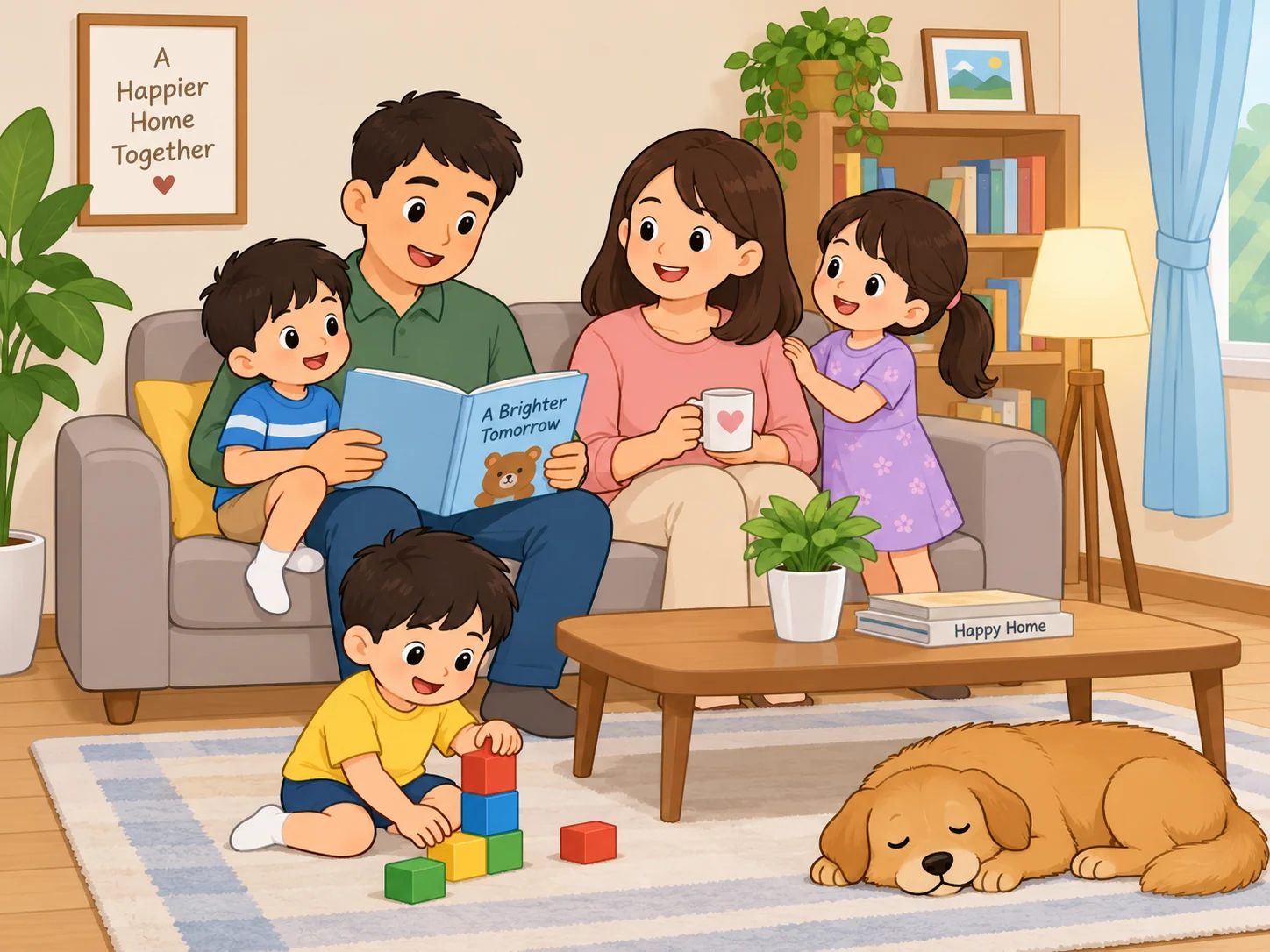
People Who May Live in a Home
Different people may live together in a home.
They may include:
- Father.
- Mother.
- Brother.
- Sister.
- Grandfather.
- Grandmother.
- Other relatives or caregivers.
Not every home has the same people.
Some children may live with parents, grandparents, relatives or guardians.
All homes should be treated with respect.
Family Members at Home
|
Family Member |
Simple Example of What They May Do |
|---|---|
|
Parents or guardians |
Care for the family and home |
|
Children |
Learn, play and help with simple tasks |
|
Older family members |
May guide and help other members |
|
Everyone |
Helps to keep the home peaceful and tidy |
Children should only do tasks that are safe and suitable for their age.
Different Types of Homes
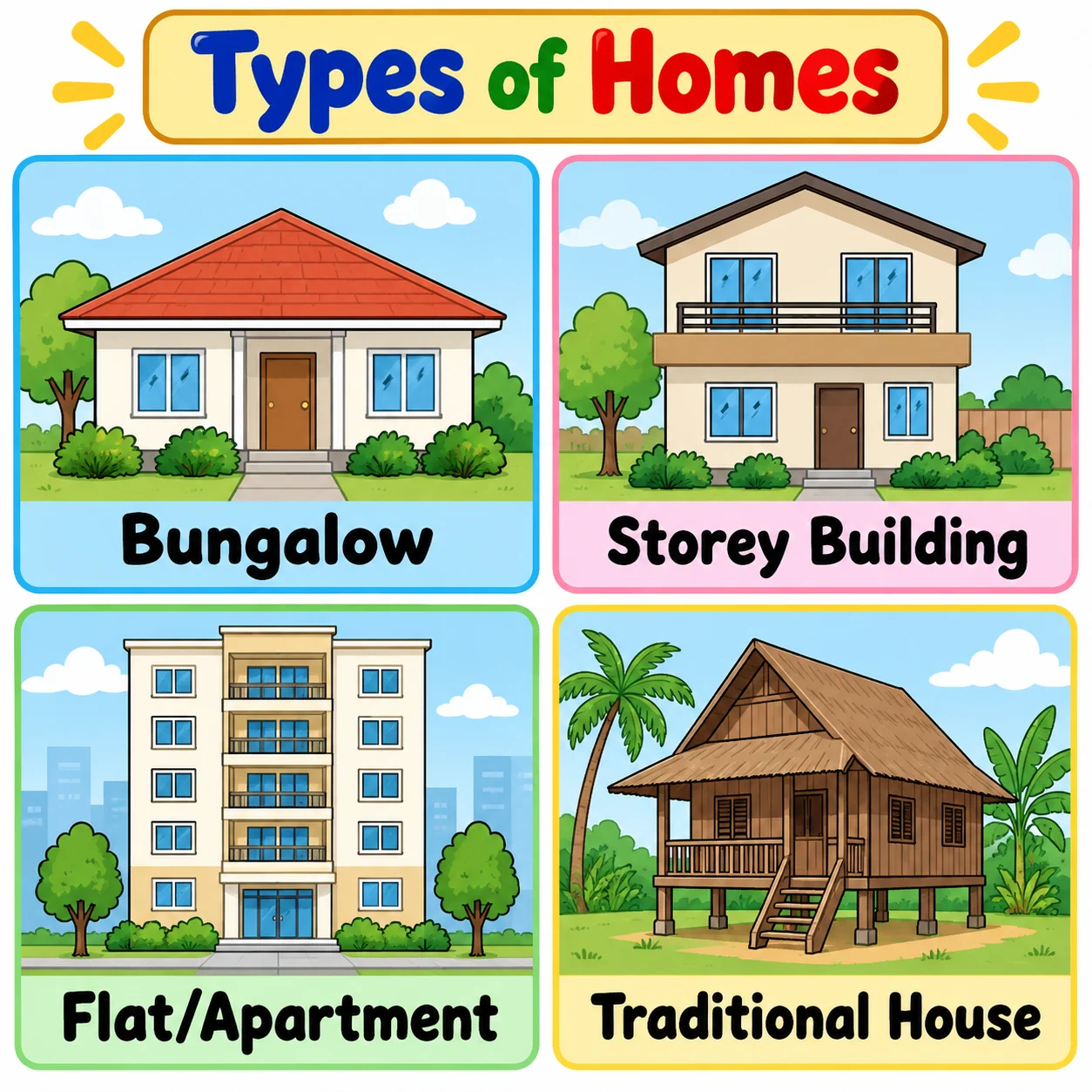
People live in different kinds of homes.
Some homes are:
1. Bungalow
A bungalow is usually a house built mainly on one level.
2. Storey Building
A storey building has rooms on more than one level.
People may go upstairs to reach some rooms.
3. Flat or Apartment
A flat or apartment is part of a larger building where a person or family lives.
Different families may live in different flats in the same building.
4. Traditional House
Some people live in houses built in traditional styles using materials common in their area.
Homes may look different, but they all provide a place for people to live.
Types of Homes at a Glance
|
Type of Home |
Simple Description |
|---|---|
|
Bungalow |
A house mainly on one level |
|
Storey building |
A house or building with an upper floor |
|
Flat or apartment |
One home inside a larger building |
|
Traditional house |
A home built in a traditional local style |
Activities We Do at Home
Many activities take place in the home.
We may:
- Eat.
- Sleep.
- Rest.
- Read.
- Play.
- Bathe.
- Dress.
- Cook with adult supervision.
- Talk with family members.
- Clean and arrange our belongings.
Different activities are done in different parts of the home.
Pupils will learn more about the parts of the home in another lesson.
Simple Home Activities Chart
|
Activity |
Example |
|---|---|
|
Eating |
Eating breakfast or dinner |
|
Sleeping |
Sleeping at night |
|
Resting |
Sitting quietly after school |
|
Reading |
Reading a book or doing homework |
|
Playing |
Playing safely with toys |
|
Bathing |
Washing the body |
|
Cleaning |
Keeping rooms and surroundings tidy |
Keeping the Home Clean
We should keep our home clean and tidy.
A clean home is pleasant and comfortable.
Simple ways children can help include:
- Putting toys away after playing.
- Keeping books properly.
- Putting dirty clothes in the proper place.
- Putting rubbish inside a waste bin.
- Avoiding littering the floor.
- Arranging personal belongings neatly.
- Helping with safe and simple cleaning tasks when asked.
Clean Home and Untidy Home
|
Clean Home |
Untidy Home |
|---|---|
|
Rubbish is put in a bin |
Rubbish is thrown on the floor |
|
Toys are arranged |
Toys are scattered everywhere |
|
Clothes are kept properly |
Clothes are left on the floor |
|
Floor is kept clean |
Floor is dirty |
|
Belongings are arranged |
Belongings are scattered |
Why We Should Keep the Home Clean
Keeping the home clean helps to:
- Make the home look neat.
- Make the home comfortable.
- Reduce dirt.
- Make it easier to find our belongings.
- Reduce the risk of tripping over scattered objects.
- Develop good habits.
Safety in the Home
A home should be a safe place.
Children should learn simple safety rules.
Simple Home Safety Rules
We should:
- Walk carefully inside the home.
- Avoid running on wet floors.
- Keep toys away from walkways after playing.
- Stay away from fire and hot objects.
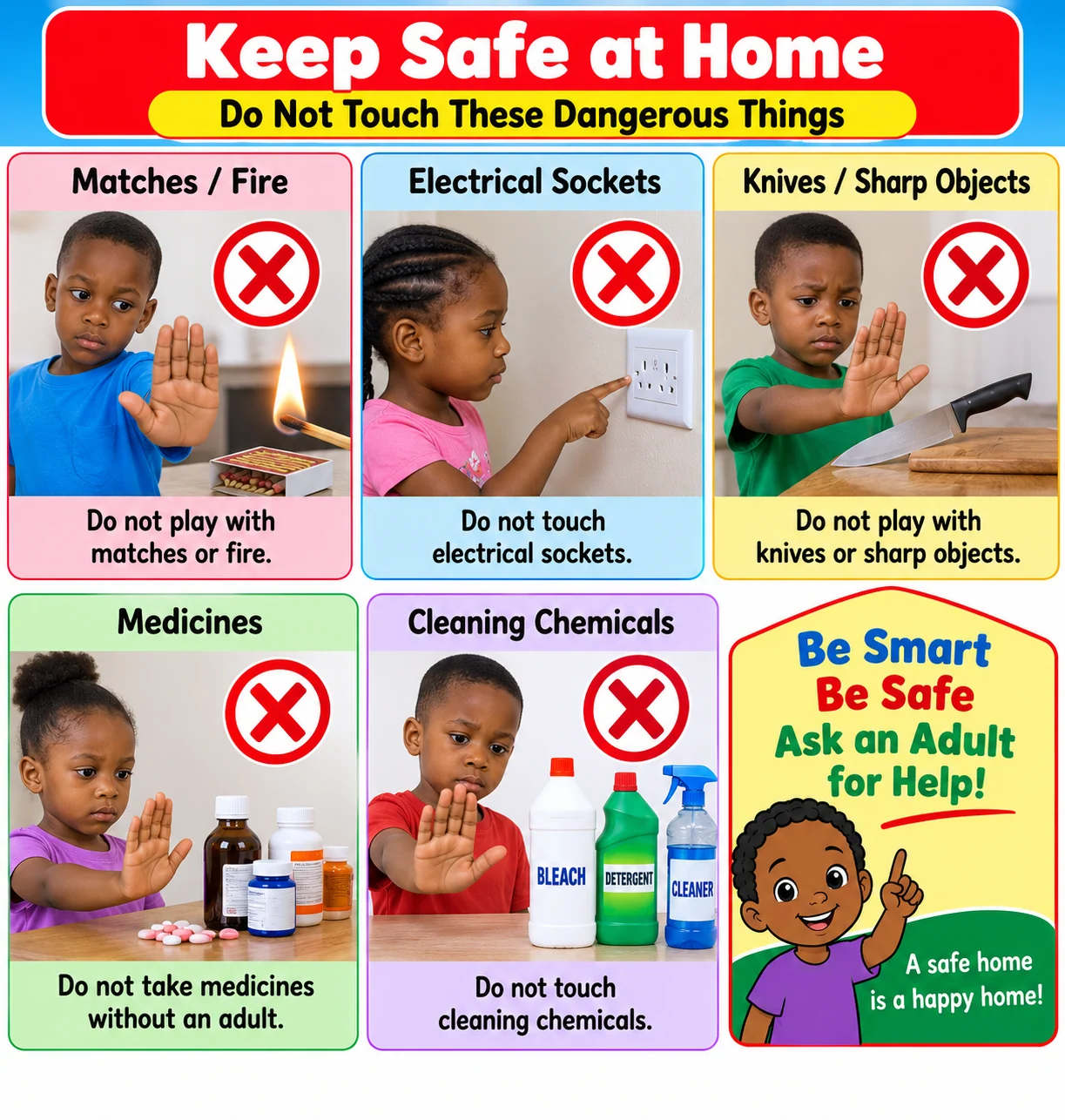
- Do not play with matches.
- Do not touch electrical sockets.
- Do not play with knives or sharp objects.
- Do not drink unknown liquids.
- Ask an adult before using unfamiliar equipment.
- Tell an adult when something dangerous happens.
Things Children Should Not Play With
Children should not play with:
- Matches.
- Fire.
- Knives.
- Razor blades.
- Electrical sockets.
- Medicines.
- Cleaning chemicals.
- Broken glass.
These things may cause injury.
Wet Floors
A wet floor can be slippery.
A person may fall on it.
Children should:
- Walk carefully.
- Tell an adult when water spills.
- Avoid running on wet floors.
Household Property
Household property means things that belong to the home and family.
Examples include:
- Chairs.
- Tables.
- Beds.
- Television.
- Books.
- Plates.
- Cups.
- Curtains.
- Toys.
We should take care of things in our home.
Caring for Household Property
We should:
- Use household items carefully.
- Avoid breaking things.
- Keep books and toys properly.
- Avoid drawing on walls and furniture.
- Return items to their correct places.
- Tell an adult if something becomes damaged.
Good and Poor Home Habits
|
Good Home Habits |
Poor Home Habits |
|---|---|
|
Putting rubbish in a bin |
Throwing rubbish on the floor |
|
Arranging toys after playing |
Leaving toys on walkways |
|
Caring for household items |
Breaking things carelessly |
|
Walking safely |
Running on wet floors |
|
Asking adults for help |
Touching dangerous things |
|
Keeping belongings neatly |
Scattering belongings everywhere |
VISUAL TO INSERT: A two-column classroom poster titled Good Habits at Home and Poor Habits at Home, showing simple examples from the table.
A Good Home
A good home should be:
- Clean.
- Safe.
- Comfortable.
- Peaceful.
- Well cared for.
Everyone can help according to his or her age and ability.
What a Primary 1 Pupil Can Do at Home
A young pupil can help by:
- Putting toys away.
- Keeping school books properly.
- Putting rubbish in the bin.
- Keeping shoes in their proper place.
- Carrying out simple tasks given by an adult.
- Keeping personal belongings neat.
A child should not perform dangerous household work.
F: LESSON PRESENTATION
F1: Teachers’ Activities
- Revises the previous lesson on personal health and cleanliness.
- Displays a picture of a home and asks pupils what they see.
- Explains the meaning of a home in simple language.
- Discusses why a home is important.
- Shows pictures of different family arrangements and explains that people may live with different family members or caregivers.
- Displays pictures of different types of homes.
- Guides pupils to identify activities carried out at home.
- Shows pictures of a clean home and an untidy home.
- Discusses simple ways children can help to keep the home tidy.
- Introduces simple home-safety rules.
- Displays pictures of dangerous objects children should not touch.
- Discusses how pupils should care for household property.
- Asks oral questions and corrects pupils where necessary.
F2: Pupils’ Activities
- Observe and identify a picture of a home.
- Explain a home in simple words.
- Mention reasons why a home is important.
- Mention people who may live in a home.
- Identify different types of homes from pictures.
- Mention activities they carry out at home.
- Identify clean and untidy homes from pictures.
- Mention ways of keeping the home clean.
- Identify dangerous household objects from pictures.
- Mention simple home-safety rules.
- Mention ways of caring for household property.
- Answer the teacher’s questions.
G: CONCLUSION
The teacher revises the meaning and importance of a home, the people who may live there, common types of homes and activities carried out at home.
The teacher reminds pupils that the home should be kept clean, safe and tidy and that household property should be handled carefully.
The teacher corrects pupils where necessary and encourages them to help with simple, safe and age-appropriate tasks at home.
H: EVALUATION GUIDE
Pupils should be able to answer the following questions:
- What is a home?
- Mention four things we do at home.
- Mention three reasons why a home is important.
- Mention four people who may live in a home.
- Name three types of homes.
- What is a bungalow?
- Mention three activities carried out at home.
- Mention four ways of keeping the home clean.
- Why should toys not be left on the walkway?
- Mention four things children should not play with at home.
- What should you do when you see water on the floor?
- Mention three examples of household property.
- Mention two ways of caring for household property.
- Mention three good habits a Primary 1 pupil can practise at home.