
TOPIC: REASONS FOR KEEPING HANDS AND FEET CLEAN – WHEN TO WASH THE HANDS AND FEET
A: TEACHING AND LEARNING MATERIALS
- Chart showing clean and dirty hands.
- Chart showing clean and dirty feet.
- Soap.
- Clean water.
- Basin or bucket.
- Clean towel.
- Pictures showing children washing their hands.
- Pictures showing children washing their feet.
- Picture cards showing different times when hands should be washed.
- Picture cards showing different times when feet should be washed.
- Pictures of clean and dirty fingernails and toenails.
- Pupils’ writing books and pencils.
B: REFERENCE MATERIALS
- Primary 1 Home Economics Scheme of Work.
- Recommended Home Economics textbook for Primary 1.
- Online educational resources.
C: PREVIOUS KNOWLEDGE
Review the previous week’s Home Economics lesson.
The pupils have learnt about the hands and feet. They can identify the fingers, fingernails, toes, toenails, palm, sole and heel. They also know simple ways of washing and protecting their hands and feet.
D: PERFORMANCE OBJECTIVES
By the end of the lesson, pupils should be able to:
- Explain what clean hands and feet mean.
- Mention reasons for keeping the hands clean.
- Mention reasons for keeping the feet clean.
- Explain why dirt should not be allowed to remain under the nails.
- State important times when hands should be washed.
- State important times when feet should be washed.
- Identify clean and dirty hands from pictures.
- Identify clean and dirty feet from pictures.
- State what may happen when dirty hands are used for eating.
- State what should be done after playing outside.
- Identify good and poor hygiene habits involving the hands and feet.
- Demonstrate when handwashing or foot washing is needed.
E: CONTENT
Meaning of Clean Hands and Feet
Clean hands and feet are hands and feet that are free from visible dirt and are properly cared for.
Our hands and feet are used every day.
The hands touch many objects.
The feet touch the ground and stay inside footwear for many hours.
Because of this, they can easily become dirty.
We should therefore keep them clean.
Why Do the Hands Become Dirty?
Our hands can become dirty when we:
- Play outside.
- Touch soil.
- Touch dusty objects.
- Touch rubbish.
- Use the toilet.
- Play with toys.
- Touch animals.
- Work in a garden.
- Cough or sneeze into our hands.
- Touch dirty surfaces.
Dirt may also collect around the fingernails.
Why Do the Feet Become Dirty?
Our feet may become dirty when we:
- Walk on dusty ground.
- Walk on muddy ground.
- Play outside.
- Walk barefoot where the ground is dirty.
- Sweat inside socks and shoes.
- Step into dirty water.
- Wear dirty socks or footwear.
We should wash dirty feet and dry them properly.
Reasons for Keeping the Hands and Feet Clean
There are many reasons for keeping our hands and feet clean.
1. To Remove Dirt
The hands and feet collect dirt during daily activities.
Washing helps to remove:
- Dust.
- Mud.
- Sand.
- Food stains.
- Other visible dirt.
Clean hands and feet look neat and feel comfortable.
2. To Help Remove Germs
Some germs are too small to be seen with our eyes.
They can get onto the hands when we touch dirty surfaces or use the toilet.
Washing the hands with soap and clean water helps remove germs.
This is one important reason why children should wash their hands regularly.
3. To Help Us Stay Healthy
Dirty hands may carry germs to:
- The mouth.
- The nose.
- The eyes.
- Food.
For example, if a pupil plays in the soil and then eats without washing the hands, dirt and germs may get onto the food.
Good handwashing helps us practise good hygiene.
4. To Keep Dirt Away from the Nails
Dirt can collect:
- Under fingernails.
- Around fingernails.
- Under toenails.
- Around toenails.
The hands and feet should therefore be washed properly.
The nails should also be kept clean and reasonably short.
5. To Keep Food Clean
We use our hands to:
- Hold food.
- Eat some foods.
- Carry plates.
- Open food containers.
If the hands are dirty, dirt may get onto the food.
Therefore, we should wash our hands before eating or handling food.
Simple Rule
Clean hands help us handle food more safely.
6. To Look Neat
Clean hands, nails, feet and toenails help us look neat.
A neat pupil should try to keep:
- Hands clean.
- Fingernails clean.
- Feet clean.
- Toenails clean.
Cleanliness does not depend on expensive clothes or shoes.
Good personal hygiene is what matters.
7. To Keep the Feet Comfortable
Feet may sweat inside footwear.
Dirty, sweaty feet may become uncomfortable.
Washing and drying the feet helps to keep them fresh and comfortable.
Clean socks should also be worn where socks are needed.
Reasons for Keeping Hands and Feet Clean
| Reason | Simple Explanation |
|---|---|
| Remove dirt | Washing removes dust, mud and stains |
| Reduce germs | Soap and water help remove germs from hands |
| Support good health | Clean hands reduce the chance of carrying germs to the mouth, nose, eyes and food |
| Keep nails clean | Dirt should not remain under fingernails and toenails |
| Keep food clean | Clean hands should be used when eating or handling food |
| Look neat | Clean hands and feet improve personal neatness |
| Feel comfortable | Clean, dry feet feel better inside footwear |
WHEN SHOULD WE WASH OUR HANDS?
Hands should be washed at important times.
1. Before Eating
Wash your hands before touching or eating food.
This helps prevent dirt from getting onto the food.
2. After Using the Toilet
Hands should always be washed with soap and clean water after using the toilet.
The hands may pick up germs during toilet use.
Remember
Use the toilet → Wash your hands.
3. After Playing Outside
Children may touch:
- Soil.
- Sand.
- Grass.
- Playground equipment.
- Balls and other objects.
After outdoor play, hands may become dirty.
Wash them before touching food or putting fingers near the mouth.
4. After Working in the Garden
Gardening may involve:
- Soil.
- Leaves.
- Plants.
- Water.
- Gardening tools.
Hands should be washed after gardening.
The Week 7 scheme specifically includes washing after working in the garden.
5. After Touching Rubbish
Rubbish may carry dirt and germs.
After touching or disposing of rubbish, wash the hands properly.
Children should not play with waste.
6. After Coughing, Sneezing or Blowing the Nose
If a child coughs or sneezes into the hands, or uses the hands while blowing the nose, the hands should be washed afterward.
This helps prevent germs from being transferred to other objects or people.
7. When the Hands Are Visibly Dirty
If you can see:
- Mud.
- Dust.
- Food stains.
- Paint.
- Dirt
on your hands, wash them.
Do not wait until mealtime.
8. After Handling Certain Cleaning or Chemical Products
Children should not handle strong household chemicals without adult supervision.
If a child has been involved in a supervised activity using a safe cleaning product, the hands should be washed afterward as directed by an adult.
Never taste or play with household cleaning products.
Important Times for Washing the Hands
BEFORE EATING
↓
AFTER USING THE TOILET
↓
AFTER OUTDOOR PLAY
↓
AFTER TOUCHING RUBBISH
↓
AFTER COUGHING OR SNEEZING
↓
WHEN HANDS ARE DIRTY
BEFORE AND AFTER MEALS
The scheme also teaches pupils to understand cleanliness around meals.
Before Eating
Hands should be washed.
After Eating
Hands should be washed when they become dirty or oily from the food.
For example, after eating foods with the hands, wash away food remains.
This helps keep the hands and surroundings clean.
WHEN SHOULD WE WASH OUR FEET?
Feet should also be washed when necessary.
1. After Outdoor Play
Running and playing may make the feet:
- Dusty.
- Sweaty.
- Muddy.
Wash dirty feet after play.
2. When the Feet Are Muddy
After walking through mud or wet soil, wash the feet with clean water and suitable soap.
Do not carry mud onto:
- Floors.
- Beds.
- Furniture.
3. After Walking Barefoot on Dirty Ground
If a child has walked barefoot on a dirty surface, the feet should be washed.
Where footwear is needed for protection, suitable shoes or sandals should be worn.
4. Before Going to Bed When the Feet Are Dirty
Dirty feet should not be taken onto a clean bed.
If the feet have become dusty or dirty during the day, wash and dry them before going to bed.
5. During Bathing
The feet should be washed properly during bathing.
Do not forget:
- The toes.
- Between the toes.
- The soles.
- The heels.
6. After Working or Playing in a Garden
Soil may stick to the feet.
Wash away soil and mud afterward.
When to Wash the Feet
| Situation | What to Do |
|---|---|
| After playing outside | Wash dirty or sweaty feet |
| After walking through mud | Wash with soap and clean water |
| After walking barefoot on dirty ground | Wash properly |
| During bathing | Wash all parts of the feet |
| Before bed when feet are dirty | Wash and dry |
| After gardening | Remove soil and dirt |
Washing Is Not Enough: Dry the Feet
After washing the feet, dry them properly with a clean towel.
Remember to dry:
- The top.
- The sole.
- The heel.
- Between the toes.
Wet feet should not be left inside socks and shoes for a long time.
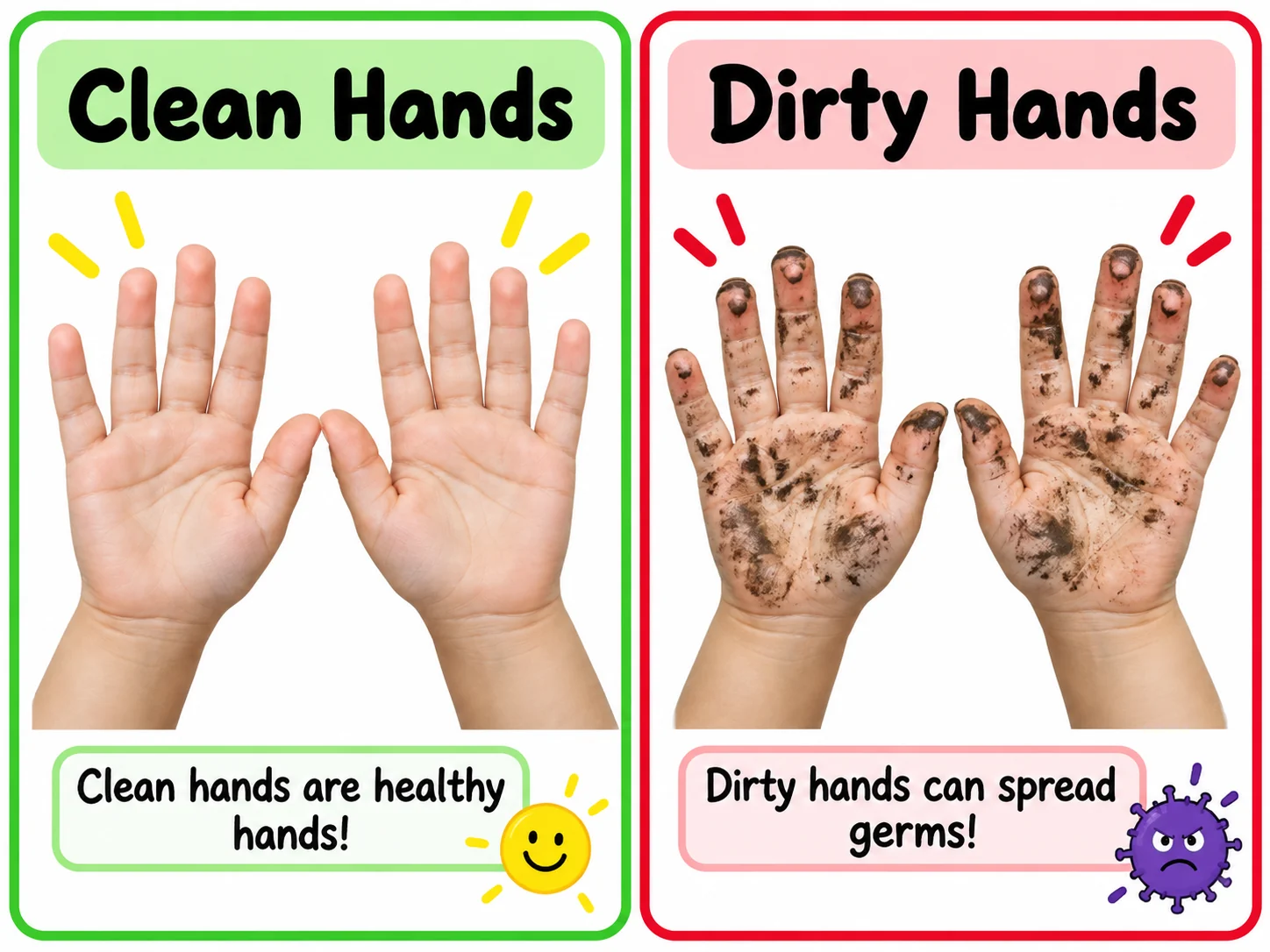
Clean and Dirty Hands
Clean Hands
Clean hands:
- Have no visible dirt.
- Have clean nails.
- Are washed at important times.
Dirty Hands
Dirty hands may have:
- Mud.
- Dust.
- Food stains.
- Dirt under the nails.
Clean and Dirty Feet
Clean Feet
Clean feet:
- Are washed.
- Are dried properly.
- Have clean toenails.
Dirty Feet
Dirty feet may have:
- Dust.
- Mud.
- Dirt around the toes.
- Dirt under the toenails.
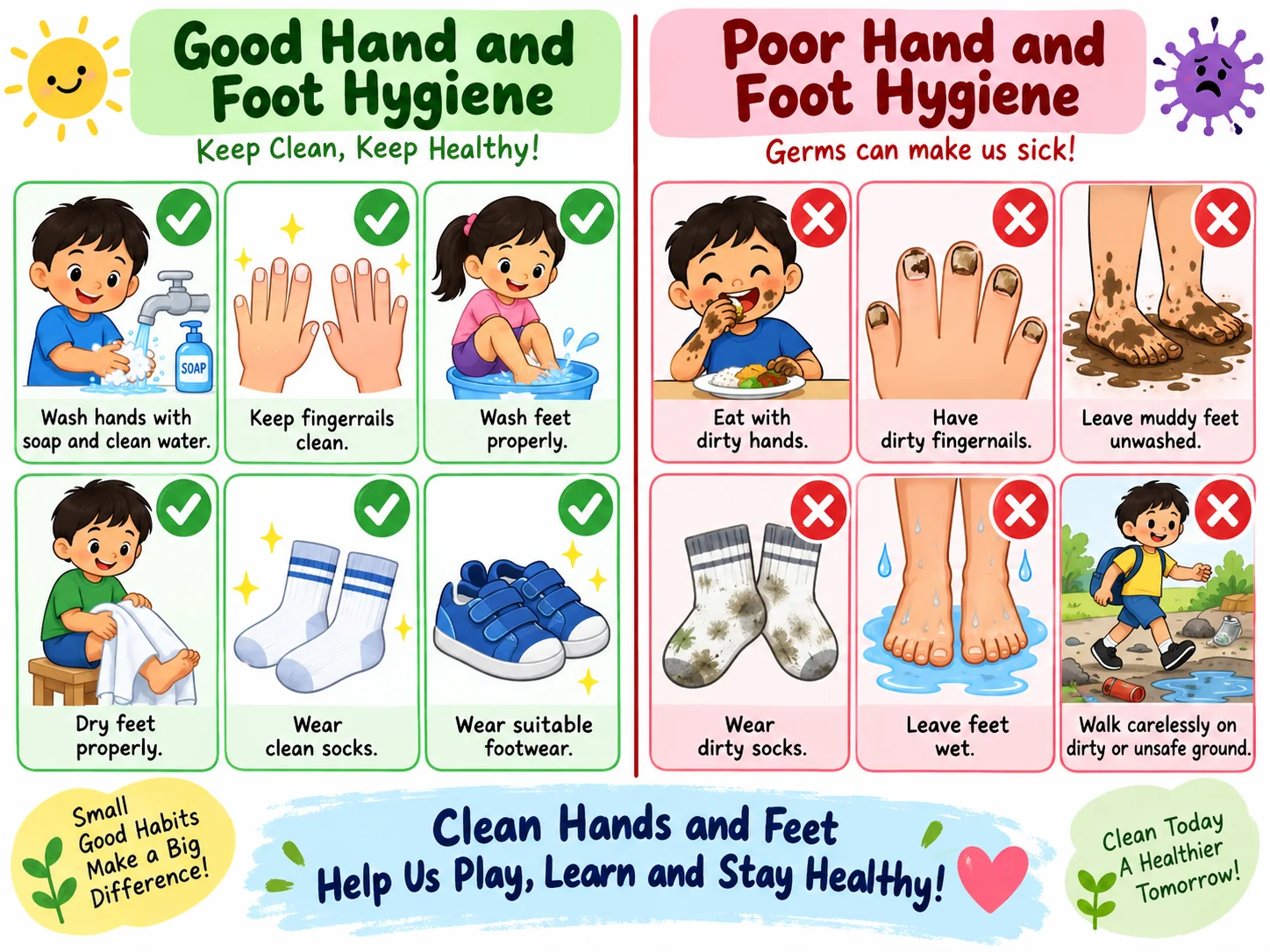
Good Habits and Poor Habits
| Good Habit | Poor Habit |
|---|---|
| Washing hands before eating | Eating with dirty hands |
| Washing after toilet use | Leaving the toilet without washing |
| Washing after outdoor play | Putting dirty fingers in the mouth |
| Keeping fingernails clean | Leaving dirt under the nails |
| Washing muddy feet | Leaving mud on the feet |
| Drying feet properly | Wearing socks over very wet feet |
What Should I Do?
The teacher reads each situation.
Pupils say what should be done.
Situation 1
Chidi has just used the toilet.
What should Chidi do?
Answer: Wash his hands with soap and clean water.
Situation 2
Amina has been playing with soil.
What should Amina do before eating?
Answer: Wash her hands.
Situation 3
Tunde stepped into mud while playing.
What should he do?
Answer: Wash and dry his feet.
Situation 4
Ngozi has just touched the rubbish bin.
What should she do?
Answer: Wash her hands.
Situation 5
Bola’s feet are clean and dry.
Should she deliberately make them dirty again?
Answer: No.
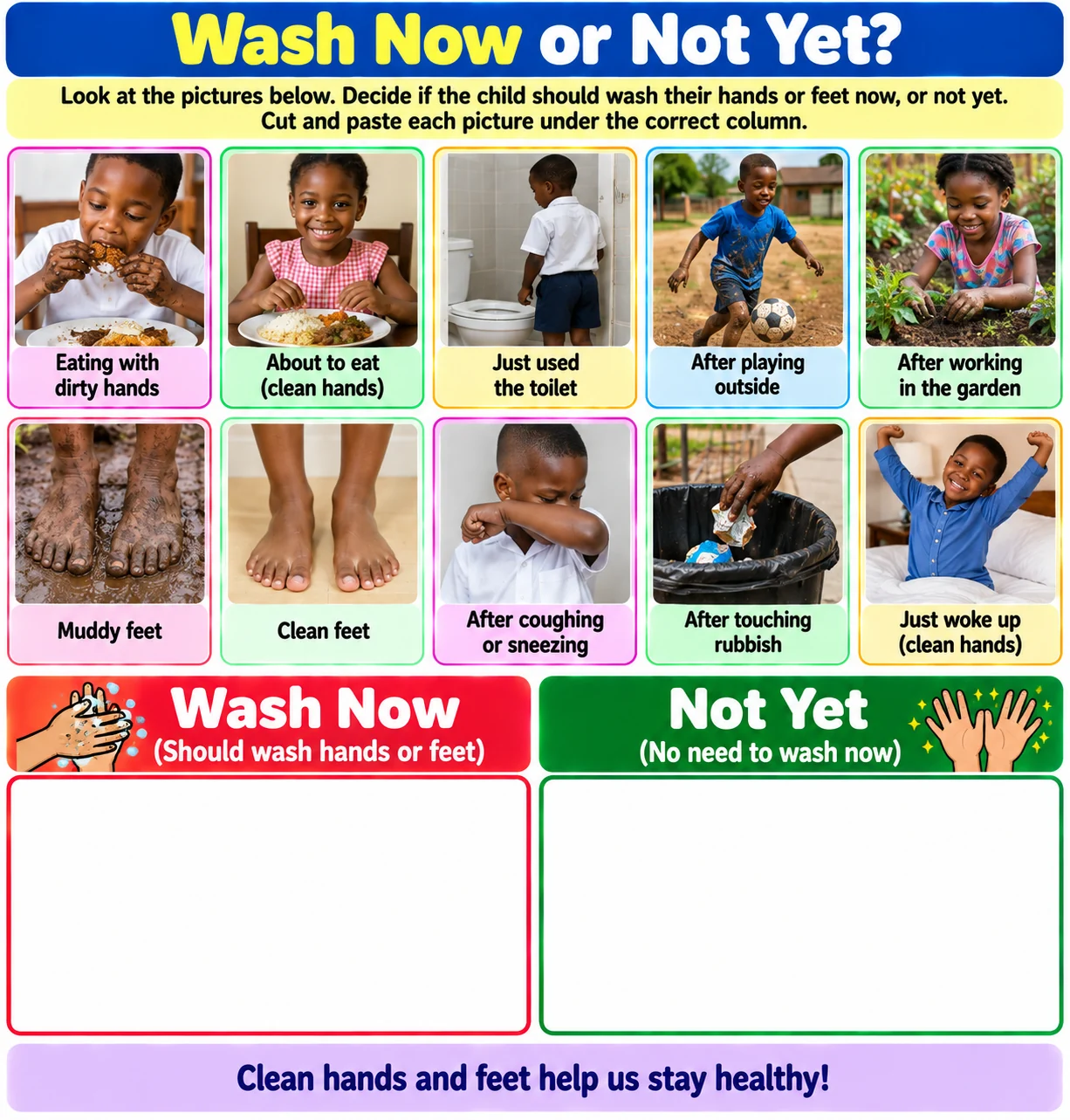
Picture-Sorting Activity: Wash Now or Not Yet?
The teacher displays pictures showing:
- A child just waking up with clean hands.
- A child coming out of the toilet.
- A child about to eat.
- A child playing in mud.
- A child touching rubbish.
- A child whose feet are muddy.
Pupils identify which pictures show a need to wash immediately.
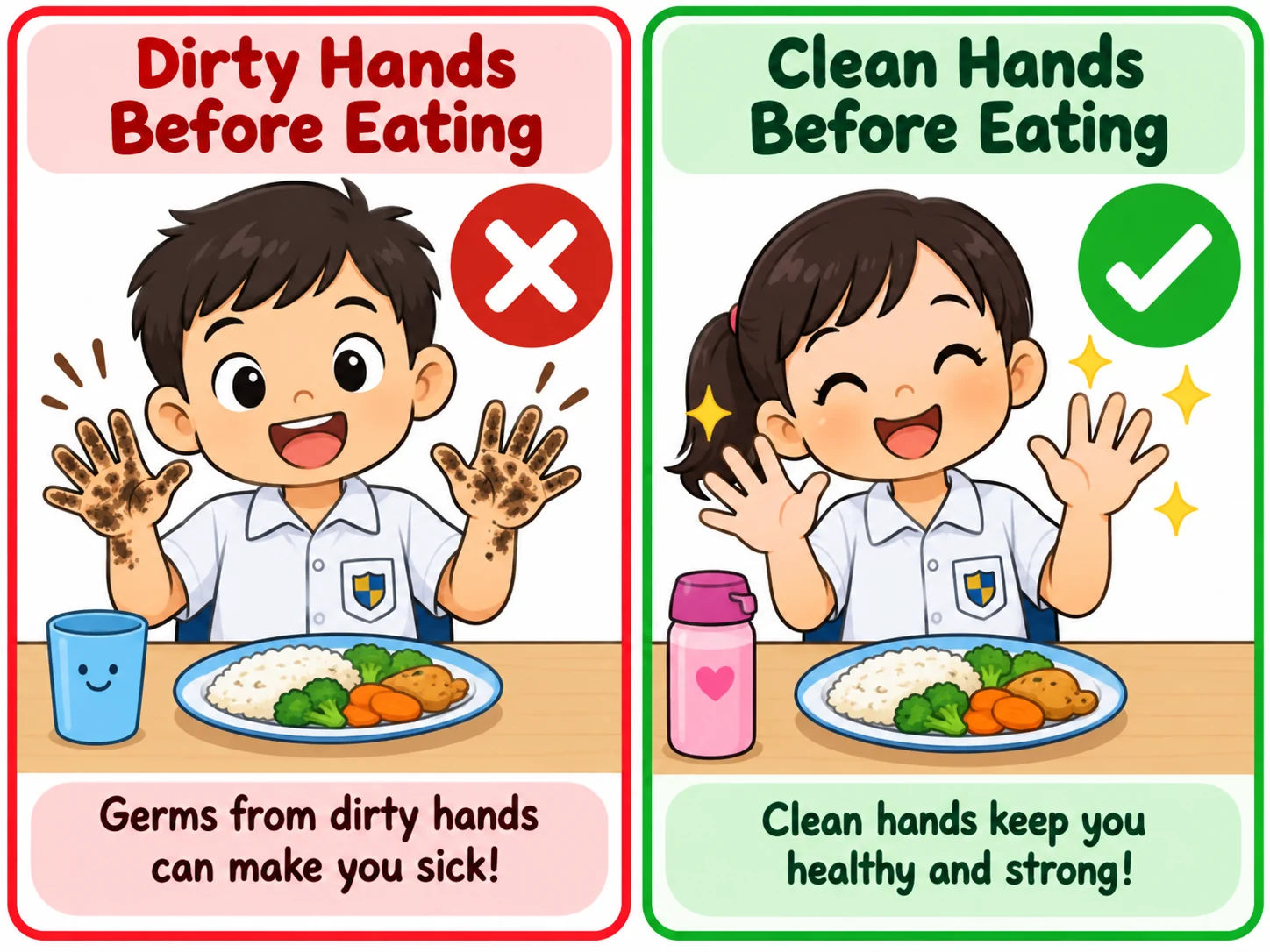
Why Clean Hands Matter Around Food
Imagine two children.
Child A
- Plays in the soil.
- Does not wash hands.
- Picks up bread and eats it.
Child B
- Plays in the soil.
- Washes hands with soap and clean water.
- Eats after washing.
The better hygiene habit is shown by Child B.
Classroom Activity: When Should I Wash?
The teacher calls out different activities.
Pupils respond:
Wash or No washing needed now.
Examples:
- After using the toilet — Wash.
- Before eating — Wash.
- After touching rubbish — Wash.
- After playing in mud — Wash.
- After gardening — Wash.
- When feet are muddy — Wash.
Our Clean Hands and Feet Rule
KEEP HANDS CLEAN
+
KEEP FEET CLEAN
=
GOOD PERSONAL HYGIENE
Remember
We keep our hands and feet clean because:
- They easily become dirty.
- Cleanliness removes visible dirt.
- Clean hands help reduce the spread of germs.
- Clean nails look neat.
- Clean hands are important around food.
- Clean feet feel fresh and comfortable.
F: LESSON PRESENTATION
F1: Teachers’ Activities
- Revises the parts and care of the hands and feet learnt in Week Six.
- Displays pictures of clean and dirty hands.
- Displays pictures of clean and dirty feet.
- Asks pupils how the hands and feet become dirty.
- Explains reasons for keeping hands clean.
- Explains reasons for keeping feet clean.
- Discusses dirt under fingernails and toenails.
- Explains why hands should be washed before eating.
- Explains why hands should be washed after toilet use.
- Discusses washing after outdoor play and gardening.
- Discusses washing after touching rubbish.
- Explains when dirty feet should be washed.
- Explains why washed feet should be dried.
- Conducts the What Should I Do? activity.
- Conducts the Wash Now or Not Yet? sorting activity.
- Uses pictures to compare good and poor hygiene habits.
- Revises the simple handwashing sequence in preparation for Week Eight.
- Asks oral questions and corrects pupils where necessary.
F2: Pupils’ Activities
- Recall the parts of the hands and feet.
- Identify clean and dirty hands.
- Identify clean and dirty feet.
- Mention ways the hands become dirty.
- Mention ways the feet become dirty.
- State reasons for keeping the hands clean.
- State reasons for keeping the feet clean.
- Mention important times to wash the hands.
- Mention important times to wash the feet.
- Explain why hands should be washed before eating.
- Explain why hands should be washed after using the toilet.
- Identify good and poor hygiene habits from pictures.
- Take part in the What Should I Do? activity.
- Sort pictures in the Wash Now or Not Yet? activity.
- Repeat the simple handwashing sequence.
- Answer the teacher’s questions.
G: CONCLUSION
The teacher revises the reasons for keeping the hands and feet clean and the important times when washing is needed.
The teacher reminds pupils that hands should be washed especially before eating, after using the toilet, after outdoor play, after touching rubbish, after gardening and whenever they are dirty.
Feet should be washed when they become dirty, dusty, sweaty or muddy, and they should be dried properly after washing.
The teacher tells pupils that in the next lesson they will learn the proper ways of caring for the hands, feet and nails.
Continue with the next week’s Home Economics lesson.
H: EVALUATION GUIDE
Pupils should be able to answer the following questions:
- Why should we keep our hands clean?
- Mention three reasons for keeping the hands and feet clean.
- What can collect under dirty fingernails?
- Why should hands be washed before eating?
- What should you do after using the toilet?
- What should you do after playing with soil?
- What should you do after touching rubbish?
- What should you do after gardening?
- Mention four times when the hands should be washed.
- Mention three times when the feet should be washed.
- What should you do when your feet become muddy?
- Why should washed feet be dried?
- State whether this is a good or poor habit: eating with dirty hands.
- State whether this is a good or poor habit: washing after using the toilet.
- State whether this is a good or poor habit: leaving mud on the feet.
- Complete: We wash our hands before ______.
- Complete: We wash our hands after using the ______.
- Complete: Dirty feet should be washed and ______ properly.
- Mention two things that may make the hands dirty.
- Mention two things that may make the feet dirty.