
TOPIC: CARE OF EACH PART OF THE BODY
A: TEACHING AND LEARNING MATERIALS
- Large chart of the human body.
- Soap.
- Clean water.
- Sponge or washcloth.
- Clean towel.
- Toothbrush.
- Toothpaste.
- Comb or hairbrush.
- Clean clothes.
- Pictures showing proper care of different body parts.
- Picture cards showing good and poor body-care habits.
- Handwashing chart.
- Pupils’ writing books and pencils.
B: REFERENCE MATERIALS
- Primary 1 Home Economics Scheme of Work.
- Recommended Home Economics textbook for Primary 1.
- Online educational resources.
C: PREVIOUS KNOWLEDGE
Review the previous week’s Home Economics lesson.
The pupils have learnt the reasons for caring for the body and the materials used for body care. They can identify materials such as soap, clean water, sponge, towel, toothbrush, toothpaste, comb and hairbrush.
D: PERFORMANCE OBJECTIVES
By the end of the lesson, pupils should be able to:
- Explain what it means to care for the body.
- Mention different parts of the body that need regular care.
- State simple ways of caring for the head and hair.
- State simple ways of caring for the eyes.
- State simple ways of caring for the ears.
- State simple ways of caring for the nose.
- State simple ways of caring for the mouth and teeth.
- Demonstrate proper handwashing.
- State simple ways of caring for the legs and feet.
- Match body parts with suitable care materials.
- Identify good and poor body-care habits.
- Explain why each part of the body should be kept clean and safe.
E: CONTENT
Meaning of Caring for the Body
Caring for the body means keeping the different parts of our body clean, neat and safe.
Every part of the body is important.
We should not care for only our face or hair and leave other parts dirty.
We should care for:
- The head and hair.
- The eyes.
- The ears.
- The nose.
- The mouth and teeth.
- The neck and skin.
- The hands and nails.
- The legs and feet.
Why We Care for Every Part of the Body
We care for our body to:
- Remove dirt and sweat.
- Keep ourselves neat.
- Keep the body comfortable.
- Reduce the spread of germs.
- Protect delicate body parts.
- Develop good personal-hygiene habits.
- Feel fresh and ready for school and other activities.
1. CARE OF THE HEAD AND HAIR
The head and hair should be kept clean and neat.
Ways of Caring for the Head and Hair
We should:
- Wash the hair when necessary.
- Use suitable hair products chosen by a parent or caregiver.
- Dry the hair properly.
- Comb or brush the hair gently.
- Keep the hair neatly arranged.
- Avoid pulling another person’s hair.
- Keep combs and hairbrushes clean.
Materials Used
- Clean water.
- Suitable soap or shampoo where used.
- Towel.
- Comb.
- Hairbrush.
- Suitable hair cream where necessary.
Different people have different hair textures and hairstyles.
There is no single hairstyle that everyone must have.
The important thing is to keep the hair clean and neat.
2. CARE OF THE EYES
The eyes help us to see.
The eyes are delicate, so we should treat them carefully.
Ways of Caring for the Eyes
We should:
- Keep dirty hands away from the eyes.
- Wash the face with clean water.
- Avoid rubbing the eyes with dirty hands.
- Read where there is enough light.
- Keep sharp objects away from the eyes.
- Tell an adult if the eyes are painful, injured or very uncomfortable.
- Avoid staring directly at very bright light.
What We Should Not Do
We should not:
- Poke the eyes.
- Put pencils near the eyes.
- Throw sand at another person’s face.
- Rub the eyes with dirty fingers.
- Play with sharp objects close to the face.

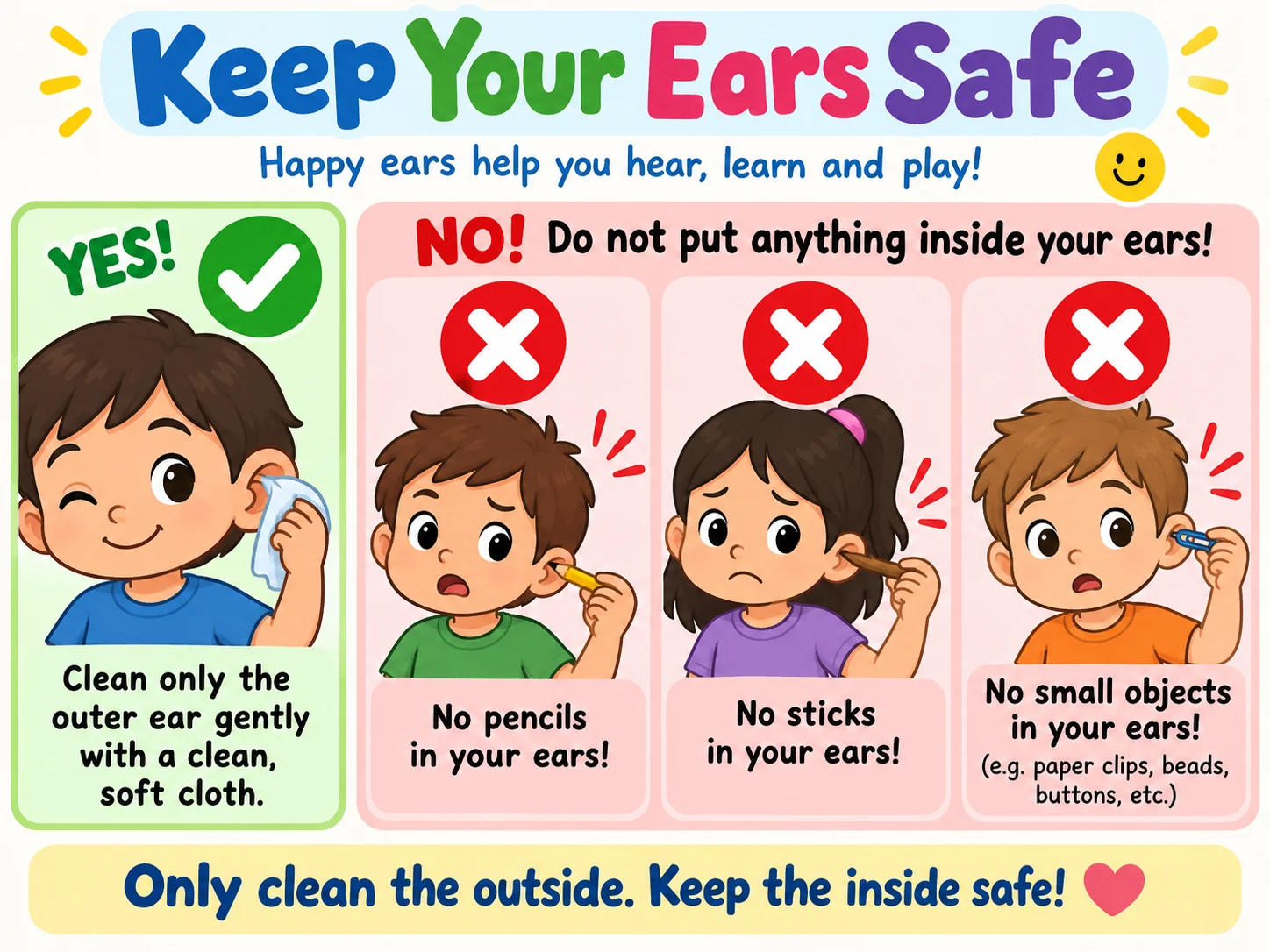
3. CARE OF THE EARS
The ears help us to hear.
The outer part of the ear can be cleaned gently during normal washing.
Ways of Caring for the Ears
We should:
- Wash around the outside of the ears gently.
- Dry the outer ears after bathing.
- Keep sharp objects away from the ears.
- Avoid very loud sounds where possible.
- Tell an adult if an ear is painful or something gets stuck inside it.
Do Not Put Objects Inside the Ear
Children should not put:
- Pencils.
- Matchsticks.
- Sticks.
- Hairpins.
- Fingers.
- Other objects
deep inside the ears.
Objects pushed into the ear may cause injury.
4. CARE OF THE NOSE
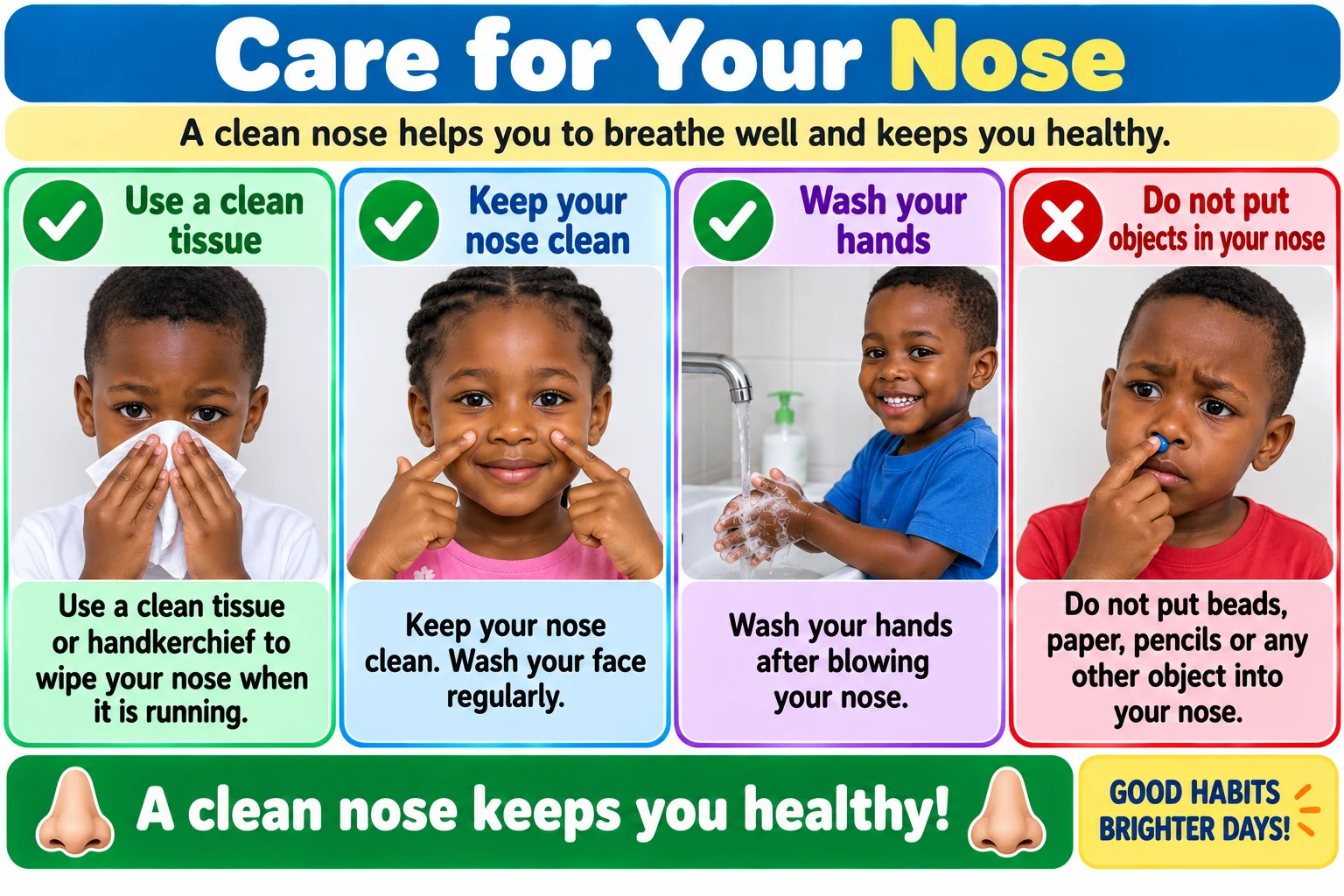
The nose helps us to smell and breathe.
We should keep the nose clean.
Ways of Caring for the Nose
We should:
- Wipe the nose with a clean tissue or handkerchief when necessary.
- Wash the face regularly.
- Cover the nose and mouth appropriately when sneezing.
- Wash the hands after blowing the nose.
- Keep objects out of the nostrils.
We Should Not Put Objects into the Nose
Do not put:
- Beads.
- Paper.
- Stones.
- Pencils.
- Small toys
inside the nose.
If something gets stuck in the nose, tell a responsible adult.
Do not try to push it farther inside.
5. CARE OF THE MOUTH AND TEETH
The mouth is used for:
- Eating.
- Drinking.
- Speaking.
The teeth help us bite and chew food.
We should keep the mouth and teeth clean every day.
Ways of Caring for the Mouth and Teeth
We should:
- Brush the teeth every morning.
- Brush the teeth again before going to bed.
- Use a toothbrush and suitable fluoride toothpaste.
- Brush the teeth gently.
- Keep the toothbrush clean.
- Use our own toothbrush.
- Avoid eating too many sugary foods and drinks.
- Tell an adult if a tooth is painful.
Children should brush their teeth at least twice a day, with adult supervision where necessary.
Tooth-Care Materials
- Toothbrush.
- Toothpaste.
- Clean water.
Simple Tooth-Care Sequence
TOOTHBRUSH
+
TOOTHPASTE
↓
BRUSH GENTLY
↓
CLEAN TEETH
6. CARE OF THE HANDS
We use our hands for many activities.
We use them to:
- Eat.
- Write.
- Carry things.
- Play.
- Touch objects.
Because the hands touch many things, they can collect dirt and germs.
Ways of Caring for the Hands
We should:
- Wash the hands with soap and clean water.
- Wash between the fingers.
- Wash around and under the nails.
- Keep fingernails clean.
- Keep nails reasonably short with adult help where needed.
- Dry the hands properly.
- Avoid biting the nails.
Important Times to Wash the Hands
Wash the hands:
- Before eating.
- After using the toilet.
- After playing outside.
- After touching rubbish.
- After coughing, sneezing or blowing the nose.
- Whenever the hands are dirty.
Five Simple Handwashing Steps
WET
↓
SOAP
↓
RUB
↓
RINSE
↓
DRY
Washing hands with soap and water is an important way to remove dirt and germs.
7. CARE OF THE FINGERNAILS
Fingernails are found at the tips of our fingers.
Dirt can collect around and under the nails.
Ways of Caring for the Nails
We should:
- Wash them when washing the hands.
- Keep them clean.
- Keep them reasonably short.
- Allow a responsible adult to help with nail cutting where necessary.
- Avoid biting the nails.
Poor Nail-Care Habits
We should not:
- Allow dirt to remain under the nails.
- Bite the nails.
- Use sharp tools carelessly on the nails.
8. CARE OF THE NECK AND SKIN
The skin covers our body.
The neck and skin can collect:
- Sweat.
- Dust.
- Dirt.
Ways of Caring for the Skin
We should:
- Bathe regularly.
- Use clean water and suitable soap.
- Wash around the neck properly.
- Rinse away soap.
- Dry the body with a clean towel.
- Wear clean clothes.
- Use suitable skin products only with adult guidance.
Bathing Materials
- Clean water.
- Soap.
- Sponge or washcloth.
- Towel.
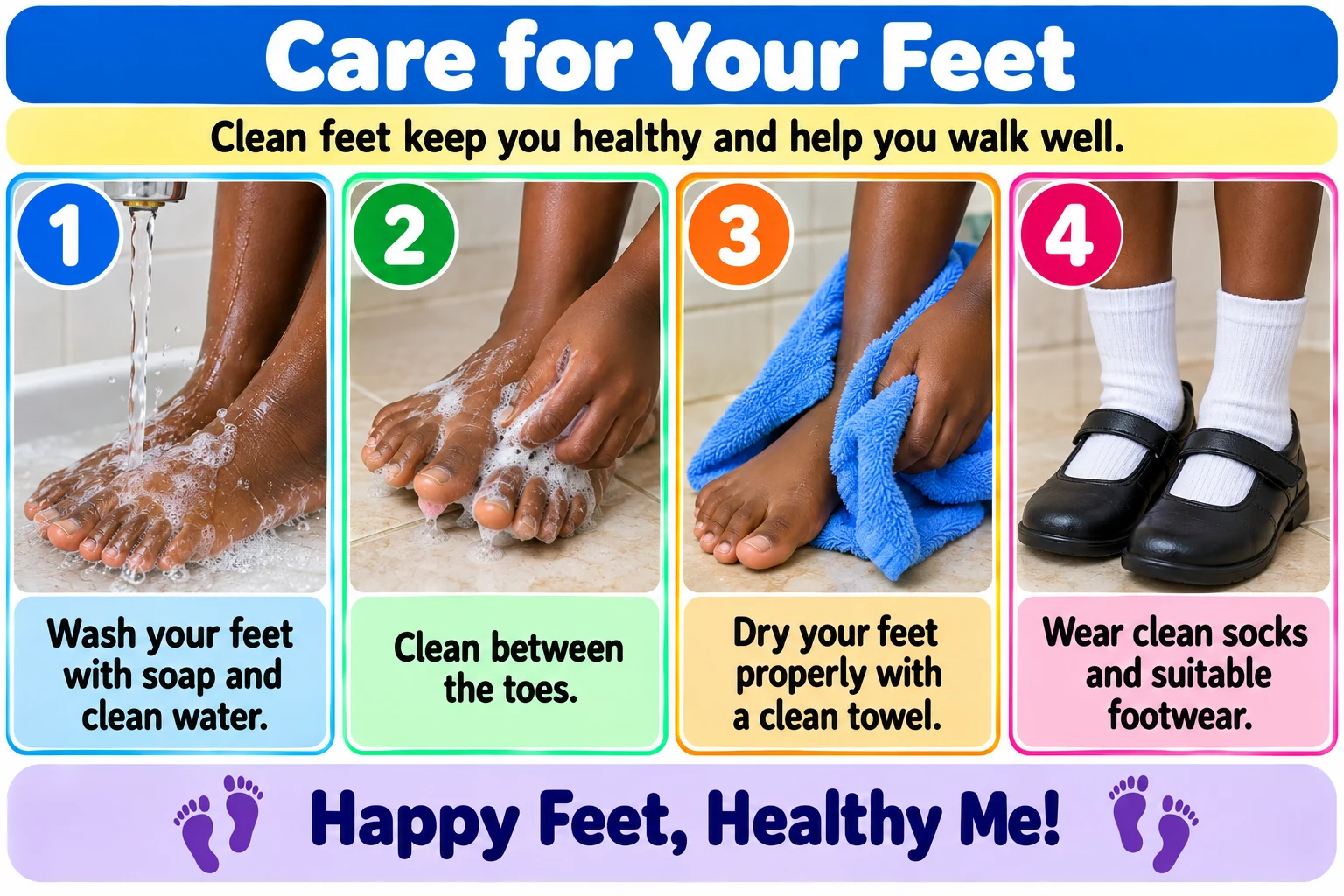
9. CARE OF THE LEGS AND FEET
Our legs and feet help us to:
- Stand.
- Walk.
- Run.
- Jump.
- Move from place to place.
They should also be kept clean.
Ways of Caring for the Legs and Feet
We should:
- Wash the legs and feet properly during bathing.
- Wash dirty feet after outdoor play when necessary.
- Clean between the toes.
- Dry the feet properly.
- Keep toenails clean.
- Wear clean socks where socks are used.
- Wear suitable footwear.
- Avoid walking carelessly on sharp objects.
- Be careful on slippery floors.
Protecting the Feet
Shoes, sandals or slippers may protect the feet from:
- Dirt.
- Sharp objects.
- Hot surfaces.
- Rough ground.
CARE OF DIFFERENT BODY PARTS AT A GLANCE
| Body Part | How We Care for It |
|---|---|
| Hair | Wash, dry, comb or brush and keep neat |
| Eyes | Keep clean and keep dirty hands and sharp objects away |
| Ears | Clean outer ear gently and do not insert objects |
| Nose | Keep clean and do not insert objects |
| Mouth/Teeth | Brush morning and night |
| Hands | Wash with soap and clean water |
| Nails | Keep clean and reasonably short |
| Skin | Bathe and dry properly |
| Feet | Wash, dry and protect with suitable footwear |

Materials Used for Different Body Parts
| Body Part | Materials Used |
|---|---|
| Hair | Water, towel, comb or hairbrush |
| Skin | Soap, water, sponge, towel |
| Mouth/Teeth | Toothbrush, toothpaste |
| Hands | Soap, clean water, towel |
| Feet | Soap, clean water, towel |
| Nose | Clean tissue or handkerchief where appropriate |
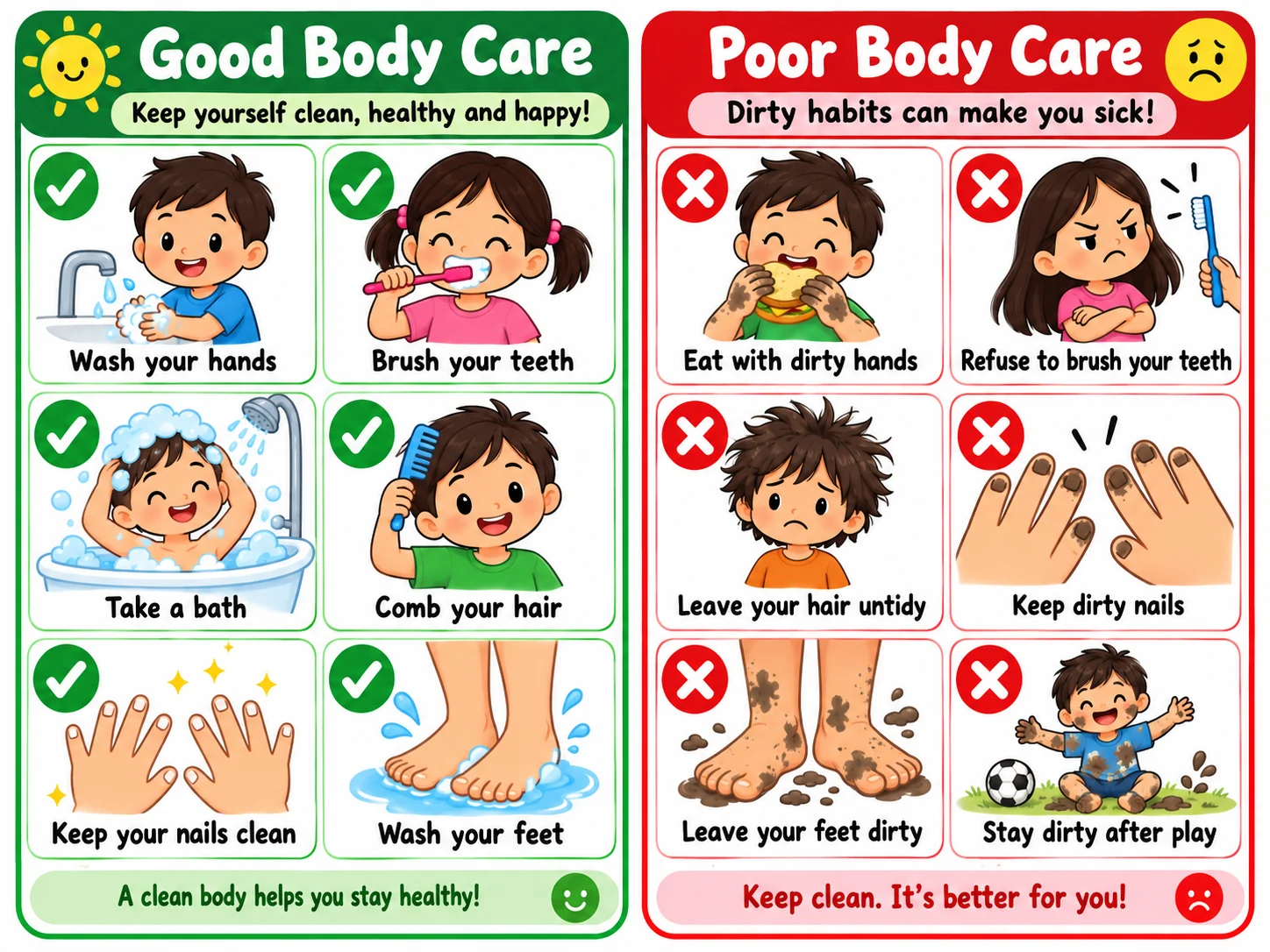
Good Body-Care Habits
Good habits include:
- Bathing regularly.
- Brushing the teeth twice each day.
- Washing the hands at important times.
- Keeping nails clean.
- Keeping the hair neat.
- Wearing clean clothes.
- Keeping objects out of the ears and nose.
- Protecting the eyes.
- Washing and drying the feet.
Poor Body-Care Habits
Poor habits include:
- Eating with dirty hands.
- Refusing to brush the teeth.
- Leaving the body dirty after outdoor play.
- Putting objects inside the nose or ears.
- Rubbing the eyes with dirty hands.
- Biting dirty nails.
- Wearing very dirty clothes unnecessarily.
- Leaving feet wet and dirty.
Body Part and Care Activity
The teacher calls out a body part.
Pupils say one way of caring for it.
Example
Teacher: Hair.
Pupils: Wash it and keep it neat.
Teacher: Teeth.
Pupils: Brush them.
Teacher: Hands.
Pupils: Wash them with soap and water.
Teacher: Ears.
Pupils: Do not put objects inside them.
Teacher: Feet.
Pupils: Wash and dry them.
Practical Activity: What Do I Need?
The teacher displays body-care materials.
Activity 1
Teacher says:
I want to brush my teeth.
Pupils choose:
- Toothbrush.
- Toothpaste.
Activity 2
Teacher says:
I want to wash my hands.
Pupils choose:
- Soap.
- Clean water.
Activity 3
Teacher says:
I want to arrange my hair.
Pupils choose:
- Comb or hairbrush.
Activity 4
Teacher says:
I want to dry my body after bathing.
Pupils choose:
- Towel.
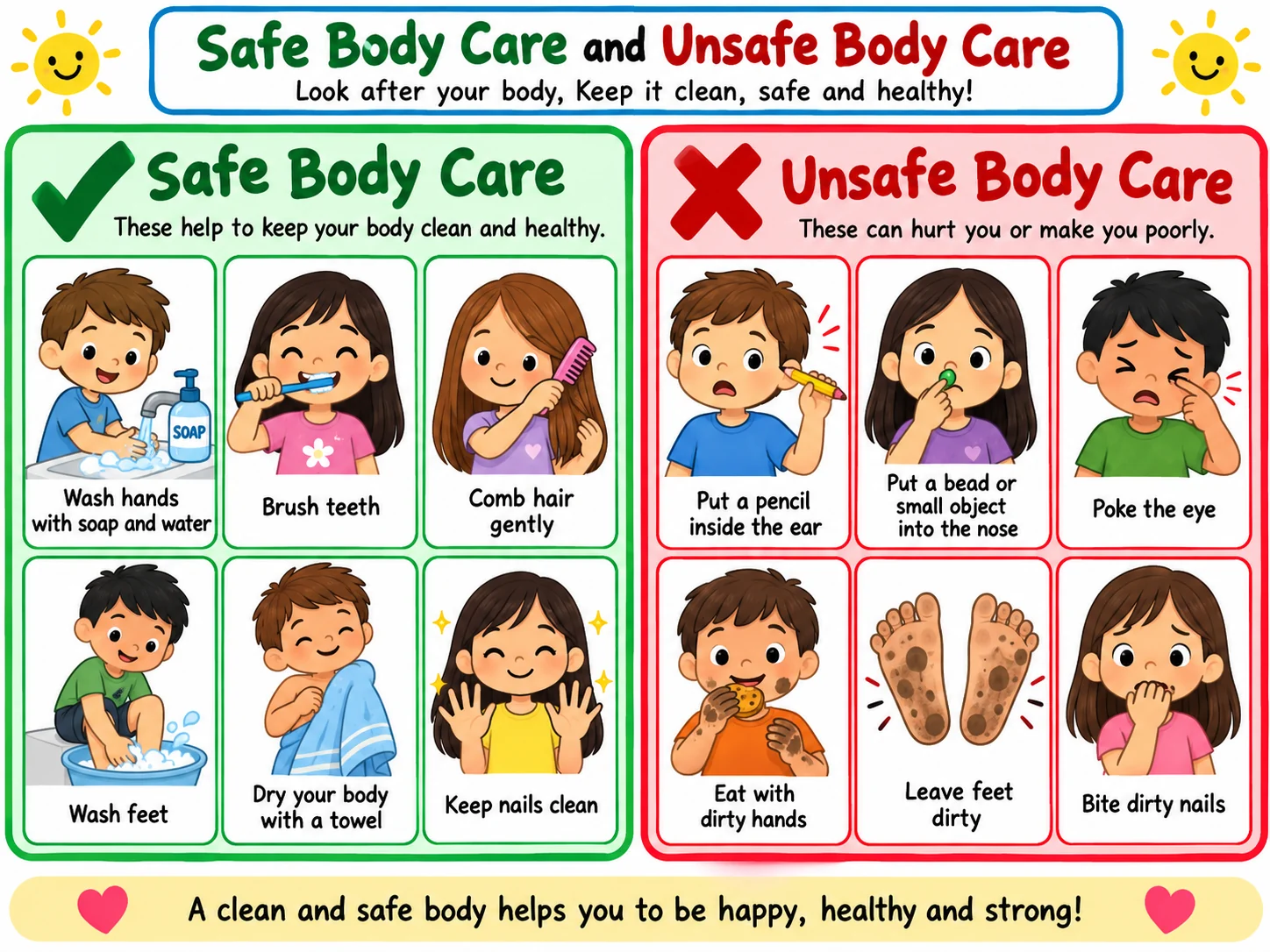
Picture Sorting Activity
The teacher prepares two headings:
SAFE BODY CARE
and
UNSAFE BODY CARE
Pupils sort pictures such as:
- Washing hands.
- Brushing teeth.
- Combing hair gently.
- Putting a pencil inside the ear.
- Putting a bead inside the nose.
- Poking the eyes.
- Washing the feet.
- Keeping nails clean.
A Simple Daily Body-Care Routine
Morning
- Brush the teeth.
- Bathe.
- Dry the body.
- Arrange the hair.
- Wear clean clothes.
During the Day
- Wash hands before eating.
- Wash hands after using the toilet.
- Keep the body neat.
- Avoid unsafe behaviour.
Evening
- Wash or bathe when necessary.
- Clean dirty feet.
- Brush the teeth before bed.
- Change into clean sleeping clothes where available.
F: LESSON PRESENTATION
F1: Teachers’ Activities
- Revises materials used for caring for the body from Week Four.
- Displays a chart of the human body.
- Asks pupils to identify familiar body parts.
- Explains the meaning of caring for each part of the body.
- Demonstrates simple ways of caring for the head and hair.
- Discusses safe care of the eyes.
- Explains how to care for the ears without inserting objects.
- Discusses simple care of the nose.
- Demonstrates proper use of toothbrush and toothpaste.
- Demonstrates handwashing.
- Discusses care of fingernails.
- Explains bathing and care of the skin.
- Demonstrates how the feet should be washed and dried.
- Uses the body-part-and-care table for revision.
- Guides pupils through the What Do I Need? activity.
- Conducts the Safe Body Care and Unsafe Body Care sorting activity.
- Asks oral questions and corrects pupils where necessary.
F2: Pupils’ Activities
- Recall body-care materials learnt previously.
- Identify different body parts on the chart.
- Mention ways of caring for the hair.
- State ways of keeping the eyes safe.
- State why objects should not be put inside the ears or nose.
- Demonstrate brushing movements using a model or picture.
- Demonstrate proper handwashing movements.
- Identify clean and dirty nails.
- Mention materials used for bathing.
- State ways of caring for the legs and feet.
- Match body parts with care materials.
- Sort safe and unsafe body-care pictures.
- Mention good body-care habits.
- Answer the teacher’s questions.
G: CONCLUSION
The teacher revises the different parts of the body and how each one should be cared for.
The teacher reminds pupils that every part of the body is important.
Pupils should keep the hair, eyes, ears, nose, mouth, hands, skin, legs and feet clean and safe.
The teacher emphasises that pupils should never put sharp or small objects into their eyes, ears or nose, and should tell a responsible adult if any body part is painful or injured.
Pupils are encouraged to practise good personal hygiene every day.
Continue with the next week’s Home Economics lesson.
H: EVALUATION GUIDE
Pupils should be able to answer the following questions:
- What does it mean to care for the body?
- Mention six parts of the body that need regular care.
- Mention three ways of caring for the hair.
- What should you keep away from your eyes?
- Should you put objects inside your ears?
- Mention two ways of caring for the ears.
- Mention two ways of caring for the nose.
- What materials do we use for brushing the teeth?
- How many times should the teeth be brushed each day?
- Mention four times when we should wash our hands.
- Why should fingernails be kept clean?
- Mention four materials used for bathing.
- What do we use to dry the body?
- Mention three ways of caring for the feet.
- Why should we wear suitable footwear?
- Complete: We wash our hands with soap and clean ______.
- Complete: We arrange our hair with a comb or ______.
- State whether this is safe or unsafe: Putting a pencil inside the ear.
- State whether this is safe or unsafe: Brushing the teeth every morning and night.
- State whether this is safe or unsafe: Washing and drying the feet properly.