
TOPIC: MATERIALS USED FOR CARE OF THE BODY
A: TEACHING AND LEARNING MATERIALS
- Bathing soap.
- Sponge or washcloth.
- Clean water.
- Bucket or basin.
- Clean towel.
- Toothbrush.
- Toothpaste.
- Comb.
- Hairbrush.
- Suitable body cream.
- Clean clothes.
- Picture cards showing different body-care materials.
- Chart showing each material and its use.
- Pupils’ writing books and pencils.
B: REFERENCE MATERIALS
- Primary 1 Home Economics Scheme of Work.
- Recommended Home Economics textbook for Primary 1.
- Online educational resources.
C: PREVIOUS KNOWLEDGE
Review the previous week’s Home Economics lesson.
The pupils have learnt why the body should be cared for every day. They know that regular body care helps to remove dirt and sweat, keeps the body neat and supports good personal hygiene. They have also seen common materials such as soap, sponge, towel and toothbrush at home.
D: PERFORMANCE OBJECTIVES
By the end of the lesson, pupils should be able to:
- Explain body-care materials in simple words.
- Mention at least eight materials used for caring for the body.
- Identify body-care materials from real objects or pictures.
- State the use of soap.
- State the use of a sponge or washcloth.
- State the use of clean water.
- State the use of a towel.
- Explain the uses of a toothbrush and toothpaste.
- State the use of a comb or hairbrush.
- State the use of body cream.
- Match body-care materials with their correct uses.
- Demonstrate simple and safe ways of using some body-care materials.
- State simple ways of keeping body-care materials clean.
E: CONTENT
Meaning of Body-Care Materials
Body-care materials are things we use to keep our body clean, neat and comfortable.
We use different materials for different parts of the body.
For example:
- Soap helps us wash the body.
- A toothbrush helps us clean the teeth.
- A comb helps us arrange the hair.
- A towel helps us dry the body.
We should use body-care materials properly.
Common Materials Used for Caring for the Body
Some common body-care materials are:
- Soap.
- Sponge or washcloth.
- Clean water.
- Bucket or basin.
- Towel.
- Toothbrush.
- Toothpaste.
- Comb.
- Hairbrush.
- Body cream.
- Clean clothes.
1. SOAP
Soap is used for washing.
We may use suitable soap to wash:
- The hands.
- The body.
- Some washable personal items.
Soap works with water to help remove dirt and grease.
How Soap Is Used
When bathing:
- Wet the body with clean water.
- Apply suitable soap to the sponge or washcloth.
- Wash the body gently.
- Rinse the soap away with clean water.
- Dry the body.
Important Rule
Soap should not be deliberately put into the:
- Eyes.
- Mouth.
- Nose.
If soap enters the eyes, rinse them with plenty of clean water and tell an adult.
2. SPONGE OR WASHCLOTH
A sponge or washcloth can be used during bathing.
It helps to wash the skin.
We use it with:
- Water.
- Suitable soap.
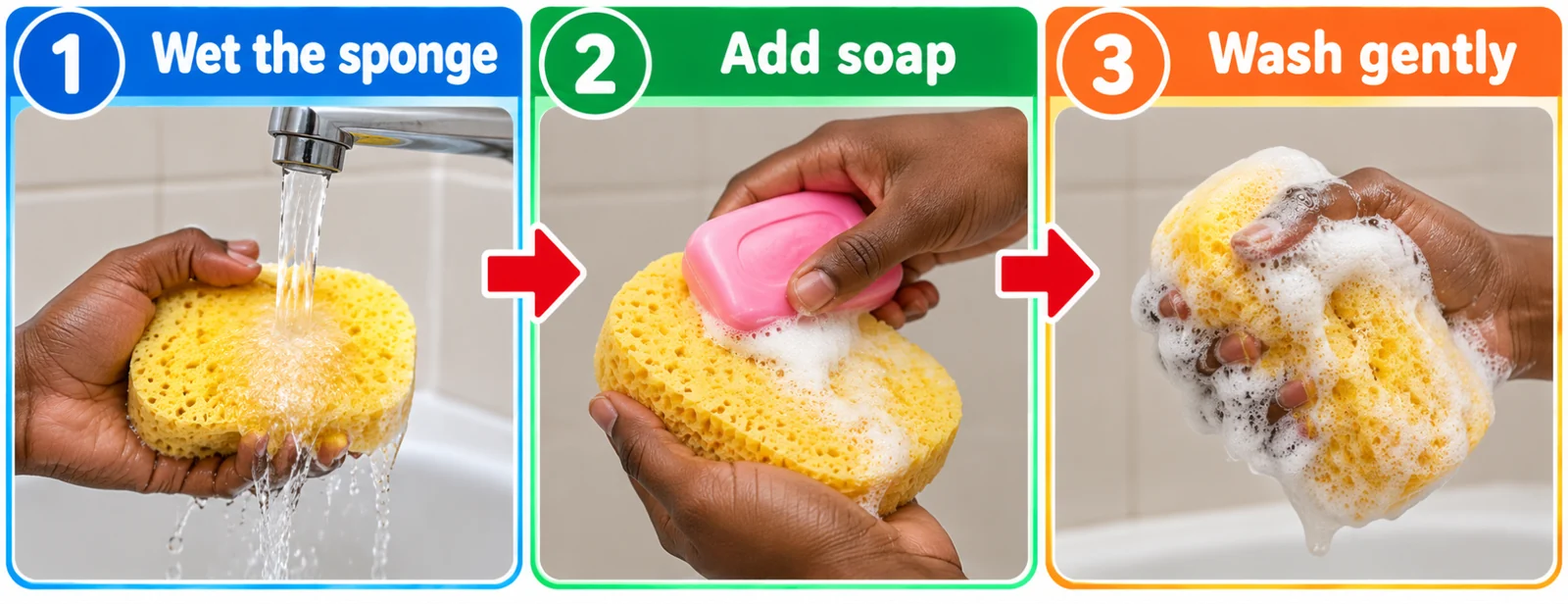
How to Use a Sponge
- Wet the sponge.
- Put a little soap on it.
- Rub the body gently.
- Rinse the body.
- Rinse the sponge after bathing.
- Keep it where it can dry properly.
We should not scrub the skin so roughly that it becomes sore.
3. CLEAN WATER
Water is one of the most important materials for body care.
Clean water is used for:
- Bathing.
- Washing hands.
- Washing the face.
- Rinsing the mouth.
- Cleaning some body-care materials.
Why Clean Water Is Important
Water helps to:
- Wash away dirt.
- Rinse away soap.
- Keep the body clean.
We should use clean water for personal hygiene.
Simple Body-Care Rule
SOAP + CLEAN WATER = CLEANER BODY
4. BUCKET OR BASIN
A bucket or basin may be used to hold water.
It should be:
- Clean.
- Kept in a proper place.
- Emptied when necessary.
A bucket used for bathing should not be left where someone can trip over it.
Small children should not be left alone near large containers of water.
5. TOWEL
A towel is used for drying the body after washing or bathing.
A towel may be used to dry:
- The face.
- The hands.
- The body.
- The feet.
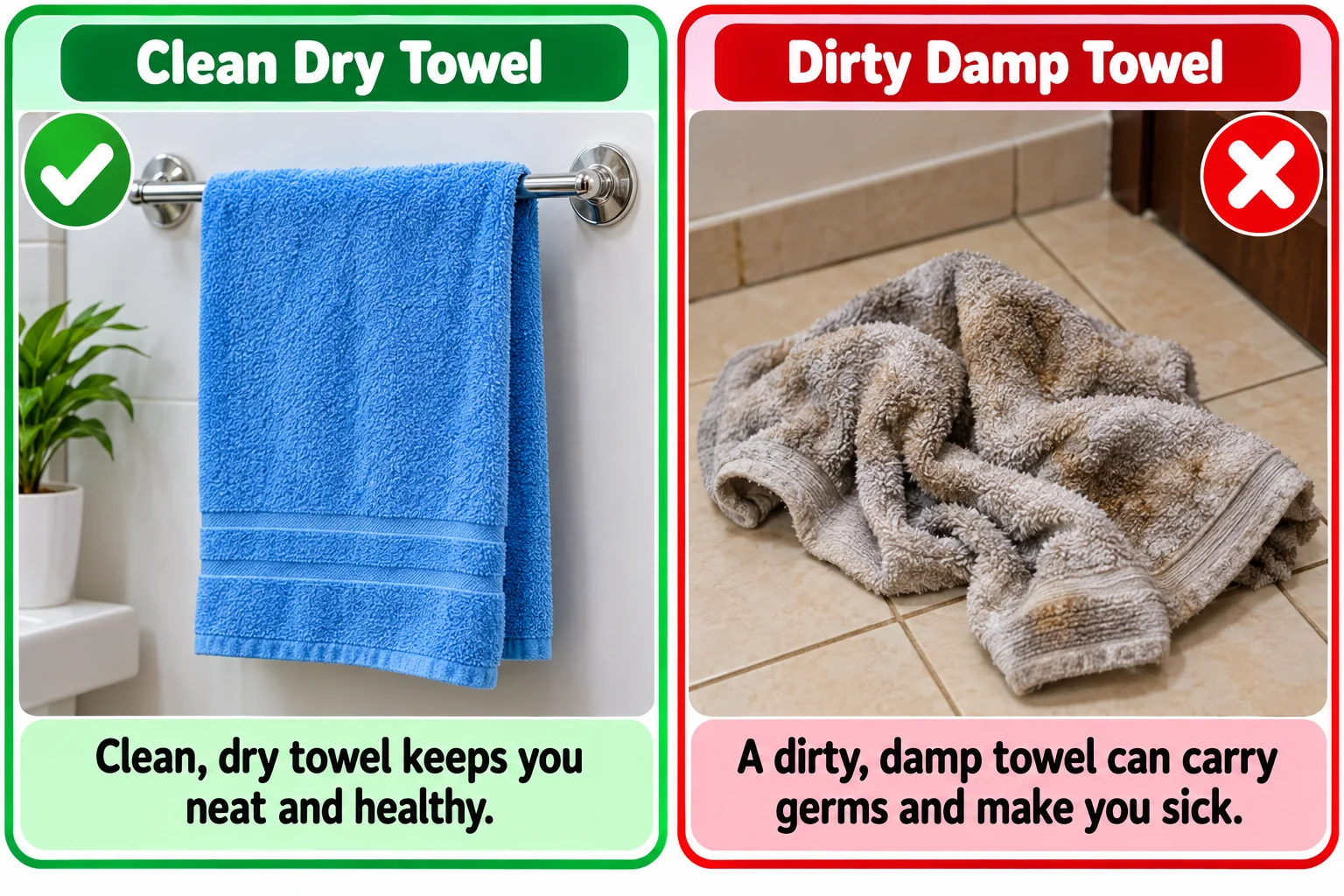
How to Care for a Towel
A towel should be:
- Kept clean.
- Dried properly after use.
- Washed regularly.
- Kept in a clean place.
A personal towel should not be shared carelessly.
6. TOOTHBRUSH
A toothbrush is used to clean the teeth.
A toothbrush has:
- A handle.
- Bristles.
The bristles help clean the surfaces of the teeth.
Good Toothbrush Habits
We should:
- Use our own toothbrush.
- Keep it clean.
- Rinse it after brushing.
- Store it properly.
- Never share it with another person.
7. TOOTHPASTE
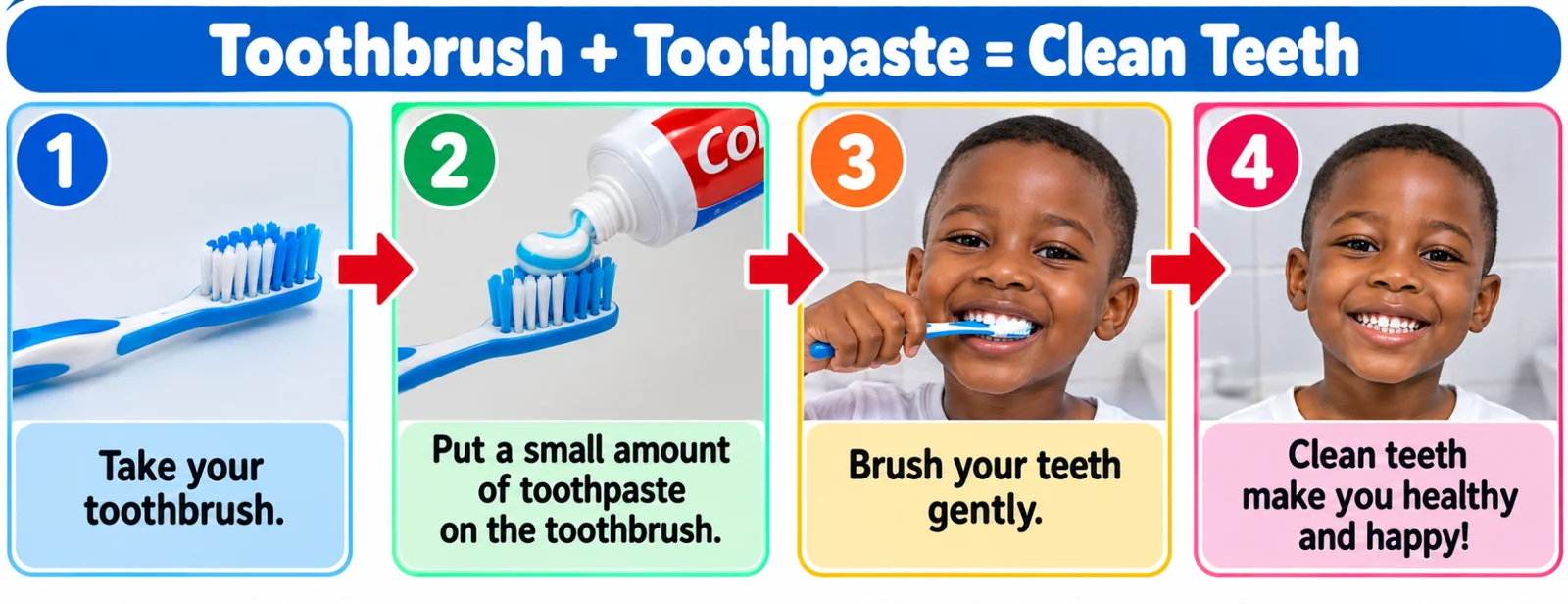
Toothpaste is used with a toothbrush to clean the teeth.
A small amount of suitable toothpaste is enough.
The teacher should remind pupils:
- Toothpaste is for brushing the teeth.
- It should not be eaten like food.
- Pupils should follow the guidance of a parent, caregiver or teacher.
Toothbrush and Toothpaste Work Together
8. COMB
A comb is used to arrange the hair.
A comb has teeth that help to separate and arrange the hair.
Different combs may be suitable for different hair types.
How to Use a Comb
- Hold the comb properly.
- Comb the hair gently.
- Do not pull the hair roughly.
- Keep the comb clean after use.
Hair should be handled gently.
9. HAIRBRUSH
A hairbrush may also be used to arrange suitable hair.
Some people use:
- A comb.
- A brush.
- Both.
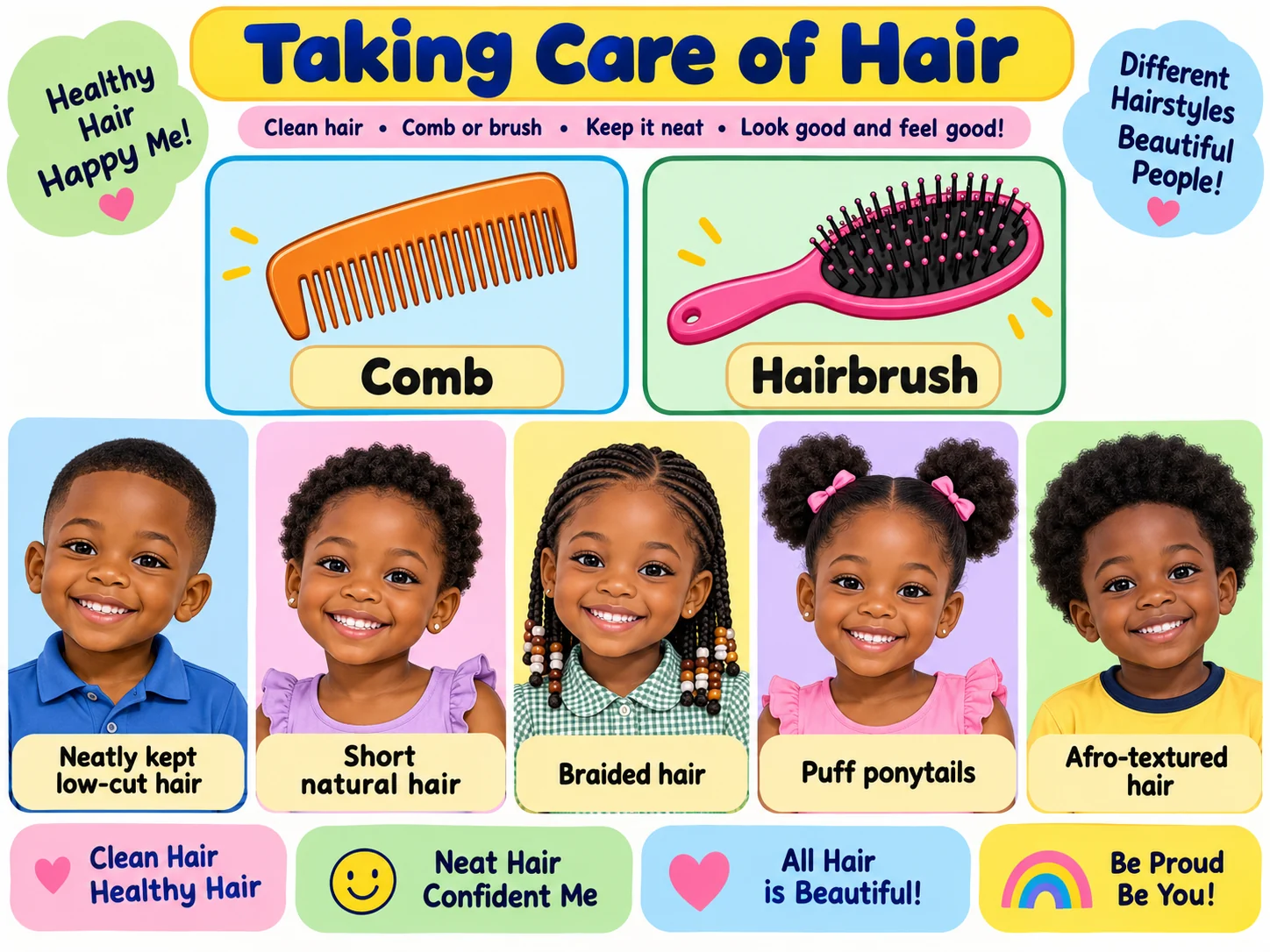
The material used depends on the person’s hairstyle and hair texture.
There is no single hairstyle that every child must have.
The important thing is for the hair to be clean and neat.
10. BODY CREAM
A suitable body cream or moisturiser may be used on the skin.
It may help keep dry skin comfortable.
Children should use creams chosen or approved by their parents or caregivers.
We should not:
- Use unknown creams.
- Share medicated creams without adult guidance.
- Put body cream into the eyes or mouth.
Not every child needs to use the same type of cream.
11. CLEAN CLOTHES
Clean clothes are also important in personal care.
After bathing, we should wear clean clothes.
Examples include:
- Shirt.
- Dress.
- Shorts.
- Skirt.
- Underwear.
- School uniform.
Clean clothes help us remain neat after bathing.
Dirty or sweaty clothes should be changed when necessary.
Materials and Their Uses
| Body-Care Material | Main Use |
|---|---|
| Soap | Washing the body and hands |
| Sponge/Washcloth | Washing the skin |
| Clean water | Bathing, washing and rinsing |
| Bucket/Basin | Holding water |
| Towel | Drying the body |
| Toothbrush | Brushing the teeth |
| Toothpaste | Used with toothbrush to clean teeth |
| Comb | Arranging the hair |
| Hairbrush | Brushing suitable hair |
| Body cream | Helps keep suitable skin comfortable |
| Clean clothes | Cover the clean body neatly |

Materials Used for Different Parts of the Body
Different body parts may need different materials.
| Body Part | Materials |
|---|---|
| Skin/Body | Water, soap, sponge, towel |
| Hands | Water, soap, towel |
| Teeth | Toothbrush, toothpaste, clean water |
| Hair | Comb or hairbrush |
| Skin after bathing | Suitable body cream where used |
| Whole body | Clean clothes |
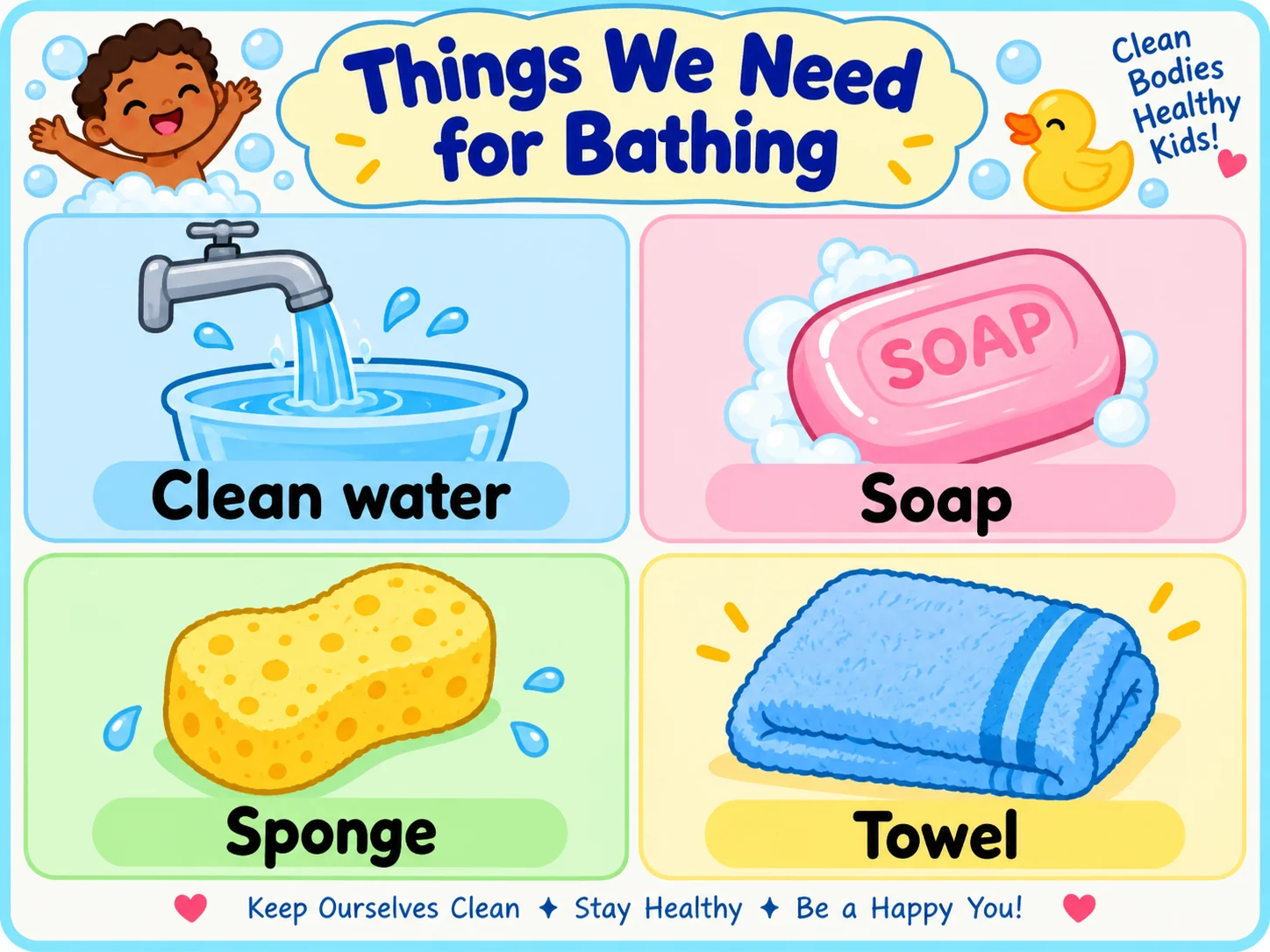
Bathing Materials
The main materials used for bathing may include:
- Clean water.
- Soap.
- Sponge or washcloth.
- Bucket or basin.
- Towel.
Materials Used for Caring for the Teeth
We mainly use:
- Toothbrush.
- Toothpaste.
- Clean water.
The toothbrush and toothpaste should be used properly.
After brushing:
- Rinse the toothbrush.
- Keep it in its proper place.
- Keep the brushing area clean.
Materials Used for Caring for Hair
Hair-care materials may include:
- Comb.
- Hairbrush.
- Suitable hair products chosen by an adult where necessary.
The comb or hairbrush should be kept clean.
We should not throw it on a dirty floor.
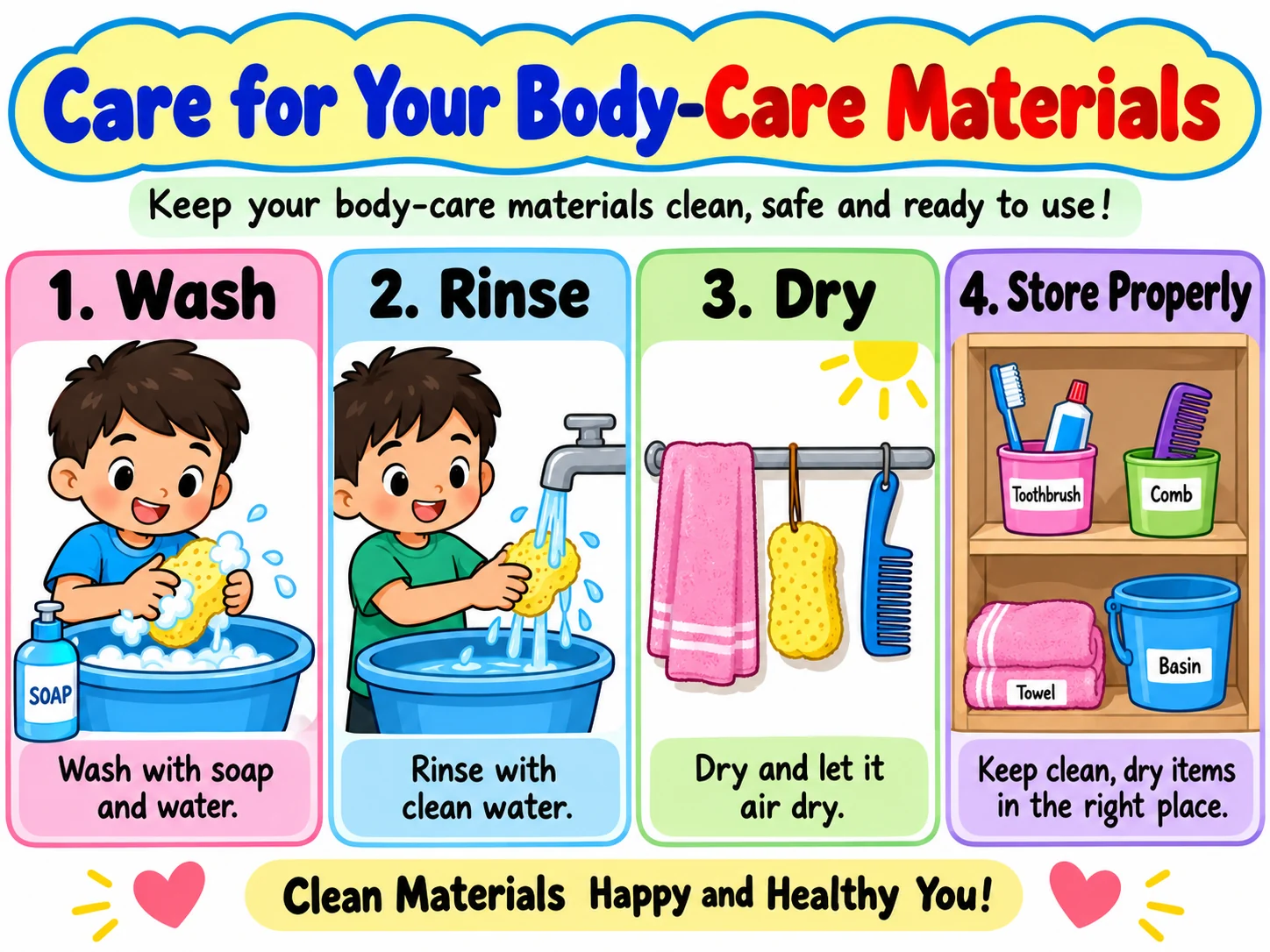
How to Keep Body-Care Materials Clean
Body-care materials also need care.
We should:
- Rinse a sponge after use.
- Dry the sponge properly.
- Wash towels regularly.
- Keep toothbrushes clean.
- Rinse toothbrushes after use.
- Keep combs and brushes clean.
- Keep body-care items in proper places.
- Keep buckets and basins clean.
Personal Body-Care Materials
Some body-care materials are personal.
Examples include:
- Toothbrush.
- Towel.
- Comb or hairbrush.
These materials should not be shared carelessly.
Why?
Personal items come into close contact with the body.
Keeping them personal and clean is a good hygiene habit.
Using Body-Care Materials Safely
Pupils should learn simple safety rules.
Soap
- Do not put it in the mouth.
- Keep it away from the eyes.
Toothpaste
- Use only a small amount.
- Do not eat it like food.
Comb and Hairbrush
- Use them gently.
- Do not use them to hit another person.
Bucket
- Keep it out of walkways.
- Do not play inside or around containers filled with water.
Cream
- Use only what an adult approves.
- Do not taste it.

Choosing the Correct Material
The teacher asks pupils to choose the correct material.
I want to wash my hands.
I need:
Soap and clean water.
I want to dry my body.
I need:
A towel.
I want to brush my teeth.
I need:
A toothbrush and toothpaste.
I want to arrange my hair.
I need:
A comb or hairbrush.
I want to bathe.
I need:
Clean water, soap and a sponge or washcloth.
Matching Activity
Match the material to what it does.
SOAP → WASHING
TOWEL → DRYING
TOOTHBRUSH → CLEANING TEETH
COMB → ARRANGING HAIR
BUCKET → HOLDING WATER
Classroom Sorting Activity
The teacher displays real objects or picture cards.
The pupils sort them into groups.
Bathing Materials
- Soap.
- Sponge.
- Water.
- Towel.
Teeth-Care Materials
- Toothbrush.
- Toothpaste.
Hair-Care Materials
- Comb.
- Hairbrush.

What Does Not Belong?
The teacher may show groups of objects.
Group One
Soap – Sponge – Towel – Toy car
Question:
Which one is not mainly a body-care material?
Answer:
Toy car.
Group Two
Toothbrush – Toothpaste – Comb – Football
Answer:
Football.
This activity helps pupils recognise body-care materials.
Practical Demonstration
The teacher displays:
- Soap.
- Sponge.
- Towel.
- Toothbrush.
- Toothpaste.
- Comb.
The teacher demonstrates:
- How soap and water are used for washing the hands.
- How a towel is used for drying.
- How a small amount of toothpaste is placed on a toothbrush.
- How a comb is used gently on suitable hair.
The demonstration should use clean materials.
Pupils may demonstrate safe actions without sharing toothbrushes or other personal items.
Our Body-Care Materials Rule
USE THEM CORRECTLY
↓
KEEP THEM CLEAN
↓
DRY THEM WELL
↓
STORE THEM PROPERLY
Remember
Different body-care materials have different uses.
Using the correct material helps us take proper care of the body.
F: LESSON PRESENTATION
F1: Teachers’ Activities
- Revises reasons for daily care of the body.
- Introduces the meaning of body-care materials.
- Displays real examples of soap, sponge, water, towel, toothbrush, toothpaste and comb.
- Allows pupils to observe and name familiar items.
- Explains the use of soap.
- Demonstrates the use of a sponge or washcloth.
- Explains the importance of clean water.
- Demonstrates how a towel is used for drying.
- Identifies toothbrush and toothpaste as materials for cleaning the teeth.
- Identifies comb and hairbrush as materials for arranging the hair.
- Explains the simple use of body cream where appropriate.
- Discusses the importance of clean clothes.
- Uses the materials-and-uses table for comparison.
- Explains how body-care materials should be kept clean.
- Discusses personal items that should not be shared carelessly.
- Conducts the Choose the Correct Material activity.
- Conducts the classroom sorting activity.
- Demonstrates simple safe uses of the materials.
- Asks oral questions and corrects pupils where necessary.
F2: Pupils’ Activities
- Recall reasons for caring for the body.
- Name body-care materials displayed by the teacher.
- Identify soap.
- Identify a sponge or washcloth.
- Identify a towel.
- Identify a toothbrush and toothpaste.
- Identify a comb and hairbrush.
- Match body-care materials with their uses.
- Sort materials into bathing, teeth-care and hair-care groups.
- State the use of each material.
- Demonstrate handwashing using soap and water.
- Demonstrate how a towel is used.
- Show how a comb is held and used gently.
- Mention ways of keeping body-care materials clean.
- Identify personal body-care items.
- Answer the teacher’s questions.
G: CONCLUSION
The teacher revises the different materials used for caring for the body.
Pupils are reminded that:
- Soap and water are used for washing.
- A sponge or washcloth helps us wash the body.
- A towel dries the body.
- A toothbrush and toothpaste clean the teeth.
- A comb or hairbrush helps arrange the hair.
- Clean clothes help us remain neat after bathing.
The teacher reminds pupils to use body-care materials properly, keep them clean and store them in suitable places.
Continue with the next week’s Home Economics lesson.
H: EVALUATION GUIDE
Pupils should be able to answer the following questions:
- What are body-care materials?
- Mention eight materials used for caring for the body.
- What is soap used for?
- What is a sponge used for?
- Why do we need clean water?
- What is a towel used for?
- Mention two materials used for cleaning the teeth.
- What is a toothbrush used for?
- What is toothpaste used for?
- What is a comb used for?
- What is a hairbrush used for?
- Mention four materials used for bathing.
- Which material is used to hold water?
- Mention three ways of caring for body-care materials.
- Why should a toothbrush not be shared?
- Complete: We use a ______ to dry the body.
- Complete: We use a ______ to arrange the hair.
- Complete: Soap works with clean ______ when washing.
- Match: Toothbrush → ______ .
- Match: Towel → ______ .