
TOPIC: REASONS FOR DAILY CARE OF THE BODY
A: TEACHING AND LEARNING MATERIALS
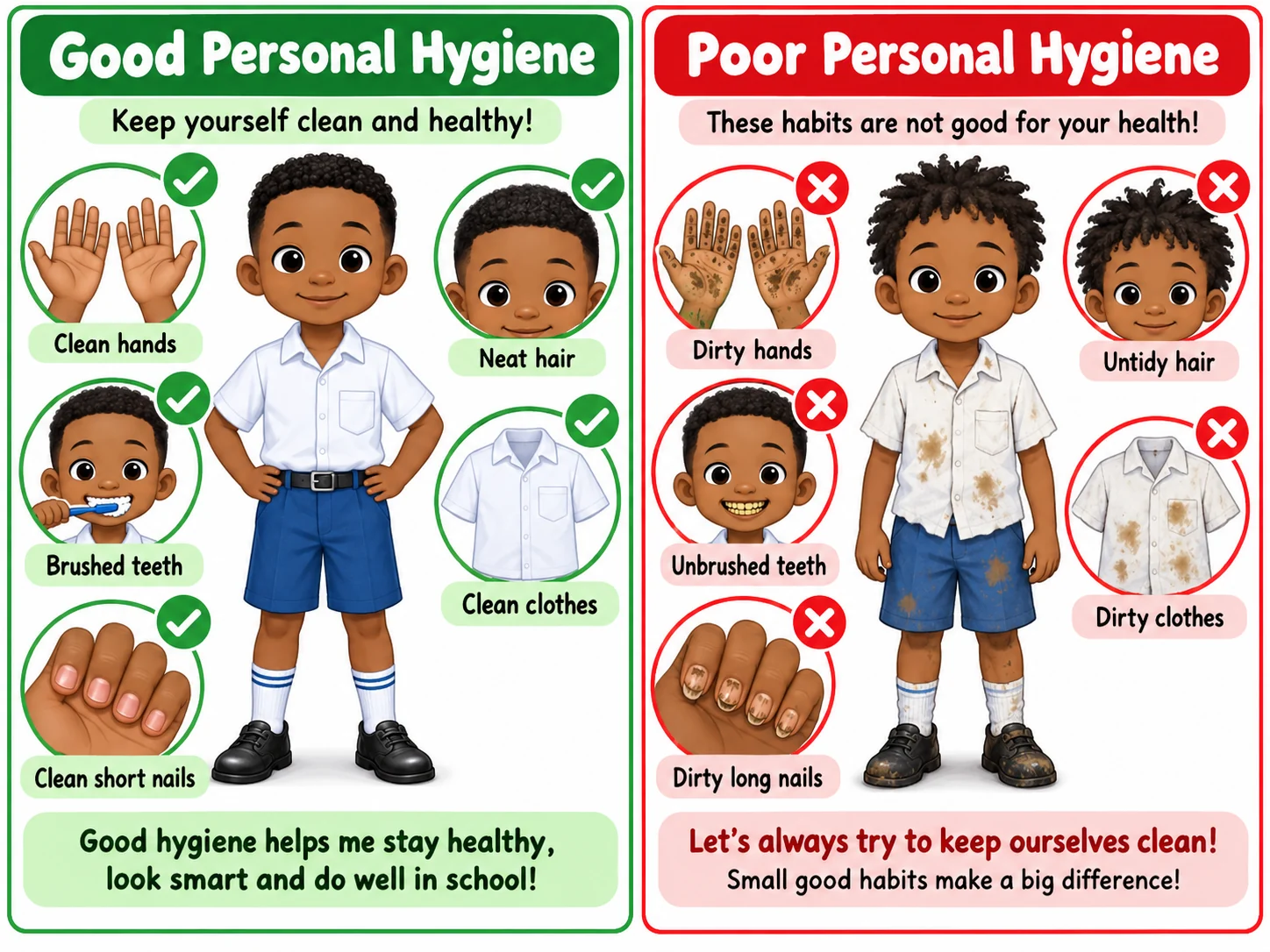
- Large picture of a clean and neatly dressed child.
- Picture of a dirty or untidy child.
- Soap.
- Sponge.
- Clean water.
- Towel.
- Toothbrush.
- Toothpaste.
- Comb or hairbrush.
- Nail brush.
- Clean clothes.
- Picture cards showing daily personal-care activities.
- Chart showing good body-care habits.
- Pupils’ writing books and pencils.
B: REFERENCE MATERIALS
- Primary 1 Home Economics Scheme of Work.
- Recommended Home Economics textbook for Primary 1.
- Online educational resources.
C: PREVIOUS KNOWLEDGE
Review the previous week’s Home Economics lesson.
The pupils have learnt different parts of the human body. They can identify the head, eyes, ears, nose, mouth, neck, trunk, chest and belly. They also know that every part of the body is important.
D: PERFORMANCE OBJECTIVES
By the end of the lesson, pupils should be able to:
- Explain body care in simple words.
- Mention simple ways of caring for the body every day.
- State at least five reasons for taking care of the body.
- Identify materials used for simple body care.
- Explain why the body should be kept clean.
- State why clean hands are important.
- Explain why clean clothes should be worn.
- Identify good and poor body-care habits from pictures.
- Demonstrate simple personal-care activities.
- State when some body-care activities should be carried out.
E: CONTENT
Meaning of Body Care
Body care means the things we do to keep our body clean, neat and healthy.
We should care for our body every day.
Body care includes:
- Bathing.
- Washing the hands.
- Brushing the teeth.
- Keeping the hair clean and neat.
- Keeping the nails clean.
- Wearing clean clothes.
- Keeping the feet clean.
- Using a clean towel.
Taking care of the body is part of personal hygiene.
Daily Care of the Body
Daily care means doing important body-care activities regularly, especially every day when necessary.
For example:
- We bathe regularly.
- We brush our teeth every day.
- We wash our hands at important times.
- We wear clean clothes.
- We keep our hair neat.
- We keep our nails clean.
Why Should We Care for Our Body?
There are many reasons for taking care of the body.
1. To Keep the Body Clean
During the day, the body may collect:
- Sweat.
- Dust.
- Dirt.
Bathing helps to wash away dirt and sweat.
A clean body feels fresh and comfortable.
Simple Example
After playing outside, a child may become sweaty and dusty.
Bathing with clean water and suitable soap helps to clean the body.
2. To Help Us Stay Healthy
Good hygiene helps reduce the spread of germs.
Germs are very tiny organisms. Some germs can make people sick.
We cannot usually see germs with our eyes.
Keeping the body and hands clean is one way of reducing the spread of harmful germs.
Simple Rule
Clean body → Better hygiene → Helps us stay healthy
3. To Remove Dirt and Sweat
When we run, play or work, we may sweat.
Sweat can make the body feel sticky.
Dust may also settle on the skin.
Bathing helps to remove:
- Sweat.
- Dust.
- Dirt.
4. To Prevent Bad Smell
A dirty, sweaty body may develop an unpleasant smell.
Regular bathing and wearing clean clothes help the body smell fresh.
We should also:
- Wash dirty clothes.
- Dry the body properly.
- Change very dirty or sweaty clothes.
Young pupils should use body-care products only as directed by a parent or responsible adult.
5. To Look Neat and Presentable
Taking care of the body helps us look neat.
A neat pupil may have:
- Clean skin.
- Neat hair.
- Clean clothes.
- Clean teeth.
- Clean nails.
Being neat does not mean wearing expensive clothes.
A simple, clean appearance is enough.
6. To Keep the Hands Clean
Our hands touch many things every day.
We touch:
- Books.
- Desks.
- Toys.
- Doors.
- Soil.
- Other objects.
Dirt and germs can get onto our hands.
We should wash our hands with soap and clean water.
Important Times to Wash the Hands
Wash your hands:
- Before eating.
- After using the toilet.
- After playing outside.
- After coughing, sneezing or blowing the nose into the hands.
- When the hands are visibly dirty.
- After touching rubbish.
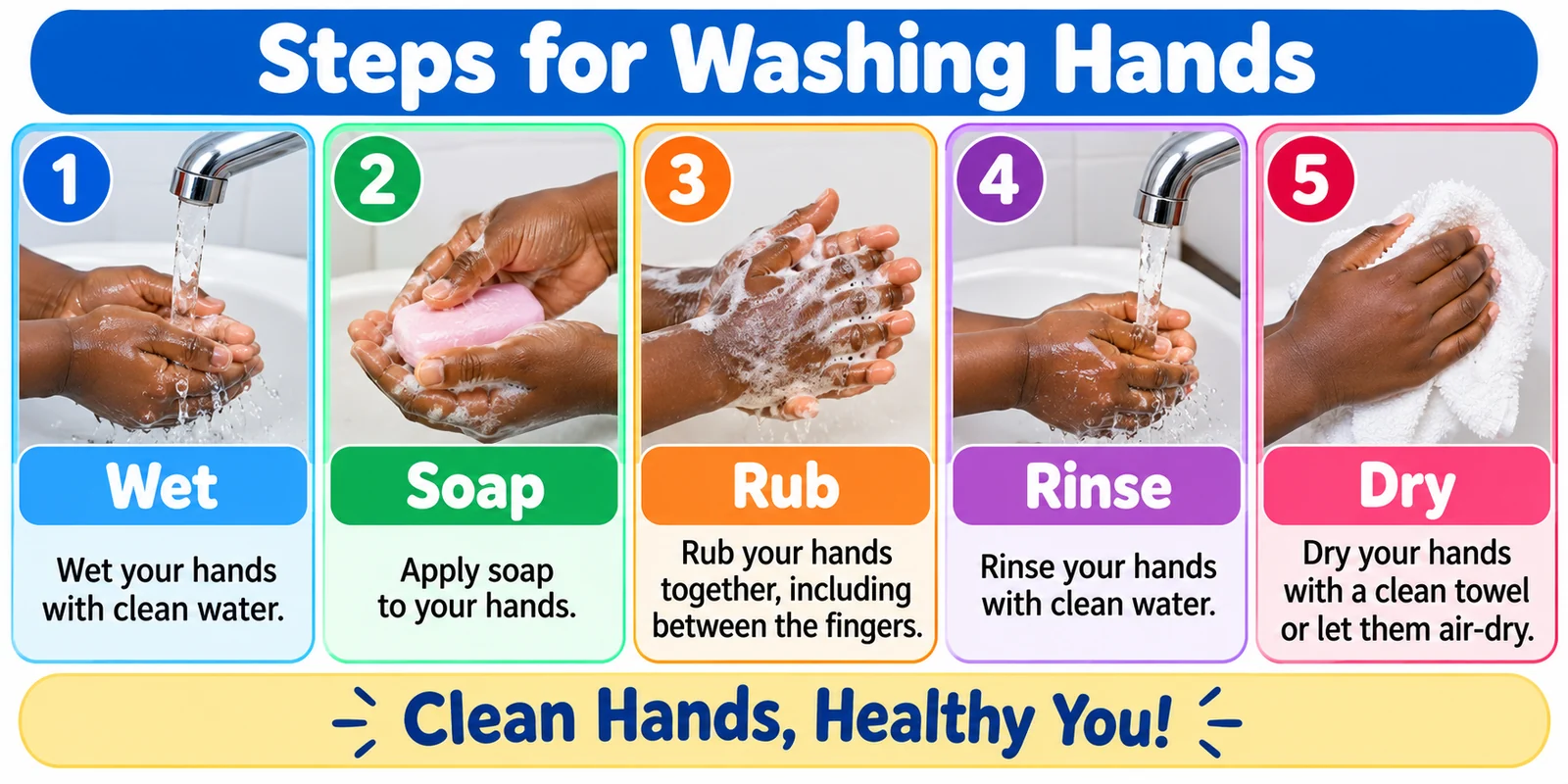
Simple Handwashing Steps
- Wet the hands with clean water.
- Apply soap.
- Rub the palms.
- Rub the backs of the hands.
- Wash between the fingers.
- Rinse properly.
- Dry with a clean towel or allow them to air-dry where appropriate.
WET
↓
SOAP
↓
RUB
↓
RINSE
↓
DRY
7. To Keep the Mouth and Teeth Clean
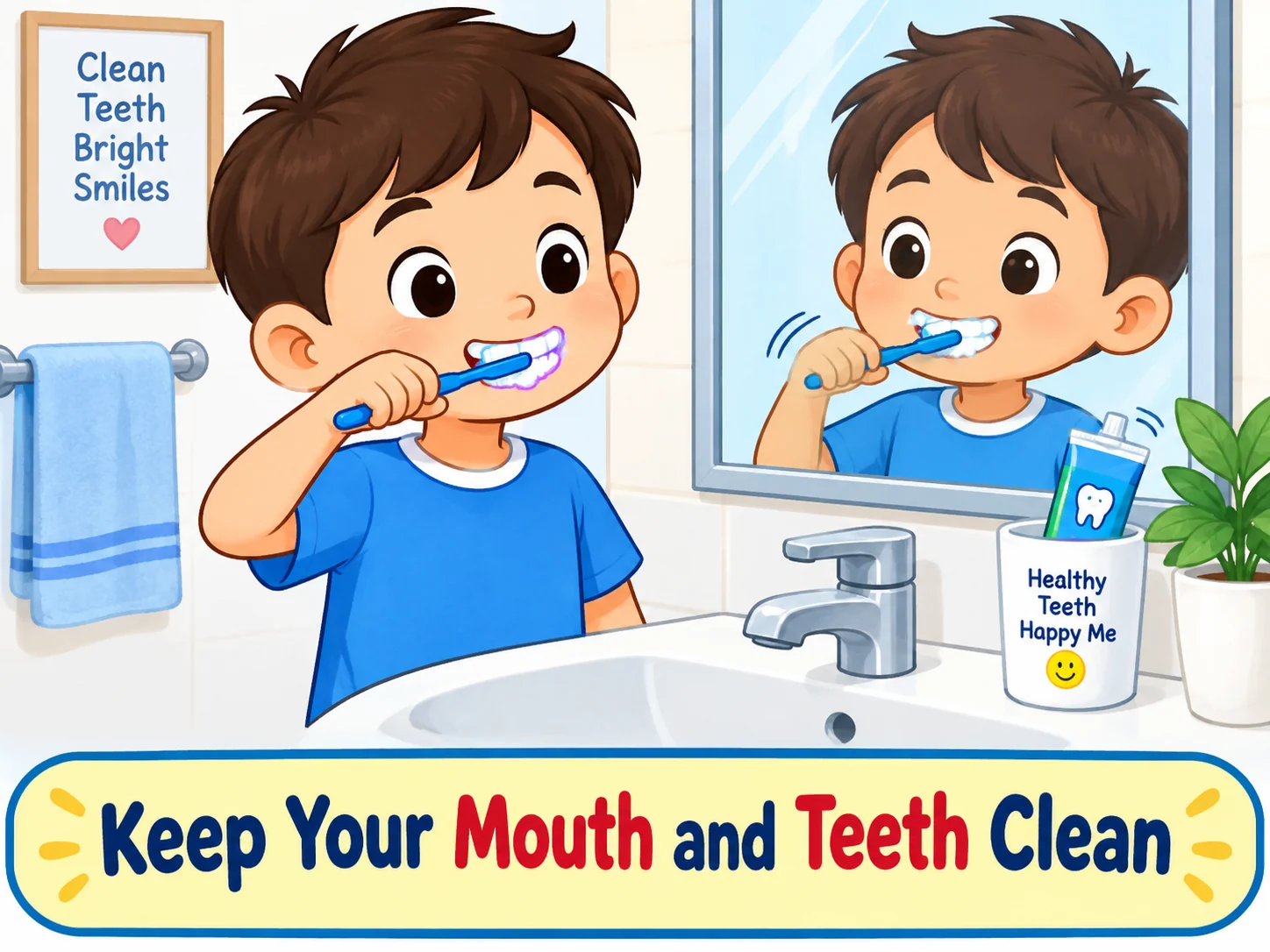
The mouth also needs daily care.
We should brush our teeth regularly with a toothbrush and suitable toothpaste.
Keeping the mouth clean helps us:
- Remove food remains.
- Keep the teeth clean.
- Keep the mouth fresh.
A toothbrush should not be shared with another person.
8. To Keep the Hair Neat
Hair should be kept clean and neat.
Depending on the hairstyle, hair may be:
- Combed.
- Brushed.
- Washed when necessary.
- Arranged neatly.
People have different hair textures and hairstyles.
Clean and neat hair is more important than having one particular hairstyle.
9. To Keep the Nails Clean
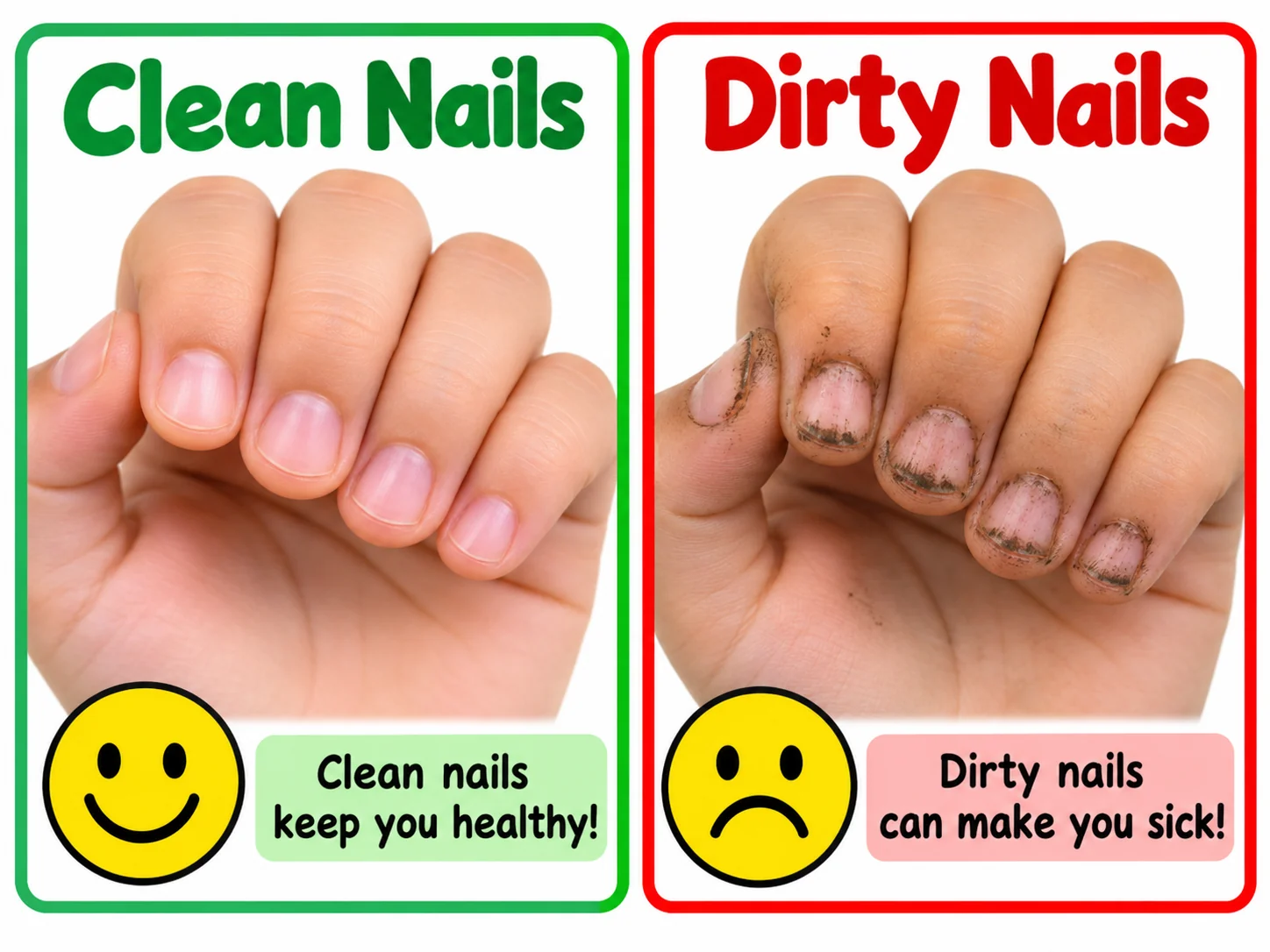
Dirt can collect under long or dirty fingernails.
We should:
- Wash the hands properly.
- Clean around the nails.
- Keep nails reasonably short with the help or supervision of an adult where necessary.
Children should not bite their nails.
Nail-cutting tools should be handled carefully.
10. To Keep Our Clothes Clean
Body care also includes wearing clean clothes.
Dirty clothes may contain:
- Sweat.
- Dust.
- Dirt.
We should wear clean clothes and change dirty clothes.
School uniforms should be kept neat where possible.
Clean clothes help us feel comfortable and presentable.
Body-Care Materials
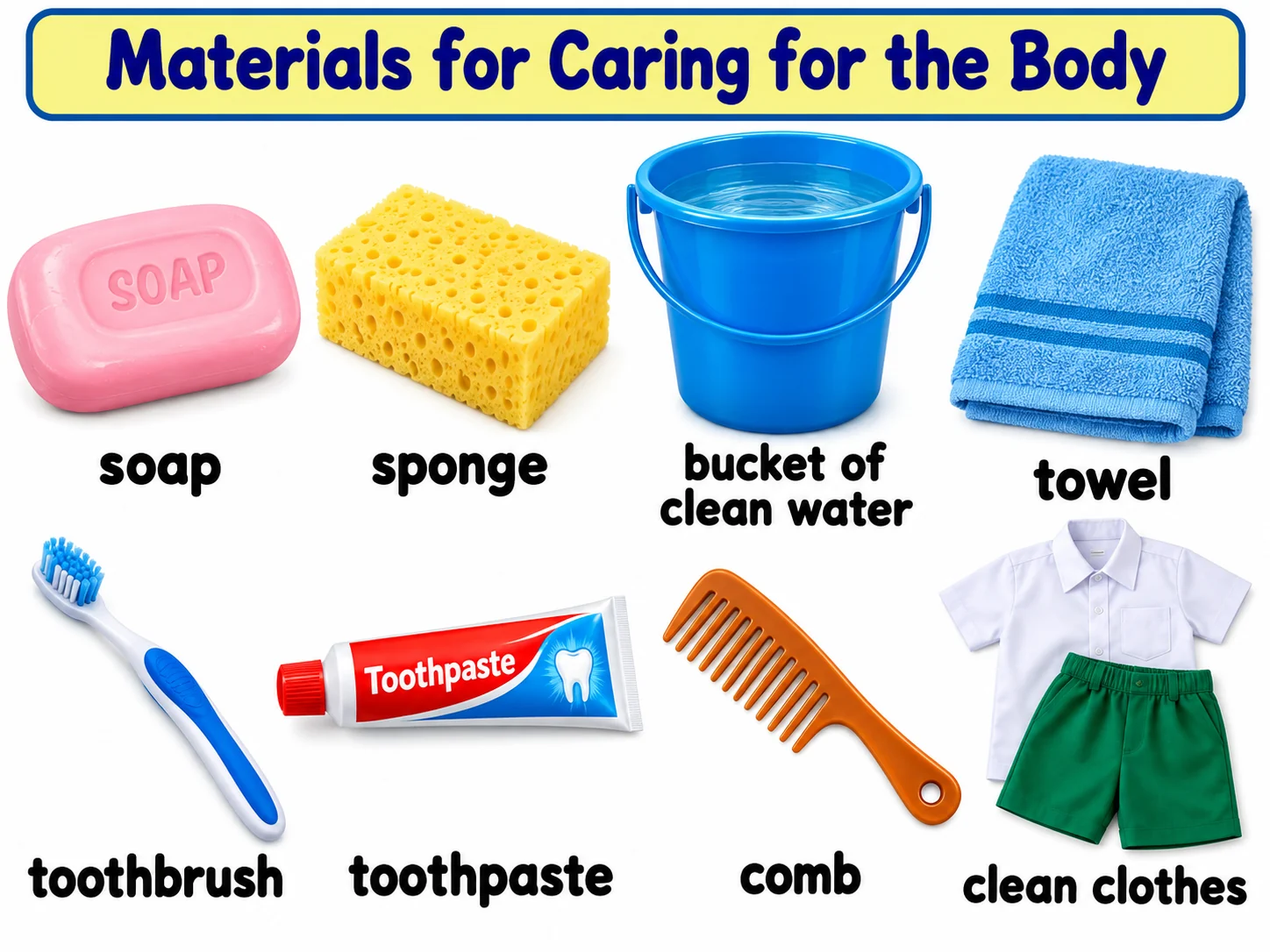
Different materials help us care for the body.
| Material | Use |
|---|---|
| Soap | Washing the body and hands |
| Sponge | Helps wash the body |
| Clean water | Bathing and washing |
| Towel | Drying the body |
| Toothbrush | Cleaning the teeth |
| Toothpaste | Used when brushing teeth |
| Comb | Arranging hair |
| Hairbrush | Brushing suitable hair |
| Clean clothes | Covering the body neatly |
Morning Body-Care Routine
A simple morning routine may include:
- Wake up.
- Use the toilet.
- Wash the hands.
- Brush the teeth.
- Bathe.
- Dry the body.
- Comb or arrange the hair.
- Wear clean clothes.
The exact order may be slightly different in different homes.
Simple Morning Routine
WAKE UP
↓
BRUSH TEETH
↓
BATHE
↓
DRY BODY
↓
ARRANGE HAIR
↓
WEAR CLEAN CLOTHES
Body Care After Playing
Children often run and play.
After outdoor play:
- Wash dirty hands.
- Wash dirty feet where necessary.
- Bathe when appropriate.
- Change very dirty clothes.
- Drink clean water when thirsty.
We should not carry visible dirt from outdoor play onto our bed or eating area.
Good and Poor Body-Care Habits
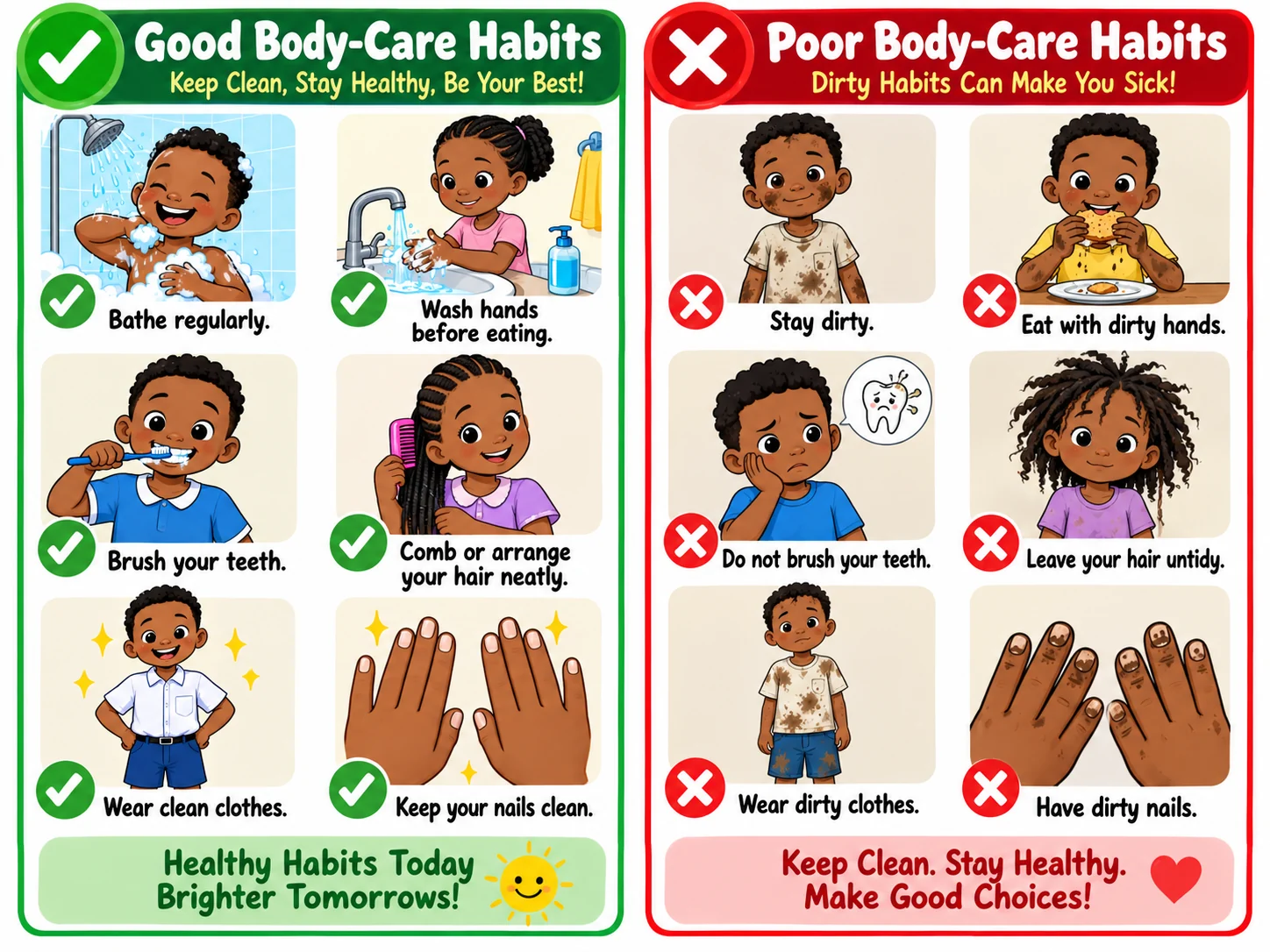
| Good Body-Care Habits | Poor Body-Care Habits |
|---|---|
| Bathing regularly | Staying dirty for a long time |
| Washing hands | Eating with dirty hands |
| Brushing teeth | Refusing to clean the teeth |
| Wearing clean clothes | Wearing very dirty clothes |
| Keeping hair neat | Leaving hair dirty and untidy |
| Keeping nails clean | Allowing dirt to remain under nails |
| Using a clean towel | Sharing very dirty personal items |
Personal Items
Some body-care items are personal.
This means they belong to one person and should not be shared carelessly.
Examples include:
- Toothbrush.
- Towel.
- Comb where appropriate.
We should keep personal items clean and in their proper places.
Why Cleanliness Matters at School
A pupil should come to school as clean and neat as possible.
Simple school hygiene habits include:
- Wearing clean clothes or uniform.
- Keeping the hands clean.
- Keeping the hair neat.
- Keeping the nails clean
- Using a clean handkerchief or tissue appropriately.
- Washing the hands before eating.
Good hygiene helps make the classroom more comfortable for everyone.
Clean Body and Dirty Body
The teacher should help pupils understand the difference without insulting anyone.
A child who is dirty should not be laughed at.
Instead, pupils should learn the correct habits and encourage cleanliness kindly.
Practical Activity: Choose the Correct Material
The teacher displays:
- Soap.
- Sponge.
- Towel.
- Toothbrush.
- Comb.
The teacher asks questions.
Question 1
What do we use to brush our teeth?
Answer: Toothbrush.
Question 2
What do we use to dry the body?
Answer: Towel.
Question 3
What can we use to arrange our hair?
Answer: Comb.
Question 4
What do we use with water to wash our hands?
Answer: Soap.
Picture Activity: Good Habit or Poor Habit?
The teacher displays pictures.
Picture One
A pupil washes the hands before eating.
Answer: Good habit.
Picture Two
A pupil eats with very dirty hands.
Answer: Poor habit.
Picture Three
A pupil brushes the teeth.
Answer: Good habit.
Picture Four
A pupil throws a dirty towel on the floor.
Answer: Poor habit.
Picture Five
A pupil wears clean clothes.
Answer: Good habit.
Why Daily Care Is Important
We care for our body every day because it helps us to:
- Stay clean.
- Remove dirt.
- Remove sweat.
- Reduce unpleasant body smell.
- Look neat.
- Develop healthy habits.
- Reduce the spread of germs.
- Feel fresh and comfortable.
Remember
A clean body is a well-cared-for body.
We should make good body care part of our daily routine.
F: LESSON PRESENTATION
F1: Teachers’ Activities
- Revises the body parts learnt in Weeks One and Two.
- Introduces the meaning of body care.
- Displays pictures of clean and untidy children.
- Guides pupils to identify differences in the hygiene habits shown.
- Explains reasons for taking care of the body every day.
- Displays soap, sponge, towel, toothbrush, toothpaste and comb.
- Explains the use of each body-care material.
- Discusses bathing and the removal of dirt and sweat.
- Explains the importance of clean hands.
- Demonstrates simple handwashing steps.
- Discusses care of the mouth, hair and nails briefly.
- Explains the importance of clean clothes.
- Guides pupils through the morning body-care routine.
- Conducts the Choose the Correct Material activity.
- Conducts the Good Habit or Poor Habit? picture activity.
- Reminds pupils not to laugh at another child because of appearance.
- Asks oral questions and corrects pupils where necessary.
F2: Pupils’ Activities
- Recall body parts learnt previously.
- Explain body care in simple words.
- Identify good body-care habits.
- Identify poor body-care habits.
- Mention reasons for caring for the body.
- Identify soap, sponge, towel, toothbrush and comb.
- State the use of each material.
- Demonstrate simple handwashing movements.
- Mention important times to wash the hands.
- Mention simple ways of keeping the mouth clean.
- Mention ways of keeping the hair neat.
- Identify clean and dirty nails from pictures.
- Arrange simple morning-care picture cards in order.
- Take part in the picture activities.
- Answer the teacher’s questions.
G: CONCLUSION
The teacher revises the meaning of daily care of the body and asks pupils to mention reasons why the body should be cared for.
The teacher reminds pupils that daily body care helps to remove dirt and sweat, keep the body neat, reduce unpleasant smell, support good hygiene and help reduce the spread of germs.
Pupils are encouraged to make bathing, brushing the teeth, washing the hands, keeping the hair and nails clean, and wearing clean clothes part of their regular personal-care routine.
The teacher informs pupils that they will learn more about the materials used for caring for the body in the next lesson.
Continue with the next week’s Home Economics lesson.
H: EVALUATION GUIDE
Pupils should be able to answer the following questions:
- What is body care?
- Mention five ways of caring for the body.
- Give five reasons why we care for our body every day.
- Why do we bathe?
- What can collect on the body after playing?
- Why should we wash our hands?
- Mention four times when the hands should be washed.
- What do we use to brush our teeth?
- What do we use to dry the body?
- Mention two materials used when bathing.
- What can we use to arrange the hair?
- Why should nails be kept clean?
- Why should we wear clean clothes?
- Mention three good body-care habits.
- Mention three poor body-care habits.
- Complete: We wash our hands with soap and clean ______.
- Complete: A toothbrush is used to clean the ______.
- Complete: A towel is used to ______ the body.
- State whether this is a good or poor habit: washing hands before eating.
- State whether this is a good or poor habit: eating with dirty hands.