
TOPIC: MAINTAINING PERSONAL HEALTH
A: TEACHING AND LEARNING MATERIALS
- Pictures showing healthy daily habits.
- Soap and clean water.
- Toothbrush and toothpaste.
- Clean towel.
- Pictures of healthy foods.
- Drinking water in a clean cup or bottle.
- Pictures showing children exercising, resting and sleeping.
- Chart showing correct sitting and standing posture.
- Pictures of clean and dirty surroundings.
- Pupils’ writing books and pencils.
B: REFERENCE MATERIALS
- Scheme of work.
- Recommended Home Economics textbook for Primary 1.
- Online educational resources.
C: PREVIOUS KNOWLEDGE
The pupils have learnt how to care for the hair, ears, nose and eyes. They also know that keeping different parts of the body clean helps them to stay neat and healthy.
D: PERFORMANCE OBJECTIVES
By the end of the lesson, pupils should be able to:
- Explain personal health in simple words.
- Mention habits that help to keep the body healthy.
- State the importance of personal cleanliness.
- Identify simple healthy foods and drinks.
- Explain why rest and sleep are important.
- Mention simple forms of exercise.
- Demonstrate good sitting and standing posture.
- Explain why the home and school surroundings should be kept clean.
E: CONTENT
Meaning of Personal Health
Personal health means taking good care of our body so that we can stay clean, strong and well.
A healthy child is able to:
- Learn.
- Play.
- Eat well.
- Sleep well.
- Carry out simple daily activities.
We can help ourselves stay healthy by practising good habits every day.
Healthy Habits
Some important healthy habits are:
- Bathing regularly.
- Brushing the teeth.
- Washing the hands.
- Wearing clean clothes.
- Eating healthy food.
- Drinking clean water.
- Exercising and playing.
- Resting and sleeping.
- Sitting and standing properly.
- Keeping our surroundings clean.
Simple Healthy-Living Chart
| Healthy Habit | Why It Is Important |
| Bathing | Keeps dirt and sweat away |
| Brushing the teeth | Keeps the mouth and teeth clean |
| Washing the hands | Helps remove dirt and germs |
| Eating healthy food | Helps the body grow and stay strong |
| Drinking clean water | Helps the body work properly |
| Exercise and active play | Helps keep the body strong and active |
| Rest and sleep | Help the body recover and prepare for a new day |
| Clean surroundings | Help us live and learn in a healthy place |
Personal Cleanliness
Personal cleanliness means keeping our body and the things we use clean.
We should keep the following clean:
- Body.
- Hair.
- Hands.
- Feet.
- Nails.
- Teeth.
- Clothes.
Good personal cleanliness helps us look neat and reduces the spread of germs.
Bathing Regularly
We should bathe regularly with:
- Clean water.
- Soap.
- Sponge.
Bathing helps to remove:
- Dirt.
- Sweat.
- Unpleasant body smell.
After bathing, we should dry the body with a clean towel and put on clean clothes.
Brushing the Teeth
The teeth should be brushed regularly.
We use:
- Toothbrush.
- Toothpaste.
- Clean water.
Brushing helps to remove food particles and keep the mouth clean.
Pupils should remember the mouth-care habits learnt during the first term.
Washing the Hands
Our hands touch many things every day.
They can pick up dirt and germs.
We should wash our hands:
- Before eating.
- After using the toilet.
- After playing.
- After touching dirty objects.
- After blowing or wiping the nose.
Simple Handwashing Steps
WET THE HANDS
↓
ADD SOAP
↓
RUB THE HANDS
↓
WASH BETWEEN FINGERS
↓
RINSE WITH CLEAN WATER
↓
DRY
Handwashing with soap and water is an important healthy habit. Pupils should learn to make it part of their daily routine.

Wearing Clean Clothes
After bathing, we should wear clean clothes.
We should not continue wearing very dirty or sweaty clothes when clean ones are available.
Clean clothes help us:
- Look neat.
- Feel comfortable.
- Maintain good personal hygiene.
Eating Healthy Food
Our body needs food to grow, play and learn.
Healthy foods include different types of food.
Examples are:
Energy-Giving Foods
These help give us energy for work and play.
Examples:
- Rice.
- Yam.
- Garri.
- Bread.
- Maize.
Body-Building Foods
These help the body to grow.
Examples:
- Beans.
- Eggs.
- Fish.
- Meat.
- Milk.
Fruits and Vegetables
These are important parts of healthy meals.
Examples:
- Orange.
- Banana.
- Pawpaw.
- Mango.
- Carrot.
- Tomato.
- Green vegetables.
We should eat different kinds of healthy food rather than eating only sweets and snacks.

Drinking Clean Water
Water is important for the body.
We should drink clean and safe water.
Clean water helps us to:
- Stay refreshed.
- Replace water lost from the body.
- Carry out normal body activities.
Water should be kept in a clean container.
We should not drink water that looks dirty or has been kept in an unsafe place.
Healthy Food and Less Healthy Choices
| Choose More Often | Take Less Often |
| Fruits | Sweets |
| Vegetables | Candy |
| Beans | Too many sugary snacks |
| Fish and eggs | Too many sugary drinks |
| Clean water | Fizzy drinks |
| Proper meals | Too many snacks instead of meals |
The aim is not to tell pupils that one food can never be eaten. They should learn that the body needs different healthy foods regularly.
Rest and Sleep
The body needs rest and sleep.
After playing, learning and doing other activities, the body becomes tired.
Rest helps the body relax.
Sleep helps the body prepare for another day.
A child should:
- Go to bed at a suitable time.
- Sleep in a comfortable place.
- Avoid staying awake very late without a good reason.
- Wake up ready for school and daily activities.
Enough sleep supports children’s health, concentration and learning.

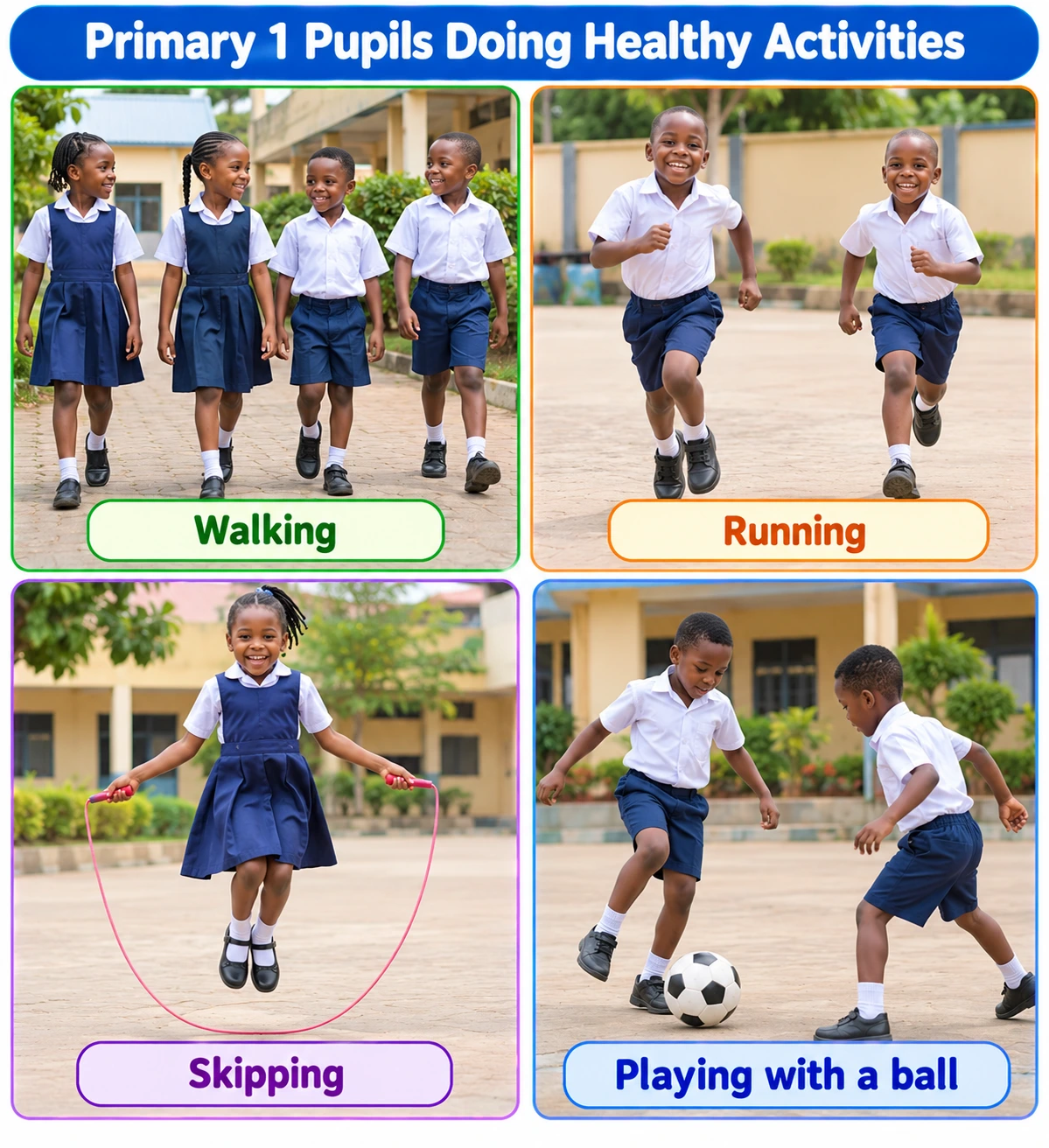
Exercise and Active Play
Exercise means moving the body to keep it active and strong.
For young children, exercise can also happen through active play.
Examples include:
- Walking.
- Running.
- Jumping.
- Skipping.
- Dancing.
- Playing simple games.
Regular physical activity helps children stay active and supports healthy growth.
Exercise Safety
When playing or exercising:
- Play in a safe place.
- Avoid pushing other children.
- Keep sharp objects away.
- Drink clean water when necessary.
- Rest when tired.
Good Posture
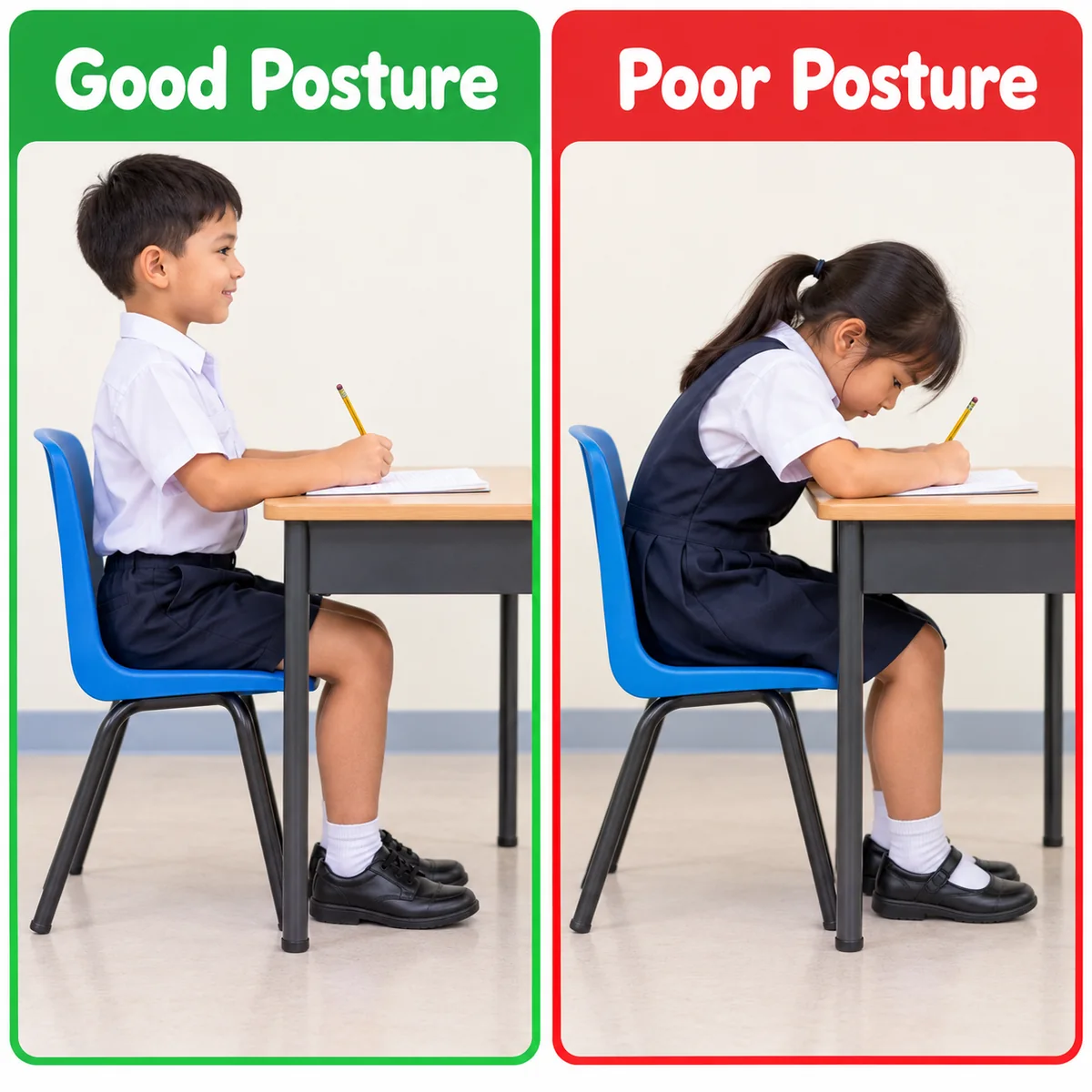
Posture means the way we hold our body when we sit, stand or walk.
We should learn to sit and stand properly.
Correct Sitting Posture
When sitting:
- Sit upright.
- Keep the back comfortable.
- Face forward.
- Keep the feet in a comfortable position.
- Avoid bending over the desk for a long time.
Correct Standing Posture
When standing:
- Stand upright.
- Keep the head up.
- Face forward.
- Balance the body well.
Simple Posture Guide
| Good Posture | Poor Posture |
| Sitting upright | Bending too far over the desk |
| Standing straight | Slouching |
| Looking forward | Bending the neck unnecessarily |
| Carrying the school bag properly | Carrying a very heavy bag carelessly |
Keeping the Environment Clean
Personal health also includes keeping the places around us clean.
We should help keep:
- The classroom clean.
- The home clean.
- The compound clean.
- The toilet clean.
Ways of Keeping the Environment Clean
We should:
- Put rubbish inside a waste bin.
- Sweep the floor when necessary.
- Keep the classroom tidy.
- Avoid throwing waste on the ground.
- Keep toilets clean.
- Keep food and drinking water properly covered.
Good hygiene and clean surroundings help children stay healthy.
Clean and Dirty Surroundings
| Clean Surroundings | Dirty Surroundings |
| Rubbish is inside a bin | Rubbish is scattered around |
| Floor is clean | Floor is dirty |
| Toilet is kept clean | Toilet is left dirty |
| Water is properly stored | Dirty water is left around |
| Classroom is tidy | Classroom is untidy |

A Healthy Day
A pupil can practise healthy living throughout the day.
MORNING
Bathe → Brush teeth → Wear clean clothes → Eat breakfast
SCHOOL TIME
Wash hands → Learn → Eat healthy food → Drink clean water → Play safely
EVENING
Wash up → Eat a healthy meal → Prepare for bed → Sleep
Healthy Habits to Remember
A healthy pupil should try to:
- Keep the body clean.
- Wash the hands regularly.
- Brush the teeth.
- Wear clean clothes.
- Eat different healthy foods.
- Drink clean water.
- Exercise and play safely.
- Rest and sleep.
- Sit and stand properly.
- Keep the surroundings clean.
F: LESSON PRESENTATION
F1: Teachers’ Activities
- Revises the pupils’ previous lessons on caring for different parts of the body.
- Explains personal health in simple language.
- Displays pictures showing different healthy habits.
- Demonstrates correct handwashing steps.
- Shows pictures of healthy foods and asks pupils to identify them.
- Explains why clean water is important.
- Uses pictures to discuss rest and sleep.
- Leads pupils in simple safe physical activities such as stretching, walking or gentle jumping.
- Demonstrates correct sitting and standing posture.
- Shows pictures of clean and dirty surroundings.
- Guides pupils to identify healthy and unhealthy habits.
- Asks simple oral questions and corrects pupils where necessary.
F2: Pupils’ Activities
- Mention ways of keeping the body clean.
- Identify healthy habits from pictures.
- Demonstrate simple handwashing movements.
- Identify familiar healthy foods.
- State why clean water is important.
- Mention activities they do for exercise.
- Demonstrate correct sitting and standing posture.
- Explain why rest and sleep are important.
- Identify clean and dirty surroundings from pictures.
- Mention ways of keeping their classroom and home surroundings clean.
- Answer the teacher’s questions.
G: CONCLUSION
The teacher revises the meaning of personal health and the daily habits that help pupils stay clean, active and healthy.
The teacher reminds pupils to keep their bodies clean, eat healthy food, drink clean water, exercise, rest, sleep well and keep their surroundings tidy.
The teacher corrects pupils where necessary and encourages them to practise these healthy habits every day at home and at school.
H: EVALUATION GUIDE
Pupils should be able to answer the following questions:
- What is personal health?
- Mention five habits that help us stay healthy.
- Mention three ways of keeping the body clean.
- When should we wash our hands?
- Mention three examples of healthy foods.
- Why should we drink clean water?
- Mention three forms of exercise or active play.
- Why do we need rest and sleep?
- Show how you should sit properly on a chair.
- Mention two examples of good posture.
- Mention three ways of keeping the environment clean.
- Where should rubbish be put?
- Mention three things a healthy pupil should do every day.